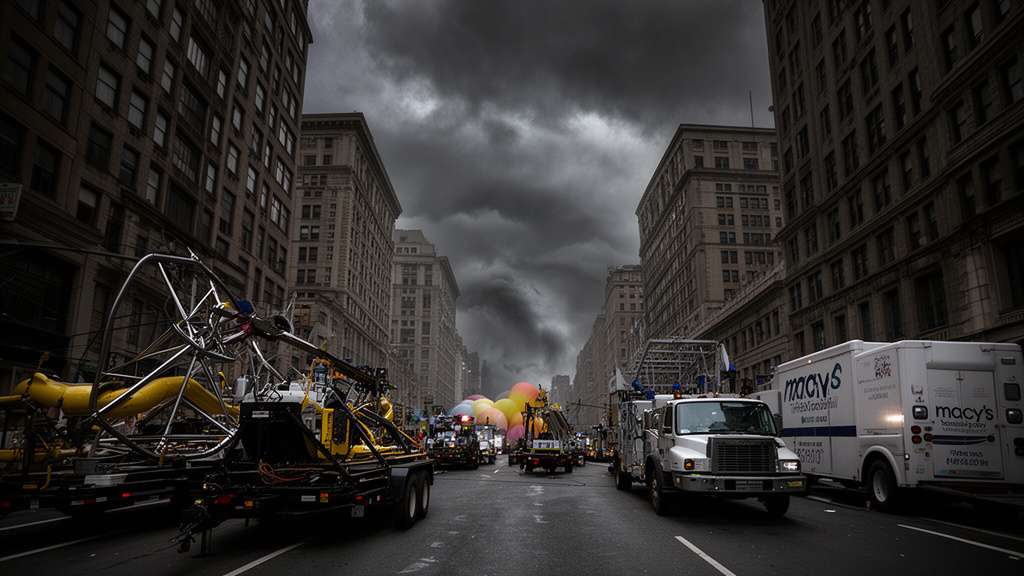
For the first time in its 100-year history, the Macy’s Thanksgiving Day Parade has been postponed. Citing severe weather forecasts in New York City, organizers moved the iconic celebration to Saturday, impacting a massive lineup of performances and floats. This unprecedented deviation from the traditional Thursday schedule marks a significant shift in the operational protocols for the world’s most famous parade, as organizers prioritize public safety amidst high-wind warnings and volatile atmospheric conditions.
Key Highlights
- Historic Precedent: This is the first postponement in the 100-year history of the Macy’s Thanksgiving Day Parade, breaking a century-long streak of Thanksgiving Day events.
- Weather-Driven Decision: Meteorologists identified a severe weather system approaching the New York City metropolitan area, necessitating a move to avoid high-wind risks associated with the parade’s massive helium balloons.
- New Schedule: The event is officially rescheduled for Saturday, with organizers scrambling to retain the full lineup of performances and floats.
- Operational Safety: The decision follows strict safety guidelines established by the New York City Department of Emergency Management, which prohibit balloon flight during high-wind events.
A Century of Tradition Interrupted by Safety Mandates
The Macy’s Thanksgiving Day Parade has long been viewed as the immutable centerpiece of American Thanksgiving, a reliable tradition that has persisted through wars, recessions, and global upheaval. Since its inception in 1924, the parade has served as a beacon of continuity. However, the decision to postpone the event until Saturday underscores the reality of modern urban event management, where meteorological precision now supersedes traditional scheduling. The National Weather Service issued warnings early Tuesday regarding a localized storm system capable of producing wind gusts exceeding the safety thresholds for the parade’s massive helium-filled characters.
The Meteorological Thresholds
Public safety protocols for the Macy’s parade, particularly those involving the giant balloons, are exceptionally stringent. Since the infamous 1997 incident involving high winds, the New York City government and Macy’s have implemented a strict wind-speed cap. If sustained winds exceed 23 mph or gusts exceed 34 mph, the flight of the giant balloons is prohibited. Recent models from the National Weather Service indicated that this specific storm system was tracking directly over Manhattan with the potential for gusts reaching up to 45 mph. With the balloon lineup being the primary draw for millions of spectators, holding the event on Thanksgiving Day would have required a “grounded” parade, or worse, a dangerous scenario for balloon handlers. Moving the event to Saturday allows for a more stable weather window and ensures the full visual spectacle can proceed.
The Logistical Domino Effect
The shift of such a massive undertaking from Thursday to Saturday creates a ripple effect across New York City’s infrastructure. The parade involves thousands of participants, including marching bands from across the country, high-profile musical performers, and specialized balloon handlers. Coordinating the logistics of travel, hotel accommodations, and security for a rescheduled event is a monumental task. The New York City Mayor’s Office, alongside the NYPD, has initiated an emergency response plan to reallocate security resources and manage traffic closures for the new Saturday date. Furthermore, local retailers and hospitality businesses, which rely on the influx of tourists for the traditional Thursday window, are now recalibrating their expectations for what will effectively be a “parade weekend” rather than a single-day event.
Economic and Cultural Implications
While the postponement is a logistical hurdle, it also presents an interesting economic scenario. By moving the event to Saturday, the parade now aligns with a busy retail weekend, potentially extending the visibility of the holiday season kick-off. However, this comes at the cost of the traditional family-centric experience that defines the Thanksgiving morning ritual. Economists and event planners will be watching closely to see how the attendance figures for a Saturday parade compare to the historical Thursday benchmarks. The shift also highlights the increasing impact of climate volatility on large-scale public events, raising questions about whether such occurrences will become more frequent as urban centers navigate increasingly unpredictable weather patterns.
Looking Ahead: The Future of the Parade
The postponement has sparked a dialogue regarding the future of outdoor mass gatherings in New York City. The successful pivot to Saturday demonstrates a level of preparedness and agility that has not been required in the event’s century-long tenure. As organizers look to preserve the integrity of the parade, the ability to rapidly adapt to environmental threats may become a new standard. For now, the focus remains on the logistics of the Saturday event, ensuring that the 100th-anniversary spirit remains intact despite the deviation from tradition. The organizers have assured the public that the broadcast schedule will be adjusted accordingly, maintaining the global reach of the celebration while placing safety at the forefront of the decision-making process.
FAQ: People Also Ask
1. Has the Macy’s Parade ever been cancelled before?
While the parade was suspended during World War II between 1942 and 1944, it has never been officially postponed due to weather in its 100-year history until this current event.
2. Why was Saturday chosen as the new date?
Saturday was selected based on the latest meteorological models showing a dissipation of the severe weather system, providing the necessary window for safe balloon operation and crowd management.
3. How does this affect the Thanksgiving morning broadcast?
Major television networks are adjusting their programming schedules. Viewers are advised to check local listings for updated air times, as the broadcast will now reflect the Saturday production.
4. Will all the floats and performers be available on Saturday?
Organizers are currently working with all talent agencies and performance groups to maintain the original lineup, though some minor changes in the order of the procession may be required due to scheduling conflicts.