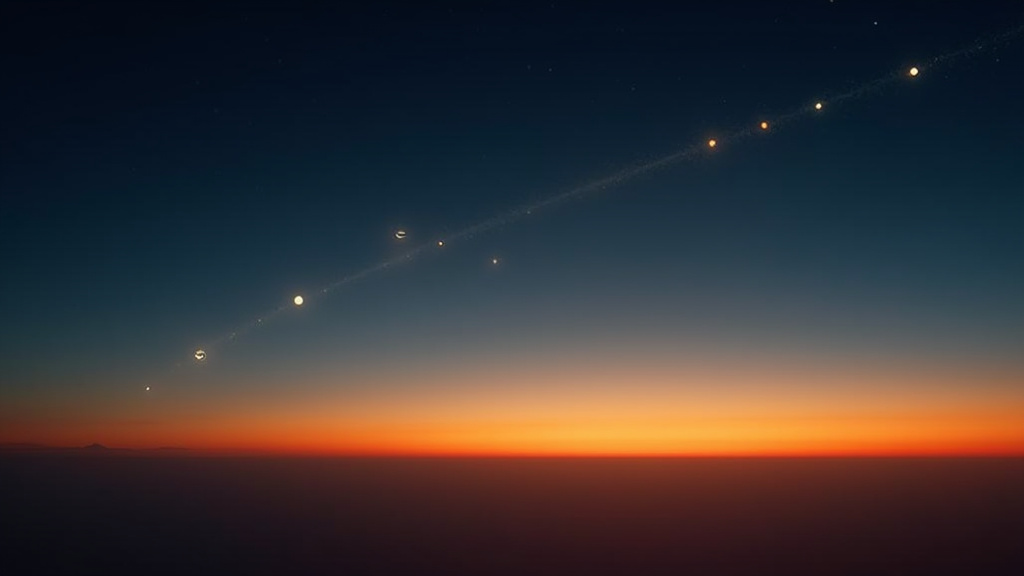
February 2026 offers a dazzling celestial display. This month promises top trending astronomical events. Skywatchers anticipate several major space events. These include eclipses and planetary alignments. It is a truly spectacular month for astronomy.
The Month Begins with Lunar Light
The month opens with the Full Snow Moon on February 1. This winter moon will shine brightly. It will appear near the Beehive Star Cluster. Early February also hosts the Alpha Centaurid meteor shower. Its peak occurs around February 8-9. This minor shower is best seen from the Southern Hemisphere. Significant moonlight may interfere with viewing. However, it still offers a chance for skygazers.
Moon’s Cosmic Dance with Antares
Mid-February brings a close encounter. The Moon will pass near the red supergiant star Antares. This occurs on February 10 and 11. Observers can witness this beautiful conjunction. A few locations will see a lunar occultation. This is when the Moon passes in front of Antares. This event is visible from Antarctica and nearby islands. For most, the Moon and Antares will appear very close. Use binoculars for a better view. Antares is known as the “Scorpion’s Heart.” It is a prominent star in Scorpius.
A ‘Ring of Fire’ Eclipse
February 17 marks a major global event. An annular solar eclipse graces the sky. This creates a spectacular “Ring of Fire” effect. The Moon will appear smaller than the Sun. It will not fully cover the Sun’s disk. This leaves a bright ring visible. Unfortunately, the path of annularity is remote. It crosses Antarctica and the Southern Ocean. Southern parts of Africa and South America will see a partial eclipse. For most, this is a challenging event to view directly. Therefore, special safety glasses are crucial for any viewing. This New Moon also sets the stage for other celestial phenomena.
Mercury’s Prime Time and Planetary Gatherings
Mercury is often hidden by the Sun’s glare. It usually proves difficult to spot. However, February 19 is a prime viewing opportunity. Mercury reaches its greatest eastern elongation. This means it appears farthest from the Sun. Look low in the western sky after sunset. You can also spot Venus and Saturn nearby. The Moon also makes several close passes. It nears Mercury on February 18. Then, it passes Saturn on February 19. On February 24, the Moon meets the Pleiades star cluster. These events offer varied viewing experiences throughout the month.
The Grand Finale: A Six-Planet Parade
Late February culminates in a rare planetary alignment. On February 28, six planets gather in the western sky. Mercury, Venus, Saturn, Jupiter, Uranus, and Neptune will be visible. This “planet parade” appears as a subtle arc. It stretches across the sky after sunset. Jupiter will be brightest and highest. Mercury and Venus will be low on the horizon. Four planets should be visible to the naked eye. Uranus and Neptune will require optical aid. Additionally, this alignment is accessible in the evening. It is a major trending event for skywatchers. This parade is one of the most anticipated space events.
Looking Beyond February
February 2026 delivers numerous astronomical highlights. These major global events capture attention. They inspire wonder and scientific curiosity. As February concludes, anticipation builds for March 3. A total lunar eclipse, often called a “Blood Moon,” will be visible. This event will grace the skies over North America, Australia, and East Asia. It continues the month’s theme of stunning celestial spectacles. These astronomical occurrences provide fantastic opportunities for public engagement. They remind us of our place in the vast cosmos.