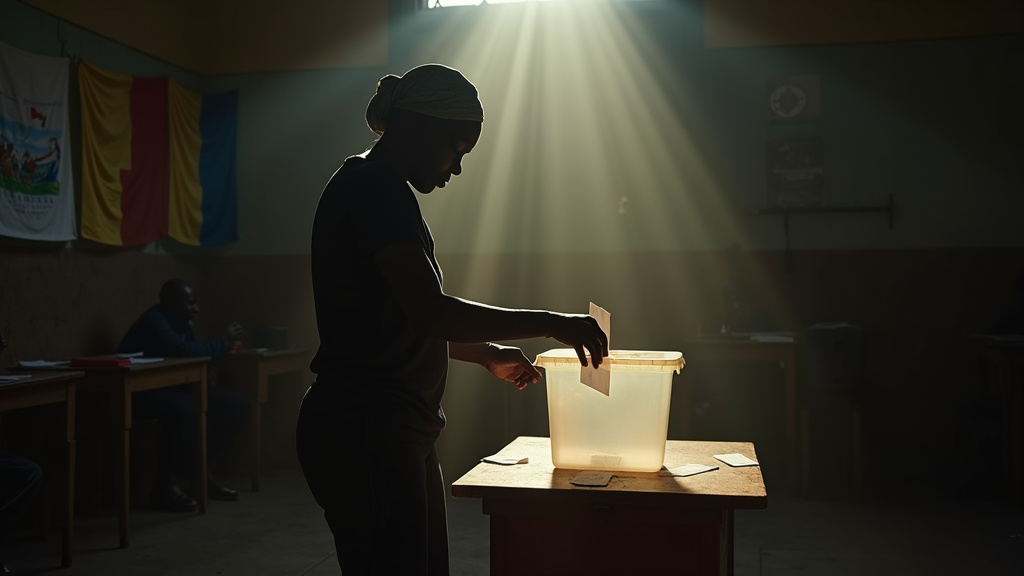
The Central African Republic Election on December 28, 2025, represented a significant moment for the nation’s political trajectory. This comprehensive general election saw citizens participate in presidential, legislative, and municipal polls, with incumbent President Faustin-Archange Touadéra vying for another term. The Central African Republic Election served as a crucial test of national stability after prolonged conflict and political upheaval, with its results anticipated to define the country’s future path. This pivotal event in African political events garnered substantial global attention, highlighting its importance in the region.
The Political Landscape Leading Up to the Central African Republic Election
President Touadéra’s ambition for an extended mandate followed substantial constitutional amendments. A referendum in 2023 controversially eliminated presidential term limits and increased the presidential term duration from five to seven years, a decision met with criticism. The former head of the Constitutional Court deemed the referendum unlawful but was subsequently dismissed by President Touadéra. The opposition largely boycotted this referendum, which ultimately passed with over 95% of the votes, exacerbating the already strained political atmosphere. The ruling United Hearts Movement (MCU) consolidated its authority, with accusations of state resource misappropriation to suppress dissent. Opposition figures faced detention, and their public gatherings were prohibited, underscoring the hurdles encountered in the lead-up to the Central African Republic Election.
Key Participants in the Central African Republic Election
Seven candidates competed for the presidency in this critical Central African Republic Election. Incumbent President Touadéra was widely considered the leading contender. His principal challengers included former Prime Ministers Anicet-Georges Dologuélé and Henri-Marie Dondra, both prominent opposition leaders who had faced attempts at disqualification before their candidacies were ultimately validated by the Constitutional Court. A significant opposition coalition, the Republican Bloc for the Defense of the Constitution, chose to boycott the election, citing an inequitable political environment. Their withdrawal highlighted the profound divisions within the nation preceding the Central African Republic Election.
Ensuring CAR Election Integrity: Challenges and Concerns
Persistent concerns regarding the CAR election integrity shadowed the proceedings. Human Rights Watch voiced apprehensions about potential compromises to credibility due to political interference and security pressures. The National Elections Authority (ANE) faced scrutiny over its logistical readiness and impartiality, with issues such as incomplete voter rolls, inadequately trained personnel, and supply chain disruptions impacting operational efficiency. The ANE’s limited capacity, particularly in remote areas, was evident. The simultaneous organization of municipal elections, absent for decades, added significant complexity to the Central African Republic Election. Security remained a formidable obstacle, with armed factions controlling extensive territories beyond the capital, restricting access for numerous citizens and raising concerns about skewed voter participation favoring urban or government-aligned regions during this crucial Central African Republic Election.
Central African Republic Election Day and International Scrutiny
On December 28, voting for the Central African Republic Election commenced. Domestic observers from Réseau Arc-en-Ciel (RAC) reported a calm atmosphere with no major incidents noted in the initial hours. Approximately 2.4 million voters were registered to cast their ballots across more than 6,700 polling stations. The UN peacekeeping mission, MINUSCA, provided essential logistical and security support, deploying resources to reach isolated areas. International observer delegations from the African Union and the European Union were present to monitor the electoral process. A notably high voter turnout was a key observation, underscoring the unprecedented scale of the four concurrent elections, including the significant Central African Republic Election.
Russian Influence and Security Dynamics in the Central African Republic Election Context
President Faustin-Archange Touadéra’s close relationship with Russia, particularly his reliance on Russian security assistance, including forces linked to the Wagner Group, was a notable factor. Tensions arose concerning Moscow’s intent to substitute Wagner with its Africa Corps unit. This alliance, aimed at combating insurgent groups and restoring stability, also attracted international examination regarding the involvement of private military contractors. The dependence on external security forces emphasized the CAR’s ongoing security vulnerabilities and the persistent threat posed by armed factions, thereby influencing the context of the Central African Republic Election. This element of Russian influence CAR cannot be overlooked when analyzing the election.
Future Outlook Following the Central African Republic Election
Provisional CAR voting results were expected by January 5, 2026, with a potential presidential runoff scheduled for February 2026. Legislative runoffs were slated for April 2026. Analysts generally anticipated a victory for Touadéra, largely attributed to his control over state apparatuses. Nevertheless, apprehension regarding post-election unrest persisted, as opposition factions might contest the anticipated outcomes of the Central African Republic Election. The result of this election is poised to shape the nation’s political course and its endeavors towards peace and stability. The results serve as a critical gauge of the country’s democratic resilience. This major political event has considerable implications for regional dynamics and international engagement with the Central African Republic, which continues to confront substantial challenges, making the Central African Republic Election a focal point for future analysis.