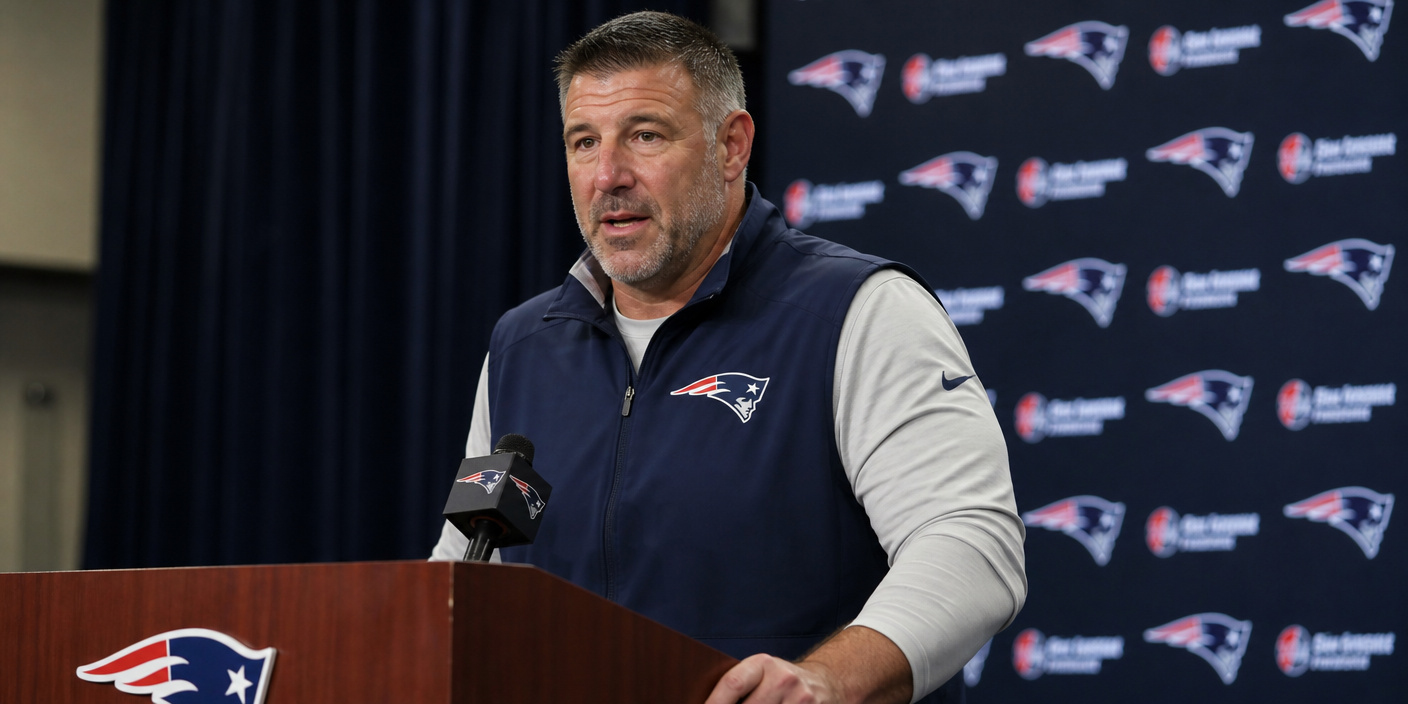
The New England Patriots’ preseason journey took a decisive turn on August 13, 2026, as the squad utilized a suffocating defensive performance to overcome the Indianapolis Colts. For Head Coach Mike Vrabel, the victory provided a significant snapshot of the team’s identity—a blend of opportunistic playmaking and the inevitable, grinding reality of preseason development. While the scoreline reflects a positive outcome, the postgame commentary from the Patriots’ locker room centered heavily on the razor-thin margin between dominance and necessary refinement.
The Defensive Blueprint
The narrative of the August 13 matchup was written in the turnover column. Forcing four turnovers is a statistical anomaly in any NFL game, but in a preseason environment where starters often share the field with depth-chart challengers, it signals a high level of situational awareness. Mike Vrabel, known for his defensive acumen, was quick to highlight this aspect during the postgame press conference. The defense’s ability to strip the ball and intercept passes demonstrated a disciplined approach to the ball-hawking philosophy that Vrabel has instilled in his scheme.
However, Vrabel’s praise was tempered by a veteran coach’s realism. Forcing turnovers is a product of aggression, but it can also be a product of variance. Vrabel emphasized that while the defense capitalized on Colts mistakes, there remains a need to improve the consistency of fundamental tackling and gap integrity—areas that often become sloppy during the early weeks of the preseason. The takeaway is clear: the Patriots are building a culture of reaction, but they are still refining the architecture of their base defense.
Roster Dynamics and The IR Impact
Beyond the tactical successes of the game, the August 13 contest was underscored by significant roster management. The placement of Terrell Jennings on the injured reserve (IR) list is a poignant reminder of the physical cost of preseason competition. Jennings, a player competing for a specialized role, now faces the challenge of rehabilitation and delayed participation. This move is more than a administrative transaction; it ripples through the team’s depth chart, forcing coaching staff and front office personnel to re-evaluate their personnel packages.
For a roster in flux, losing a player like Jennings forces younger, less-experienced players into accelerated development. This is the ‘preseason crucible’—where the absence of one key figure necessitates the emergence of another. Vrabel’s challenge in the coming weeks will be managing the expectations of a squad that must maintain defensive intensity while simultaneously integrating players into new, demanding roles.
Developing an Offensive Identity
While the defense commanded the headlines, the offense’s performance during the game against the Colts served as a counterpoint. If the defense provided the ‘what’ of the win, the offense continues to work on the ‘how.’ Vrabel noted that the team’s ability to move the ball was inconsistent, a point he attributes to the ongoing installation of new offensive packages. In the preseason, the playbook is often vanilla, but execution remains the barometer for success. The coaching staff is clearly looking for ‘clean football’—fewer penalties and efficient situational play—even when the result is a preseason victory.
The Vrabel Philosophy: Process Over Outcome
Mike Vrabel’s tenure as Head Coach is defined by a process-oriented mindset. In his postgame evaluation, he consistently pivoted away from the final score to focus on specific segments of the game tape. This is a crucial distinction for fans and analysts to understand. In the NFL, preseason games are not about winning; they are about stress-testing concepts under game-speed conditions. By focusing on the 4-turnover performance, Vrabel is rewarding the hustle and the ‘play-to-the-whistle’ attitude, but by highlighting the need for improvement, he is reinforcing the standard. This duality—celebrating the win while identifying the cracks—is the hallmark of a coach looking to build a team capable of sustained success, not just one-off flashes of brilliance.
Looking Ahead: The Preseason Trajectory
As the Patriots prepare for their next phase of the 2026 preseason, the focus will likely remain on the interior defensive line and the secondary’s ability to maintain discipline in coverage. The game against the Colts provided a perfect case study: when the pressure gets home, the secondary benefits, and the turnovers happen. However, against higher-tier quarterbacks who can release the ball quickly, the Patriots will need to prove that their coverage is just as capable as their pass rush. The injury to Jennings will also force the coaching staff to look for versatility elsewhere, perhaps moving players across positions to see who can provide the most utility in the event of further setbacks.
Ultimately, August 13 was a validation of the team’s defensive potential. If the Patriots can maintain this level of opportunistic play while refining the technical aspects that Vrabel highlighted, they will be a difficult team to prepare for during the regular season. The road is long, and the preseason is only a waypoint, but the early indicators suggest a team that is listening to its coach, executing with intensity, and ready to compete.