The diplomatic landscape shifted dramatically this week during the 79th session of the United Nations General Assembly (UNGA) in New York. While the world watched, two distinct, high-stakes narratives unfolded simultaneously: Ukrainian President Volodymyr Zelenskyy’s strategic pivot toward potential Turkish-brokered trilateral talks, and Israeli Prime Minister Benjamin Netanyahu’s address to an assembly marked by walkouts and intense international friction. These two events underscore a fractured global order, where traditional diplomatic avenues are straining under the pressure of concurrent, unresolved conflicts.
The Trilateral Pivot: Ankara’s Role in Kyiv-Moscow Channels
President Zelenskyy’s recent signals regarding Türkiye’s involvement in peace negotiations represent a significant recalibration of Kyiv’s diplomatic strategy. For months, the international community has grappled with the stalemate in the war between Ukraine and Russia. Zelenskyy’s expressed openness to a Türkiye-hosted trilateral framework suggests an attempt to revitalize communication channels that have largely remained frozen since early 2022.
Why Türkiye?
Türkiye occupies a unique geopolitical position that makes it the most viable candidate for this delicate mediation. As a NATO member that has maintained strategic, albeit pragmatic, channels with the Kremlin while simultaneously supporting Ukraine’s territorial integrity, Ankara is uniquely positioned. The history of the Black Sea Grain Initiative serves as a primary example of this capability. During that period, Turkish President Recep Tayyip Erdoğan was able to facilitate a high-stakes agreement that allowed for the safe transit of agricultural products, a feat that demonstrated the efficacy of Türkiye’s ‘balanced’ diplomatic approach. By reviving the possibility of a trilateral mechanism—potentially involving Ukraine, Russia, and Türkiye—Zelenskyy is signaling that Kyiv is seeking practical, result-oriented solutions that bypass the current gridlock.
The Strategic Gamble
However, the move is not without risks. Any potential talks face the immediate hurdle of conflicting conditions for peace. Kyiv insists on the restoration of its 1991 borders, while Moscow continues to demand recognition of its annexation of four Ukrainian regions. A trilateral format would require enormous concessions or, at the very least, a shift in the tone of engagement. The inclusion of Türkiye adds a layer of complexity; it necessitates the approval of a mediator that is navigating its own complex domestic economic challenges and its balancing act between Western allies and Eastern partners. Despite these hurdles, the willingness to engage via Ankara marks a shift from the previous refusal to communicate, suggesting that behind-the-scenes pressure for a diplomatic off-ramp is intensifying.
UNGA Under Pressure: The Isolation of Netanyahu
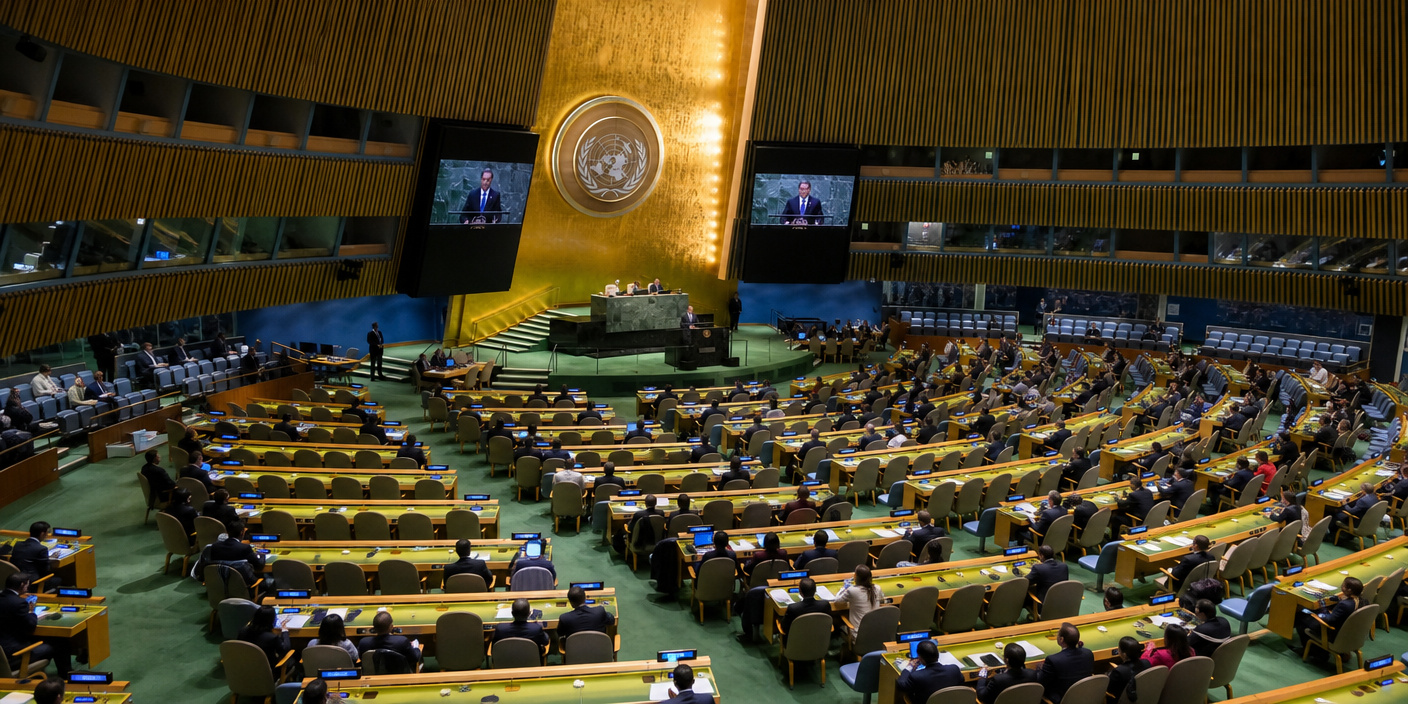
Contrasting the quiet maneuvering behind the scenes of the Ukraine conflict, the reception of Israeli Prime Minister Benjamin Netanyahu at the UNGA floor was overtly demonstrative. As Netanyahu took the podium to address the assembly regarding the ongoing conflict in Gaza, the room—typically a site of diplomatic formality—erupted in tension. Multiple delegations, representing a broad cross-section of the international community, stood up and walked out of the hall before his speech began.
The Erosion of Diplomatic Norms
The act of walking out on a sitting head of state is a rare and profound gesture of protest in the hallowed halls of the United Nations. This visible display of diplomatic disapproval reflects the deep-seated frustration regarding the humanitarian catastrophe in Gaza. The walkout was not merely a reaction to the specific speech delivered by Netanyahu; it was a symptom of the widening gap between the Israeli administration and a significant portion of the international order regarding the rules of engagement, civilian protection, and the path forward for a two-state solution. This fragmentation poses a severe challenge to the credibility of the UN as a forum for consensus-building.
The Impact of Regional Instability
The protests were compounded by the broader regional context—specifically the escalating tensions along the Lebanon border and the stalemate in hostage release negotiations. For the Israeli government, this diplomatic isolation poses a substantial challenge to its international legitimacy. For the UN, it highlights a paralysis in its ability to resolve the crisis. The assembly hall, traditionally a space designed for dialogue, instead became a theater for silent, yet powerful, confrontation, illustrating that the traditional mechanisms of international diplomacy are struggling to contain the fallout from modern conflict.
The Geopolitical Chessboard: Navigating a Fractured World
Looking beyond the immediate headlines, these two events—the potential for Turkish mediation in Ukraine and the vocal rejection of Netanyahu’s discourse—highlight a transformation in global relations. We are moving toward a period where the ‘Global South’ and middle-power nations, such as Türkiye, are demanding a more central role in conflict resolution, often filling the vacuum left by the declining influence of the traditional ‘P5’ powers (the permanent members of the UN Security Council).
The Rise of Middle-Power Diplomacy
The shift toward Türkiye as a mediator in the Russia-Ukraine war is indicative of the rising influence of ‘middle powers.’ These nations, which maintain extensive trade, military, and diplomatic ties across multiple blocs, are becoming the primary brokers in modern geopolitical disputes. Unlike the Cold War era, where influence was largely binary, today’s world requires the complex, multi-vectored diplomacy that only states with high levels of strategic flexibility can provide.
The Fragility of International Institutions
Conversely, the situation at the UNGA serves as a stark reminder of the limitations of global institutions. When delegations resort to mass walkouts, the UN’s primary objective—preventive diplomacy—is compromised. This erosion of the ability to facilitate a fair hearing for all parties suggests that the existing institutional framework of the United Nations may require significant reform to remain relevant in a polarized 21st century. The inability to bridge the divide on the Gaza conflict is not just a failure of policy, but a failure of the architecture designed to prevent such crises from festering.
FAQ: People Also Ask
Why is Türkiye considered a reliable mediator for the Ukraine-Russia conflict?
Türkiye is a member of NATO but has not imposed the same level of sanctions on Russia as the US or the EU. This unique standing allows it to keep communication lines open with both Moscow and Kyiv, a ‘neutral-plus’ status that has historically facilitated agreements like the Black Sea Grain Initiative.
What is a trilateral peace talk in the context of Ukraine?
A trilateral talk typically involves two warring parties (Ukraine and Russia) and one mediating third party (in this case, Türkiye) acting as a host and facilitator. This format is intended to reduce the intensity of bilateral demands and focus on neutral ground for negotiations.
Why did delegates walk out during Netanyahu’s UNGA address?
The walkouts were a protest against the Israeli military campaign in Gaza. Delegates from various countries left the assembly hall to demonstrate their opposition to the humanitarian situation, the scale of civilian casualties, and the perceived lack of progress toward a diplomatic resolution.
Does this UNGA protest affect Israel’s military strategy?
While symbolic, the protest indicates a significant loss of political capital for Israel on the global stage. It highlights that even traditional allies are increasingly pressured by domestic and international public opinion to distance themselves from current military policies, potentially complicating long-term diplomatic and economic relations.