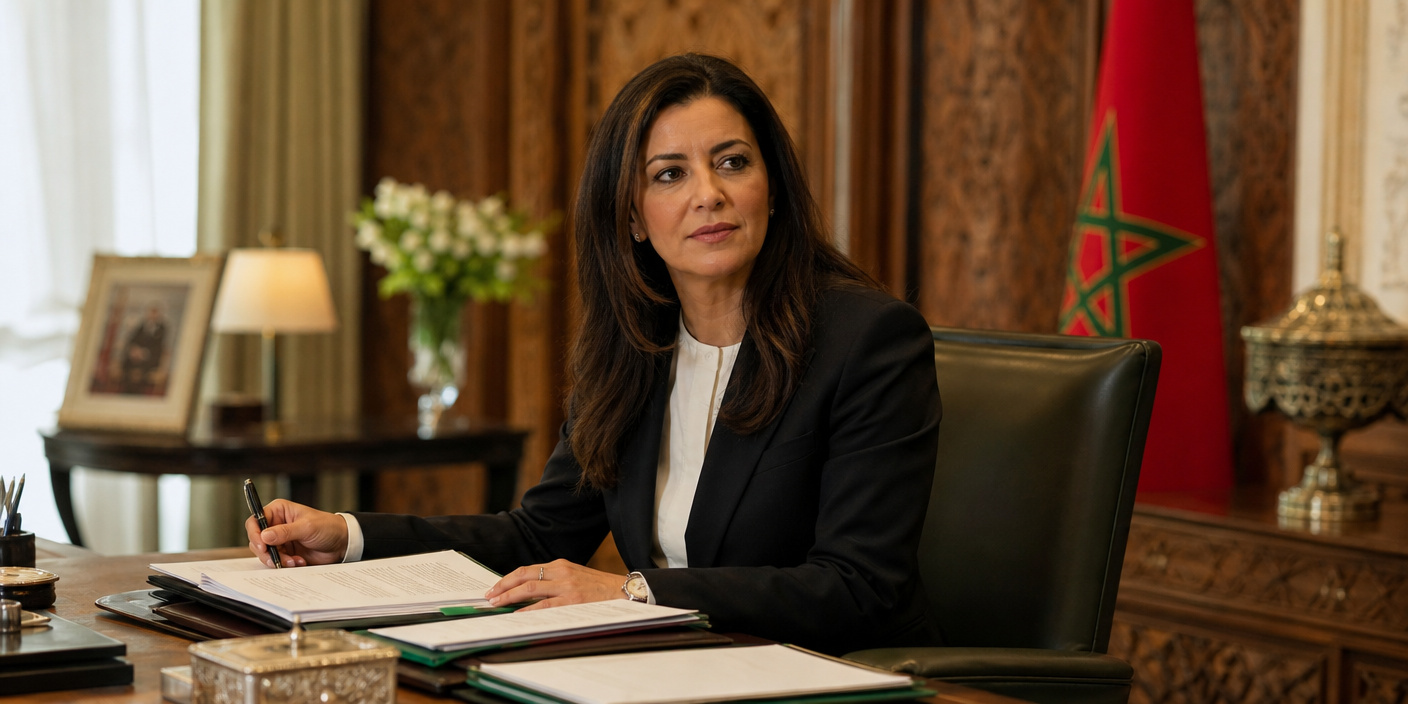
In a historic milestone for Morocco, Fatima Ezzahra El Mansouri has been appointed the nation’s first female Prime Minister, following a significant electoral victory by her party. This watershed moment marks the first time a woman has ascended to the highest executive office in the Kingdom’s modern history, fundamentally reshaping the political landscape of the region. The appointment, confirmed earlier today, follows a series of high-level consultations and a landslide consolidation of support for the Authenticity and Modernity Party (PAM), which El Mansouri has steered with strategic precision.
Key Highlights
- Unprecedented Milestone: Fatima Ezzahra El Mansouri becomes the first woman to hold the office of Prime Minister in Morocco, breaking a long-standing political glass ceiling.
- Mandate for Change: The appointment follows a decisive electoral performance by the Authenticity and Modernity Party (PAM), reflecting a strong public mandate for her reformist agenda.
- Focus on Continuity and Reform: With a career defined by urban revitalization and ministerial experience, El Mansouri is expected to prioritize economic diversification and social development.
- Global Significance: This appointment elevates Morocco’s status on the international stage, positioning the Kingdom as a leader in regional gender equality and political modernization within the MENA region.
A New Chapter for the Kingdom’s Governance
The ascension of Fatima Ezzahra El Mansouri to the Premiership is not merely a symbolic victory for gender representation; it is the culmination of a decade-long trajectory of professional excellence and political maneuvering. El Mansouri, a trained lawyer by profession, has long been a fixture of the Moroccan political elite, known for her pragmatic approach to governance and her capacity to navigate the intricate balance between traditional Moroccan values and the urgent need for economic modernization.
The Architect of Modernization
Before her historic appointment, El Mansouri served as the Minister of National Planning, Urban Planning, Housing, and City Policy. During her tenure, she was lauded for her ambitious reforms in the housing sector, focusing on reducing administrative bottlenecks and increasing access to affordable housing for Morocco’s burgeoning middle class. Her supporters frequently cite her time as the Mayor of Marrakech—where she was the first woman to ever hold the office—as the blueprint for her current success. In Marrakech, she moved to tackle the city’s complex infrastructure issues, implementing digital transparency initiatives that streamlined public services and improved the daily lives of thousands of residents. Her supporters argue that this “Marrakech Model” of efficient, technology-driven, and results-oriented governance is exactly what the country requires at the national level.
Political Challenges and Coalition Dynamics
Despite the celebration surrounding her appointment, El Mansouri faces a complex political terrain. Morocco’s system is one of constitutional monarchy, and the Prime Minister must navigate the delicate power-sharing agreements between the Parliament and the Royal Palace. Building a sustainable coalition will be her first order of business. Her party, the PAM, will need to negotiate with traditional political rivals to ensure a stable working majority in the House of Representatives. Analysts suggest that her background as a lawyer will serve her well in these negotiations, as she is known for her ability to build consensus through legal frameworks and institutional collaboration rather than partisan rhetoric.
Economic and Social Policy Trajectory
The economic environment remains the most pressing challenge for the new administration. With global inflation impacting energy prices and food security, El Mansouri is expected to prioritize the “social state” project, an initiative championed by the current monarchy. This includes expanding social safety nets, continuing the liberalization of the energy sector to focus on renewable resources, and improving the quality of the national healthcare system. Her policy platform is expected to lean heavily into private-public partnerships, encouraging foreign direct investment (FDI) to boost the manufacturing and tourism sectors. By leveraging her international network and experience in urban planning, she is positioning Morocco to become an even stronger logistical bridge between Europe and Africa.
Regional and International Implications
Beyond the borders of Morocco, this appointment sends a powerful signal to the MENA (Middle East and North Africa) region. As more nations grapple with the necessity of inclusive political structures, Morocco’s move to place a woman at the helm of the government serves as a progressive benchmark. Diplomats in Brussels and Washington are already closely watching the appointment, viewing it as a testament to the stability and maturity of Moroccan institutions. The international community expects that El Mansouri will maintain the Kingdom’s strong ties with Western allies while aggressively expanding trade routes into sub-Saharan Africa. Her appointment is not just a domestic policy shift; it is a strategic repositioning of the nation on the world map, emphasizing a modern, inclusive, and forward-thinking Moroccan identity.
FAQ: People Also Ask
Q: What is Fatima Ezzahra El Mansouri’s professional background?
A: El Mansouri is a trained lawyer. She rose to political prominence as the Mayor of Marrakech and later served as the Minister of National Planning, Urban Planning, Housing, and City Policy, where she gained a reputation for institutional reform.
Q: What party does the new Prime Minister belong to?
A: She is a leading figure in the Authenticity and Modernity Party (PAM), which has seen a significant increase in electoral support and parliamentary influence in recent years.
Q: How does this appointment affect the political system in Morocco?
A: While the Kingdom remains a constitutional monarchy, the appointment of a female Prime Minister is a major step in the ongoing evolution of the political landscape, reinforcing the push for greater gender equity in high-level government positions.
Q: What are the primary priorities for the new government?
A: Based on her previous ministerial work, the government is expected to focus on housing reform, social infrastructure development, economic diversification, and strengthening foreign investment ties.