A brutal and fast-moving Nor’easter has swept across six U.S. states, wreaking havoc on regional infrastructure and resulting in the tragic loss of one life. As of this morning, over 90,000 utility customers remain without electricity as the region grapples with the aftermath of historic coastal flooding and sustained, high-speed wind gusts. The storm system, characterized by its rapid intensification, has triggered widespread emergency responses, forcing road closures and leaving critical power grids vulnerable across the affected corridor.
Key Highlights
- Confirmed Fatality: One death has been officially linked to the storm’s environmental conditions.
- Massive Outages: Over 90,000 customers across six states have been left without power, with restoration efforts hampered by ongoing debris and localized flooding.
- Widespread Scope: Six states bore the brunt of the storm, ranging from coastal inundation to severe inland wind damage.
- Infrastructure Impact: High winds and heavy precipitation have compromised key transmission lines and local distribution networks.
The Anatomy of a Coastal Crisis: A Systemic Breakdown
The current Nor’easter event serves as a stark reminder of the fragile balance between weather resilience and the aging infrastructure of the Northeastern United States. Meteorological data from the National Weather Service (NWS) indicates that this system underwent “bombogenesis,” a phenomenon where a storm’s central pressure drops rapidly, leading to explosive development. This rapid intensification caught many communities off guard, resulting in a chaotic Tuesday evening and Wednesday morning.
Meteorological Volatility
The storm’s impact was not uniform; rather, it presented a multi-pronged threat. In coastal areas, the primary concern was storm surge—a wall of water pushed inland by high-velocity winds. These surges overwhelmed drainage systems, leading to rapid, flash-flooding scenarios in low-lying residential and commercial zones. Simultaneously, inland regions faced a different danger: heavy, saturated soils combined with high-velocity wind gusts created the perfect environment for tree failures, which are the primary culprits for the widespread power outages currently being reported by utility companies.
Grid Vulnerability and Reliability
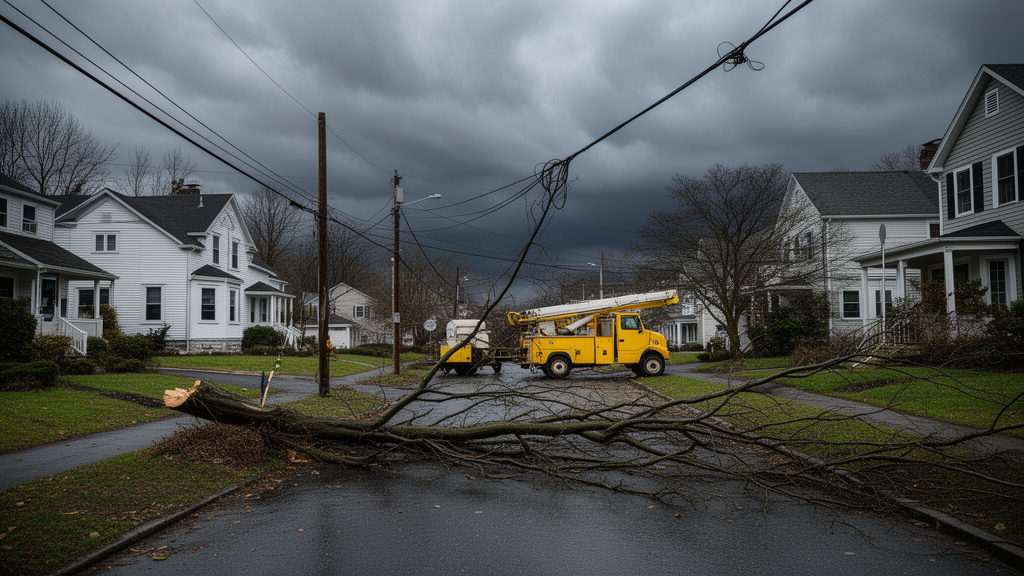
The failure of the electrical grid across these six states highlights a growing concern among energy experts: the resilience of overhead distribution lines. While modernization efforts are underway, the current event has proven that legacy infrastructure remains ill-equipped for the intensity of modern, climate-driven storm systems. Utility crews are currently facing significant “access challenges,” where fallen trees and live wires are blocking roadways, preventing the prompt restoration of services. The 90,000+ outage count is expected to fluctuate as engineers work to isolate damaged substations and reroute power, though the timeline for full restoration remains uncertain in the hardest-hit rural counties.
Socioeconomic and Community Consequences
The impact of this storm transcends the immediate utility outages. For many small businesses, a multi-day power disruption represents a significant economic blow, particularly for retail and hospitality sectors already operating on thin margins.
The Human and Economic Toll
Beyond the raw statistics of the 90,000 affected households, there is the human element. The confirmed fatality serves as a grim marker of the storm’s severity. Local authorities have emphasized that many of the road-related incidents were preventable, urging residents to adhere strictly to “stay off the roads” advisories. Emergency Management Agencies have mobilized across all six states, setting up temporary heating shelters and coordinating with the Department of Energy to prioritize critical care facilities and hospitals in the queue for power restoration.
Secondary Angles: Examining the Fallout
1. The Infrastructure Lag: This storm underscores a vital conversation regarding “hardening” the grid—moving from overhead distribution lines to underground cabling. Experts argue that while the initial capital expenditure is high, the long-term reduction in economic losses from outages would pay for the upgrades within a decade.
2. Insurance and Climate Risk: With the increasing frequency of these “bomb cyclone” style Nor’easters, property insurers are recalibrating their risk models for the Northeast. Homeowners are likely to see premium adjustments, potentially accelerating a shift in real estate valuation away from high-flood-risk coastal properties.
3. Data-Driven Disaster Response: The effectiveness of the government’s response this time is being scrutinized against previous events. New predictive modeling technologies allowed for earlier deployment of repair crews, which, despite the high outage numbers, has been credited by some regional governors with preventing an even wider catastrophic failure of the regional grid.
FAQ: People Also Ask
Why are Nor’easters so damaging to the power grid?
Nor’easters frequently bring a “triple threat” of wind, precipitation (often heavy, wet snow or driving rain), and coastal flooding. The weight of heavy precipitation on trees, combined with wind gusts, causes tree limbs to collapse onto overhead power lines, which is the leading cause of power failures in the region.
What should I do if my power is still out?
Stay clear of any downed power lines, which should always be treated as “live.” Report the outage immediately to your local utility provider’s mobile app or emergency line. Ensure you have adequate heating sources that are carbon-monoxide safe; never bring generators or charcoal grills indoors.
How long will it take for power to be fully restored?
Utility companies typically prioritize hospitals, emergency services, and water treatment plants first. Residential areas are restored in a triage process based on the number of customers per line. In a storm of this magnitude, restoration can take anywhere from 24 hours to several days depending on the accessibility of the damage.
Is this type of storm becoming more frequent?
While Nor’easters are a historical hallmark of the American Northeast, climate scientists have noted that warmer ocean temperatures are providing more energy to these storms, potentially increasing the frequency of high-impact events that exhibit rapid intensification, or “bombogenesis.”