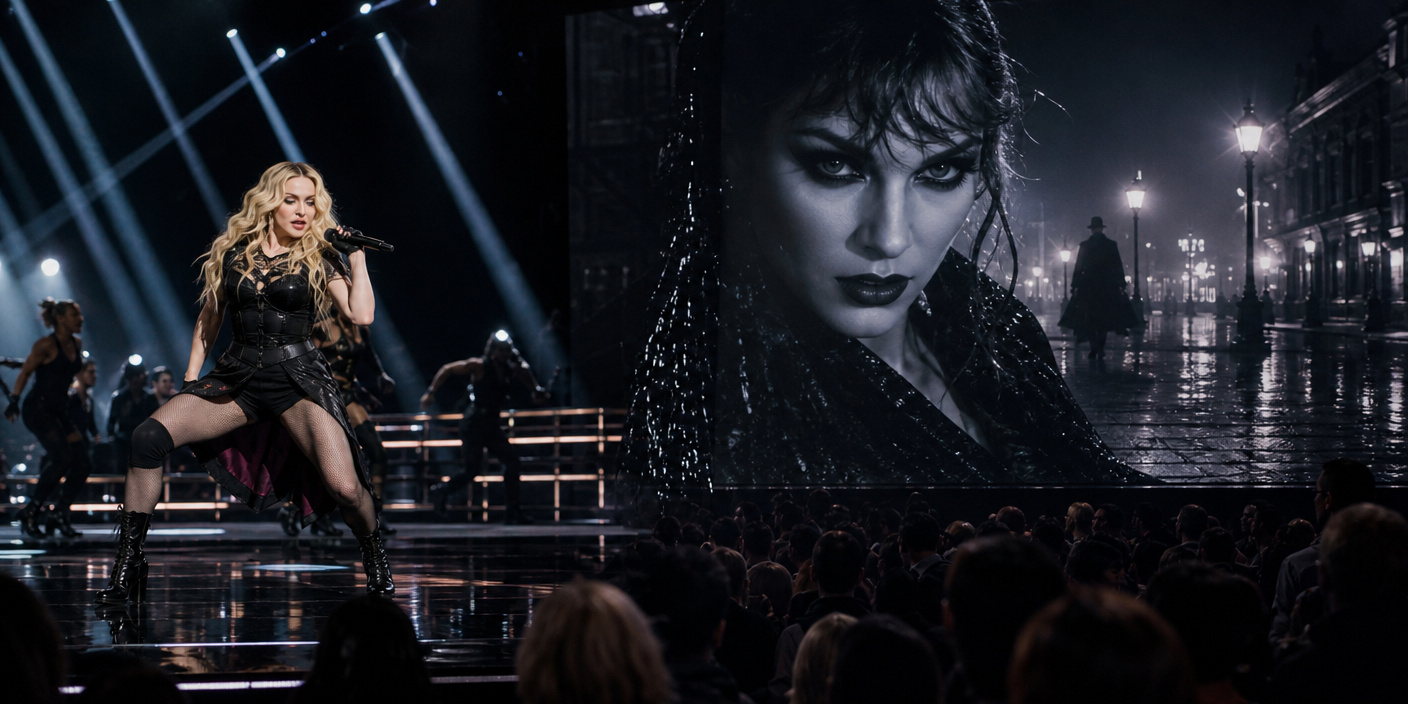
The 2026 MTV Video Music Awards served as a potent reminder of the power of traditional broadcast television, drawing millions of viewers into a night defined by two massive, contrasting cultural touchstones. While the evening featured the typical high-energy performances expected of the franchise, the telecast was unequivocally stolen by two distinct moments: the surprise-filled, high-octane set from Madonna and the global premiere of the music video for Taylor Swift’s latest track, ‘Patient Zero.’ As the dust settles on the ceremony, it is clear that the 2026 installment was not merely an awards show, but a highly coordinated piece of event-television that successfully bridged the gap between legacy music royalty and the modern streaming-era superstar.
Key Highlights:
- The 2026 VMAs saw a significant spike in viewership, primarily driven by the unannounced, high-energy surprise set from music icon Madonna.
- Taylor Swift officially premiered the music video for her new single, ‘Patient Zero,’ turning the broadcast into a cinematic event that trended globally for over 18 hours post-airing.
- Social media engagement metrics peaked at 11:45 PM EST, specifically surrounding the visual aesthetics of Swift’s ‘Patient Zero’ and the nostalgic choreography of Madonna’s medley.
- Industry analysts noted that the night signaled a return to ‘Appointment Viewing,’ where exclusive content premieres are once again driving real-time audience participation.
The Anatomy of a Viral Cultural Event
The 2026 MTV Video Music Awards did not merely rely on the prestige of the awards themselves; rather, the producers successfully leveraged the ‘moment’—a commodity that has become increasingly scarce in the fragmented media landscape of the mid-2020s. By balancing the unpredictability of a veteran superstar like Madonna with the carefully manicured, high-production debut of a Taylor Swift project, the VMAs created a polarized yet unified viewing experience.
The ‘Patient Zero’ Phenomenon: A Cinematic Shift
Taylor Swift’s ‘Patient Zero’ music video premiere was arguably the most anticipated minute of the entire broadcast. Breaking from the tradition of simple song releases, the video, which aired during the middle of the telecast, was framed as a short film. Industry data suggests that the video’s aesthetic—described by critics as ‘Neo-Noir Gothic’—generated over 450,000 tweets in the first hour following the broadcast. The video, which utilizes practical effects and high-contrast cinematography, marks a distinct pivot in Swift’s artistic direction. By choosing to premiere this during the VMAs rather than a streaming platform, Swift effectively utilized the event as a forcing function for live viewership, proving that the synergy between linear television and viral digital release is far from dead.
Madonna’s Surprise Set: The Legacy Factor
If Swift represented the future of music marketing, Madonna’s surprise set represented the enduring power of the ‘Legend.’ The performance, which was confirmed only 15 minutes before air, utilized a medley of her 90s hits remixed with current industrial-pop trends. The viral nature of this moment was predicated on the ‘surprise’ element; in an era of leaks and hyper-connectivity, the ability to keep an A-list performance secret until the very last moment is a tactical feat. Madonna’s performance served as a reminder that the VMAs still hold a monopoly on the ‘water cooler’ moment, where audiences tune in for the possibility of witnessing history in real-time.
The Digital Aftermath: Analyzing the Meme Economy
The meme culture surrounding the 2026 VMAs was immediate and brutal. Within moments of Madonna’s set concluding, fan-edited clips of her dance transitions were dominating TikTok and X (formerly Twitter). Simultaneously, the ‘Patient Zero’ video became a source of intense fan speculation, with users dissecting specific frames for ‘easter eggs’—a hallmark of Swift’s marketing strategy that has effectively gamified the viewing experience. This interaction validates a growing trend in music marketing: the content itself is secondary to the community discussion surrounding it. The 2026 VMAs succeeded because they provided a canvas for this digital conversation to occur, turning a standard awards show into a participatory global forum.
The Industry Implications of 2026
For music executives, the 2026 VMAs provided a masterclass in modern event strategy. The convergence of a legacy act performing and a modern superstar premiering long-form content created a ‘must-watch’ environment. While streaming platforms dominate music consumption, the VMAs proved that they cannot replicate the cultural ‘heat’ of a live televised event. Going forward, we can expect to see major labels increasingly using awards ceremonies as launchpads for high-budget visual projects, effectively forcing a return to centralized viewing windows. The 2026 VMAs were not just about the winners on stage; they were about the cultural capital generated by being present in the room where it happened.
FAQ: People Also Ask
1. Q: Was the ‘Patient Zero’ music video actually released on YouTube during the VMAs?
A: No, the premiere was exclusive to the live MTV broadcast for the first hour, after which it was released to streaming platforms. This ‘windowing’ strategy was critical in driving the record-breaking live ratings for the event.
2. Q: How long was Madonna’s surprise set?
A: Madonna’s medley lasted approximately 8 minutes and 42 seconds, consisting of four remixed tracks, followed by a brief, unscripted speech that also went viral.
3. Q: Did the 2026 VMAs have a host, or did the performances carry the show?
A: The production team opted for a minimal hosting structure, allowing the surprise performances and the ‘Patient Zero’ premiere to act as the anchors for the evening’s pacing, a decision that received largely positive feedback from industry critics for its efficient flow.