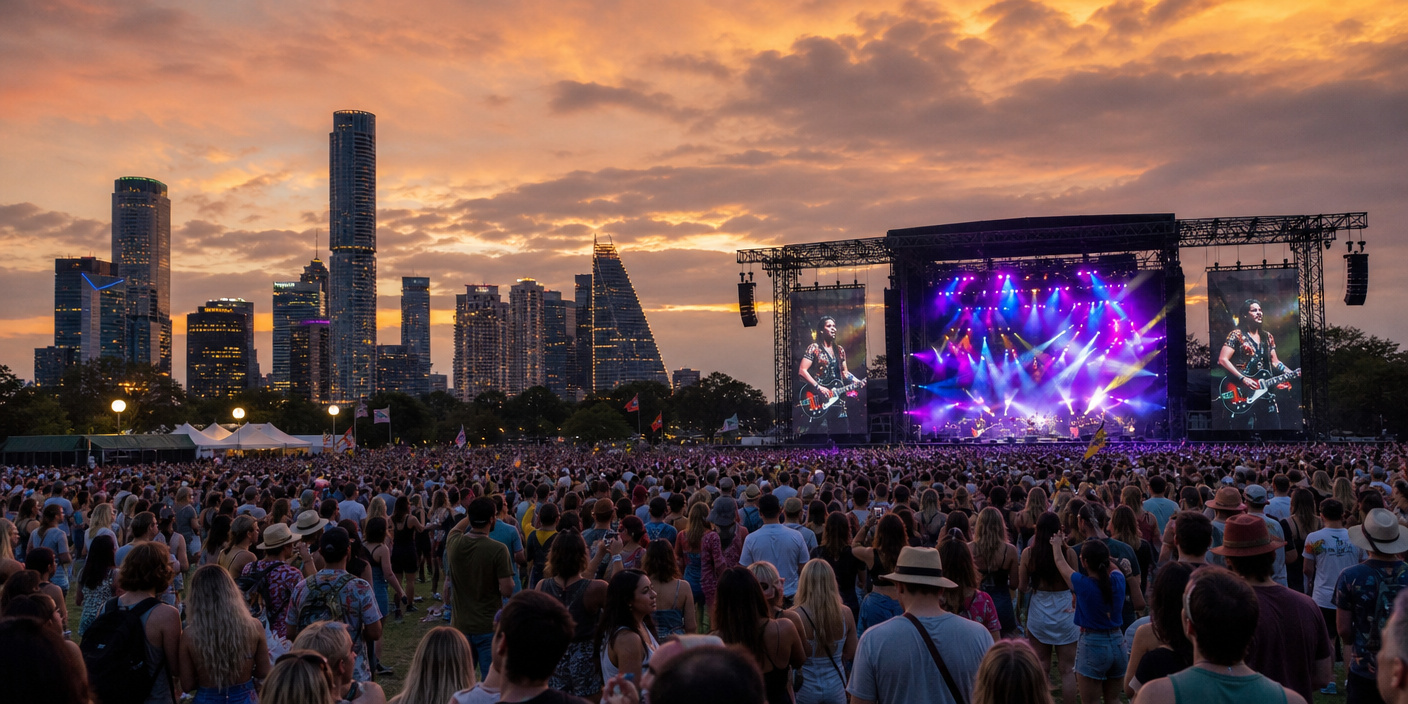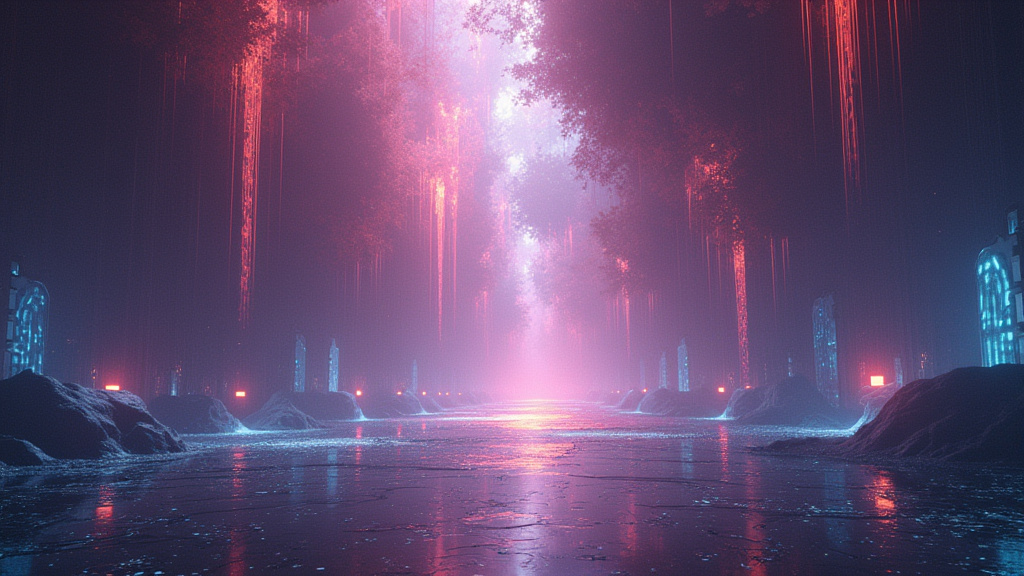
The AI-Palooza Festival, a premier showcase of artificial intelligence innovations, concluded yesterday with a significant focus on the burgeoning field of AI-generated art. Attendees were treated to cutting-edge demonstrations and discussions that highlighted the rapid advancements and creative potential of AI in artistic expression. The event underscored how AI is transforming traditional creative workflows and opening new avenues for artists and technologists alike.
Key Highlights:
- Groundbreaking AI art generators unveiled, pushing the boundaries of digital creativity.
- Expert panels debated the ethical implications and future of AI in art.
- Interactive installations allowed attendees to co-create art with AI.
- A surge in demand for AI art tools predicted by industry analysts.
AI’s Evolving Canvas
The AI-Palooza Festival this year was notably dominated by the art sector, with multiple sessions dedicated to the creation and curation of AI-generated visuals. Innovations in generative adversarial networks (GANs) and diffusion models were prominently featured, showcasing AI systems capable of producing images that are increasingly indistinguishable from human-created art. These systems, trained on vast datasets of existing artwork and imagery, can now generate novel pieces in a multitude of styles, from photorealism to abstract expressionism. The excitement surrounding these tools was palpable, with many artists viewing them not as replacements, but as powerful collaborators.
The Creative Partnership: Human and Machine
Discussions throughout the festival frequently returned to the concept of AI as a creative partner. Rather than a tool that simply automates, AI is being framed as a co-creator that can augment human imagination. “It’s about expanding our creative toolkit,” stated Dr. Evelyn Reed, a leading researcher in computational creativity. “AI can help us overcome creative blocks, explore unconventional ideas, and execute complex visual concepts that might be otherwise impossible.” The festival featured interactive exhibits where attendees could input prompts and parameters, guiding AI models to generate unique artworks in real-time, demonstrating this synergistic relationship firsthand.
Ethical Considerations and Future Trajectories
Alongside the technological marvels, the festival also delved into the critical ethical questions surrounding AI art. Concerns about copyright, originality, and the potential displacement of human artists were openly debated. Panelists explored the need for clear guidelines and regulatory frameworks to ensure responsible development and deployment of AI art technologies. The consensus leaned towards establishing new paradigms for attribution and intellectual property in the age of AI. Looking ahead, speakers predicted a future where AI art becomes increasingly integrated into various industries, from graphic design and game development to fashion and interior design, fundamentally altering creative production pipelines.
FAQ: People Also Ask
What are the latest advancements in AI art generation?
The latest advancements include more sophisticated generative models like advanced diffusion models that allow for greater control over style, content, and composition. AI can now produce highly detailed and contextually aware images from complex text prompts, and even generate short animations.
How is AI being used in art today?
AI is being used to generate novel artworks, assist artists in their creative process, create digital assets for games and films, and even generate personalized visual content for marketing and entertainment.
What are the ethical concerns surrounding AI art?
Key ethical concerns include copyright infringement, the potential devaluation of human artistic skill, the spread of misinformation through AI-generated images, and the ownership of AI-created works.
Will AI replace human artists?
Most experts believe AI will act as a tool or collaborator for artists, rather than a complete replacement. It is expected to change artistic workflows and create new opportunities, but the unique perspective and emotional depth of human artists are considered irreplaceable.
What is a diffusion model in AI art?
A diffusion model is a type of generative AI that learns to create data, such as images, by reversing a process that gradually adds noise to an image until it becomes pure static. By learning to reverse this noising process, the model can generate new, coherent images from random noise, often guided by text prompts.