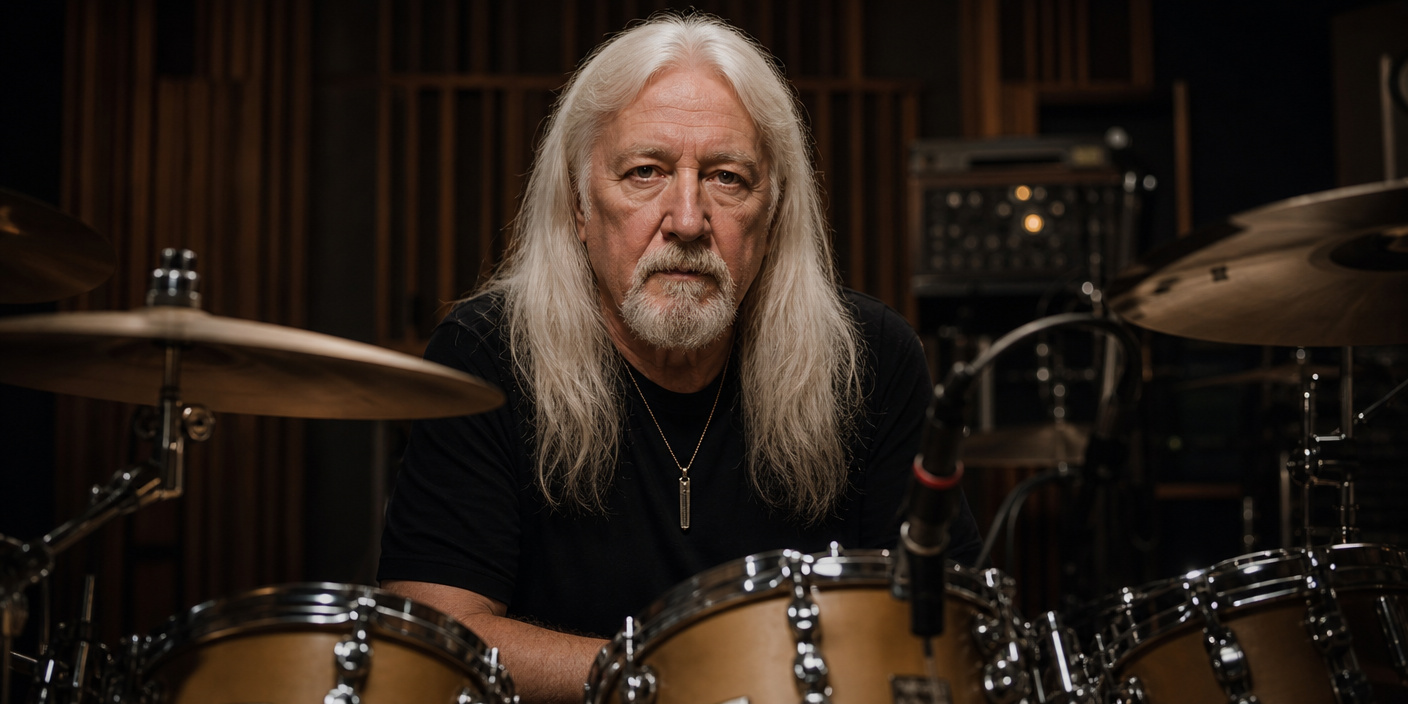
ZZ Top’s longtime drummer Frank Beard has died at the age of 77, marking a somber conclusion to a career that spanned over five decades of blues-rock history. The musician passed away in hospice care on August 17, leaving behind a profound legacy as the foundational heartbeat of one of the world’s most recognizable bands. His passing marks a significant moment in rock history, with bandmate Billy F Gibbons paying tribute to his innovative drumming style and unwavering professional dedication.
Key Highlights
- Date of Passing: Frank Beard died in hospice care on August 17 at the age of 77.
- Musical Legacy: Known for his precise, pocket-driven drumming, Beard was the rhythmic force behind ZZ Top since the band’s inception in 1969.
- Tribute: Bandmate and guitarist Billy F Gibbons has publicly honored Beard, specifically noting his unique drumming style that defined the band’s sound.
- Cultural Impact: Beard played an integral role in the band’s transition from 1970s blues-rock stalwarts to 1980s MTV superstars, helping bridge the gap between traditional blues and modern production.
The Architecture of the Groove: A Legacy Defined
The Foundations of a Texas Powerhouse
To understand the magnitude of Frank Beard’s career, one must look back to the humid music scene of Houston, Texas, in the late 1960s. Before the iconic beards and the custom hot rods, there was the music. Formed in 1969, ZZ Top emerged as a three-piece unit that would defy the conventional wisdom of the time, which favored larger lineups and complex, experimental instrumentation. Frank Beard, born in Frankston, Texas, brought a level of discipline and rhythmic solidity that allowed the two other members—guitarist Billy F Gibbons and bassist Dusty Hill—to explore the outer reaches of blues-inspired rock. Beard’s early work, particularly with his previous band American Blues, signaled a musician who understood that the drummer’s primary job was not to be the flashiest member on stage, but the most reliable.
When ZZ Top formed, the dynamic was immediate. While Gibbons and Hill became the visual centerpiece of the band—eventually growing the long, flowing beards that gave the group its aesthetic identity—Frank Beard offered a humorous, unintentional irony. Despite his last name being “Beard,” he remained the only member of the trio who famously kept his face clean-shaven, a playful subversion of the band’s public image that fans grew to love over the decades. However, his role was never comedic. He was the anchor, providing a swinging, tight, and syncopated beat that grounded the band’s often erratic and experimental blues exploration.
Mastering the Pocket: Technical Evolution
Beard’s drumming style was characterized by a deep understanding of “the pocket.” He never overplayed. In an era where rock drummers were often encouraged to fill every silence with complex rolls and cymbal crashes, Beard opted for restraint. This restraint is what allowed the band to survive the changing tides of musical trends. When rock morphed into disco, punk, and eventually new wave, Beard remained consistent. He served as the metronome against which Gibbons’ blues-drenched guitar licks could bounce and riff.
His technical adaptability was perhaps most evident during the band’s pivotal pivot in the early 1980s. With the release of Eliminator (1983), the band incorporated sequencers and synthesizers, creating a rigid, machine-like pulse that defined the MTV era. Many traditional rock drummers struggled to adapt to the constraints of the drum machine and the click track; Frank Beard, however, embraced it. He integrated electronic percussion with his natural playing, creating a hybrid sound that was unmistakably ZZ Top but completely modern. He proved that he wasn’t just a drummer of the 70s; he was an innovator who understood that the essence of a song is the rhythm, regardless of the instrument producing it.
The Billy Gibbons Connection
Following the passing of longtime bassist Dusty Hill in 2021, the band faced a crossroads. The bond between the three members was often described as telepathic. Billy F Gibbons has consistently cited Beard’s contribution not merely as a drummer, but as the essential architecture upon which the band’s sound was constructed. In his recent tribute, Gibbons remarked on the innovative spirit that Beard brought to the studio—a spirit that allowed the band to continually reinvent their sound without ever losing the grit of their Texas roots. This synergy is rare in rock music. Most power trios implode due to ego or creative stagnation, but ZZ Top’s core remained intact for over half a century, a testament to the quiet, steadfast leadership of its rhythm section.
Secondary Angles: Examining the Context
1. The Economic Engine of Touring Success: It is difficult to overstate the economic influence of ZZ Top. For decades, they were one of the most profitable touring acts in the world. Frank Beard’s rhythmic reliability was the backbone of this operation. His ability to perform at a high level night after night, often touring for months on end, allowed the band to maintain a rigorous schedule that sustained their commercial viability long after their contemporaries faded into obscurity.
2. The Cultural Geography of Texas Blues: The band’s identity is inextricably linked to Texas, and Frank Beard was a crucial element of that regional authenticity. While many rock bands of the 70s drifted toward generic sounds, Beard kept the band grounded in the Texas blues tradition. He wasn’t just a drummer; he was a custodian of a specific American musical dialect, ensuring that the “Texas Boogie” remained authentic even as it gained global popularity.
3. The Preservation of the Power Trio Format: The power trio is one of the most difficult formats in rock. With no rhythm guitarist or keyboardist to fill the space, the drummer bears a massive burden of responsibility. Frank Beard’s ability to fill the sonic space—not just with noise, but with thoughtful, syncopated rhythm—serves as a masterclass for future generations. His passing signals the end of an era where “less is more” was the guiding philosophy of rock success.
Frank Beard’s passing leaves a void that cannot be filled, but his contributions are cemented in the millions of records sold and the countless hours of live music that defined a generation. He was the quiet giant behind the kit, the steady hand in the storm of rock stardom, and a musician who defined the sound of a band that became a global cultural institution.
FAQ: People Also Ask
1. Was Frank Beard the original drummer for ZZ Top?
Yes. Frank Beard was a founding member of ZZ Top, having joined Billy F Gibbons and original bassist Lanier Greig in 1969. He remained with the band for the entirety of its existence, serving as the constant rhythmic force behind their hits.
2. Did Frank Beard actually have a beard?
Ironically, despite his last name, Frank Beard was the only member of the classic ZZ Top lineup who was famously clean-shaven for the majority of the band’s peak years. This became a running joke and a signature aspect of the band’s visual identity.
3. How did Frank Beard influence the band’s transition to the 1980s?
Beard was instrumental in the band’s successful integration of synthesizers and drum machines during the Eliminator era (1983). Unlike many rock drummers who resisted the shift toward electronic production, Beard expertly blended live drums with sequencers to create the band’s signature hybrid sound.
4. What was Frank Beard’s role in the band’s chemistry?
Beyond his role as a drummer, Beard was a stabilizer. Bandmates Billy F Gibbons and Dusty Hill relied on his “pocket” playing and syncopated style to anchor the band, allowing them the freedom to experiment with blues-rock riffs and sonic textures.