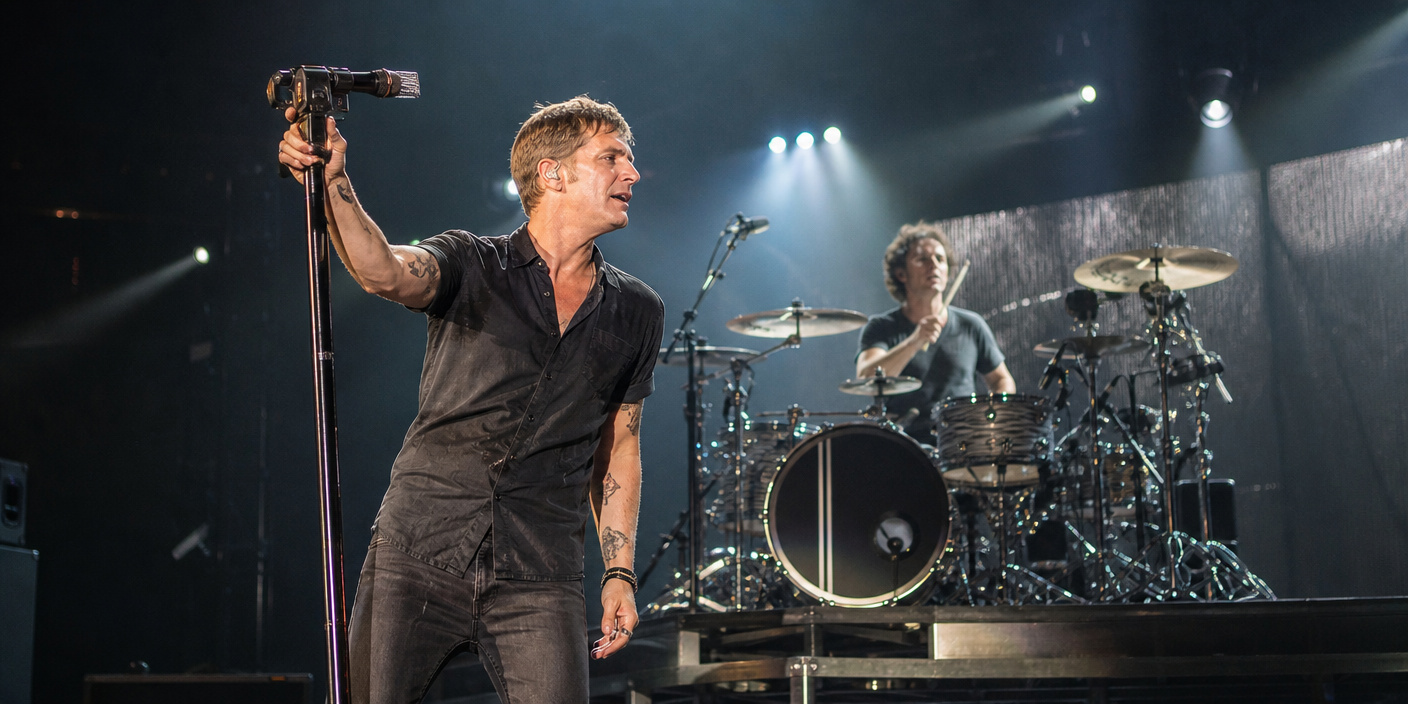
During a recent stop on their highly anticipated tour, the iconic alternative rock band Matchbox Twenty experienced a moment of unintended chaos that quickly captured the attention of the internet. Frontman Rob Thomas, known for his dynamic stage presence and iconic microphone maneuvers, accidentally struck drummer Paul Doucette with a microphone stand. The collision resulted in a brief but concerning pause as the technical team and medical personnel attended to Doucette, who suffered damage to his in-ear monitor that necessitated immediate medical extraction of debris.
Key Highlights
- Frontman Rob Thomas accidentally struck drummer Paul Doucette with a microphone stand during a high-energy live performance.
- The incident caused physical trauma that required the removal of fragments from Doucette’s in-ear monitor.
- Despite the sudden injury, the band maintained professional composure, illustrating the rigorous demands of professional touring.
- The mishap quickly went viral, highlighting the intersection of high-octane rock performances and the physical risks inherent in live music production.
The Anatomy of a Live Performance Mishap
The life of a touring musician is often romanticized, characterized by sold-out arenas, adoring crowds, and the rush of performing decades of hits. However, the incident involving Matchbox Twenty serves as a stark reminder of the physical, technical, and often hazardous nature of the stage environment. During a recent concert, the band’s rhythm and flow were interrupted by a rare, accidental collision. Rob Thomas, whose stagecraft is a staple of the Matchbox Twenty experience, was maneuvering his microphone stand—a common element in his performance style—when he inadvertently swung it into the path of drummer Paul Doucette.
While rock concerts are staged to feel spontaneous and wild, the physical proximity of band members is often tighter than it appears to the audience in the nosebleed sections. When the stand made contact with Doucette, it wasn’t just a matter of blunt force; the impact disrupted Doucette’s in-ear monitor (IEM), a sensitive piece of electronic audio equipment worn inside the ear canal. The impact shattered parts of the device, embedding small fragments near the drummer’s ear, which necessitated an immediate halt to the music to ensure Doucette received the necessary medical attention to remove the debris safely.
The Vulnerability of In-Ear Monitors
To understand the severity of the situation, one must look at the technology involved. In-ear monitors have become the gold standard for professional touring musicians, replacing traditional floor wedges to protect hearing and provide a tailored mix of the band’s audio. These devices are custom-molded to the musician’s ear and contain delicate electronics and hard acrylic or silicone casing. When struck, these devices do not merely fall out; they can crack, compress, or splinter. For Paul Doucette, the challenge was not just the pain of the impact, but the removal of these jagged materials from a sensitive area. This aspect of the injury turned what could have been a minor bruise into a genuine medical concern that required professional intervention on the side of the stage.
Tour Resilience and Band Camaraderie
Matchbox Twenty has remained a fixture in the music industry since their 1996 debut, Yourself or Someone Like You. Longevity in the music business, particularly for a band that has toured extensively for over 25 years, requires a specific level of camaraderie and resilience. The way the band handled this incident speaks volumes about their internal dynamics. Rather than allowing the moment to devolve into panic, the members and the crew transitioned into crisis management mode. This reflects the reality of modern touring: professional acts are supported by highly trained crews who are accustomed to handling everything from technical equipment failures to, in this case, medical mishaps.
The Digital Aftermath
In the age of social media, every moment of a concert is documented from hundreds of angles. The clip of the microphone stand striking Doucette traveled across platforms like TikTok and X (formerly Twitter) within hours. While the viral nature of the video focused on the shock value of the collision, it also brought a surge of support from fans who expressed relief that the injury was not more severe. The incident also sparked discussions among concert-goers regarding the dangers of stage design and the physical toll of live performance, a side of the industry that is rarely visible to the average listener.
FAQ: People Also Ask
Was Paul Doucette seriously injured?
While the incident required medical attention to remove fragments of his in-ear monitor from his ear, Doucette was treated by on-site medical staff. The quick response ensured that no permanent damage was sustained, and the band prioritized his safety above the continuation of the set.
Did the band stop the concert permanently?
No, the band remained professional. After ensuring Doucette was stable and the debris was removed, they were able to continue the performance. The event served as a testament to their professionalism and the safety protocols in place during their tours.
How does this affect the rest of the tour?
This incident is considered an isolated, accidental mishap. It has not impacted the scheduling or the integrity of the remaining tour dates. Matchbox Twenty continues to perform as planned, though it is likely that the band will implement even stricter spatial awareness measures during their sets.
Why do musicians use in-ear monitors?
In-ear monitors are essential for modern live performances. They allow musicians to hear a precise mix of vocals and instruments, protecting their hearing from the dangerously high sound pressure levels (SPL) present on large concert stages, and keeping them in time with click tracks or backing sequences.