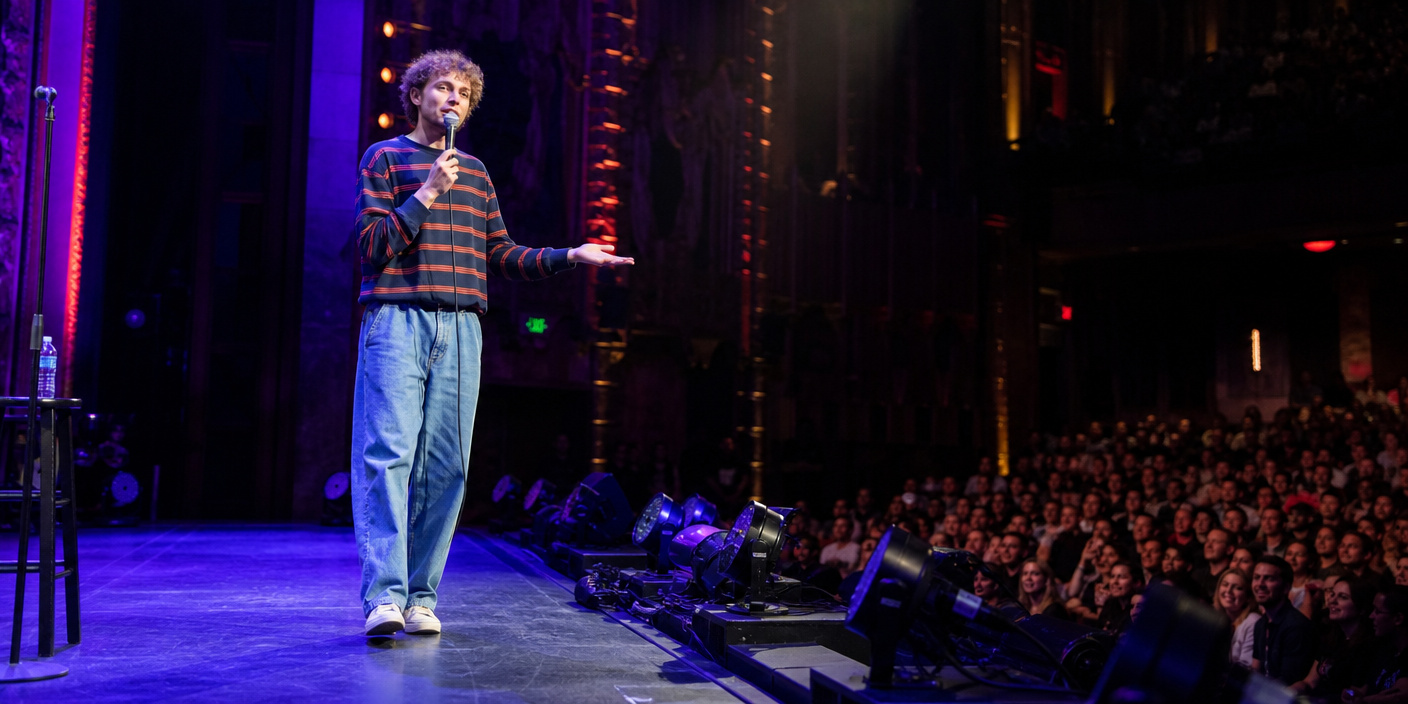
The digital landscape has long served as a testing ground for comedic talent, but few performers have successfully bridged the gap between a 60-second viral clip and a full-scale live theatrical experience quite like Kyle Gordon. With his ‘Kyle Gordon is Everywhere’ tour, the comedian is moving beyond the confines of smartphone screens, bringing his signature blend of absurdist humor, musical parody, and multi-character chaos to venues across the United States and Canada. This transition marks a significant moment in the evolution of modern entertainment, where internet-native creators are increasingly challenging the traditional boundaries of what constitutes a successful live show.
The ‘Planet of the Bass’ Effect and Beyond
To understand the magnitude of Kyle Gordon’s tour, one must look back at the catalyst of his astronomical rise: ‘Planet of the Bass.’ Released as a parody of 1990s Eurodance music, the track—featuring the larger-than-life character DJ Crazy Times—captured the global imagination. It wasn’t just a funny video; it was a masterclass in genre-specific nostalgia, tapping into the hyper-specific aesthetic of low-budget European music videos. Gordon’s ability to deconstruct and reconstruct these cultural tropes resonated with millions, turning a parody song into a genuine global earworm.
However, the ‘Kyle Gordon is Everywhere’ tour is not a one-note act. By curating an album of diverse parodies, Gordon has demonstrated that his brand of comedy is rooted in versatility. The show serves as an immersive exploration of his catalog, moving through various characters—from the Eurodance DJ to the sensitive singer-songwriter and the hip-hop braggart. By bringing these characters to life, Gordon is effectively creating a new form of digital-first vaudeville, where the quick-cutting nature of social media is replaced by a sustained, high-energy narrative arc.
Anatomy of a Multi-Character Performance
What sets this tour apart, according to Gordon, is the sheer technical difficulty of executing multiple, distinct personas within a single evening. The show is designed as a theatrical performance rather than a traditional stand-up set. Each character requires a complete shift in costume, vocal cadence, and physical mannerisms. This creates a challenging dynamic for the performer, but an engaging experience for the audience.
The live show capitalizes on the ‘uncanny’ nature of his characters. In the digital realm, fans are used to seeing these figures in isolated, polished clips. On stage, they are forced to inhabit the same space, interacting with each other and the audience in real-time. This interaction is the cornerstone of Gordon’s claim that “you will never see another show like it.” The spontaneity of live performance allows for moments of improvisation that digital media simply cannot replicate, turning the show into a living, breathing extension of his online brand.
The Logistics of a Viral-Born Tour
Translating viral content to a multi-city tour involves significant logistical hurdles. Unlike traditional touring musicians who can rely on a consistent stage persona, Gordon must manage a high-stakes transition between segments. The production values are surprisingly robust, aiming to replicate the ‘lo-fi’ charm of his videos while ensuring that the sound quality is crisp enough to satisfy a concert-going crowd.
Industry analysts note that this tour represents a shifting trend in the entertainment business. As creators move away from relying solely on platform algorithms and toward direct-to-fan monetization via touring, they are forcing established venues to adapt to a new type of act. The ‘Kyle Gordon is Everywhere’ tour is not just a comedy show; it is an experiment in how digital-first creators can leverage global reach to fill mid-to-large-scale venues. The demand across North America indicates that the audience is eager for this type of hybrid entertainment—a blend of polished production and self-aware, internet-native irony.
Cultural Significance: The Future of Parody
Gordon’s work exists in a unique space of cultural commentary. By parodying specific genres, he isn’t just making fun of them; he is documenting the cultural memory of those styles. His work functions as a bridge, connecting the Gen Z audience that discovered him on TikTok with the older demographics who might recognize the specific music styles he mimics. This cross-generational appeal is likely what has allowed him to sustain such long-term interest.
As the tour progresses, it remains a bellwether for the future of digital-born entertainment. If Gordon continues to sell out venues, it will likely pave the way for other high-concept, multi-character comedians to move from the ‘For You’ page to the main stage. The success of this tour suggests that the future of comedy lies in this kind of high-concept, genre-bending performance art—where the barrier between the creator and the digital construct is blurred, and the audience is invited into the absurd, neon-soaked world that Gordon has built from the ground up.