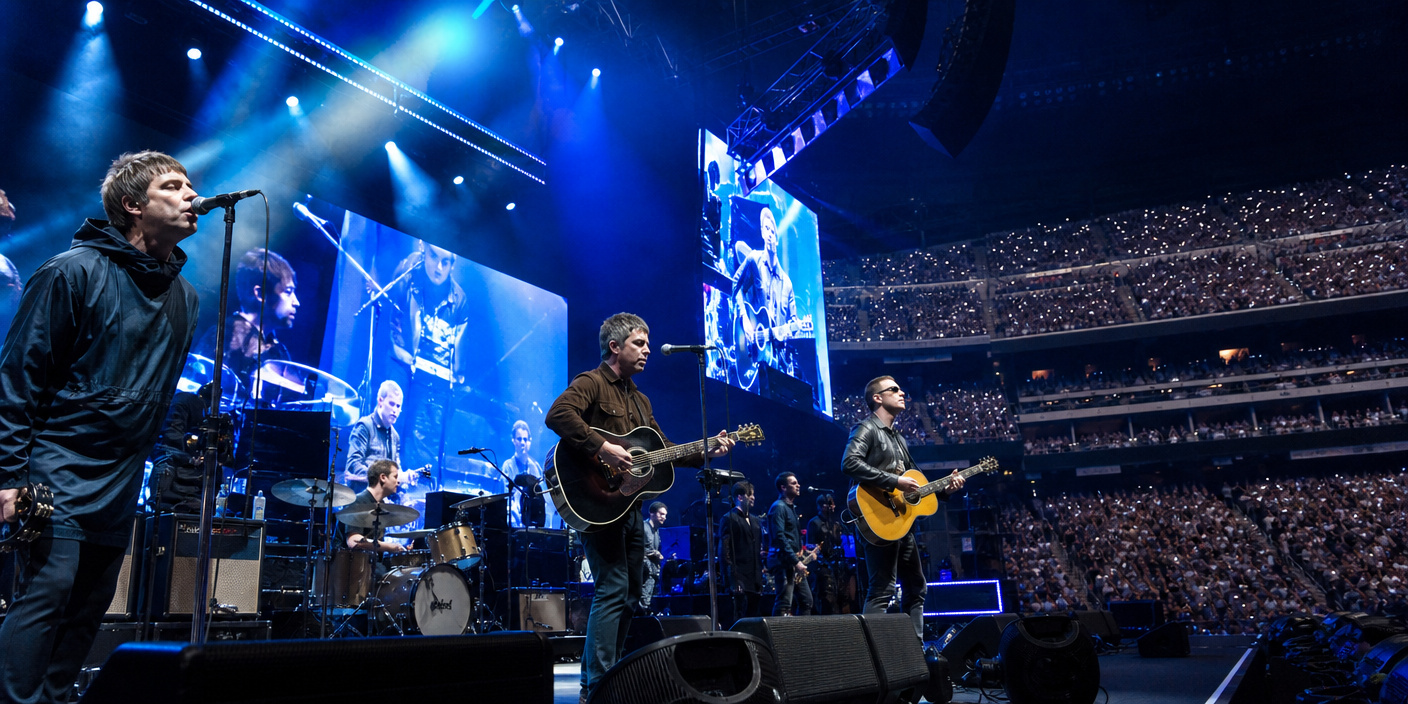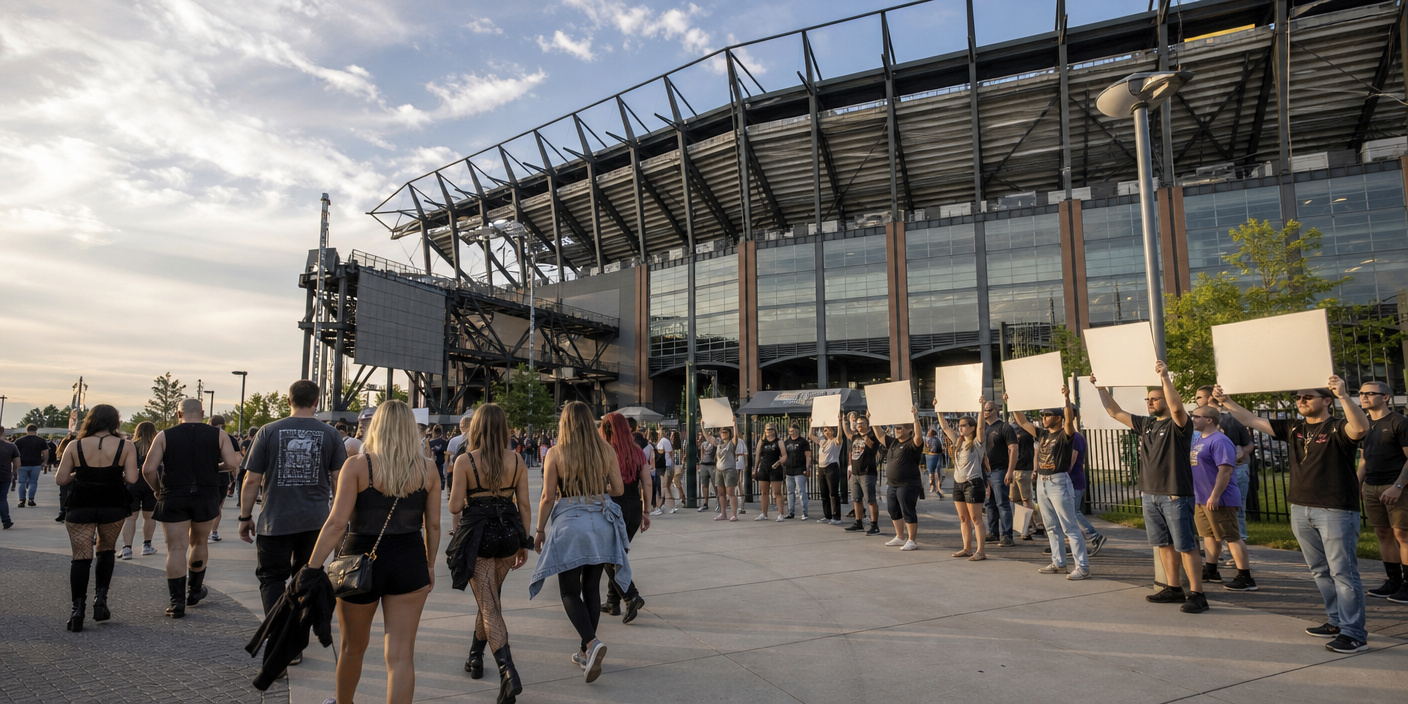
The atmosphere surrounding Ed Sheeran’s recent Philadelphia concert on the ‘Mathematics Tour’ was a stark reminder that in the modern era, the stage is rarely just a place for music. As thousands of fans flooded into the venue, a significant and vocal group of pro-Palestinian protesters gathered outside, turning the site of a pop performance into a flashpoint for geopolitical discourse. The intensity of the scene—and the rhetoric surrounding it—has brought the singer’s public positioning and his professional associations into sharp focus, leaving many to wonder if the ‘Mathematics Tour’ has inadvertently become a venue for broader societal conflict.
Key Highlights
- Protest Activity: A concentrated group of pro-Palestinian activists demonstrated outside the Philadelphia venue, demanding acknowledgment of the humanitarian crisis in Gaza.
- The Macklemore Discourse: The tension was exacerbated by discussions regarding Macklemore’s vocal stance on the conflict, leading to rumors and controversies regarding the management of supporting acts on the tour.
- The ‘Betrayed’ Narrative: The sentiment of feeling ‘betrayed’ has emerged as a central theme, reflecting a disconnect between fans, the artist, and the expectations of political alignment in 2024.
- Industry Precedent: The event underscores a growing trend where global pop stars face increasing pressure to utilize their massive platforms for political advocacy, turning concert logistics into political statements.
The New Reality of Stadium Performance
For decades, the stadium tour was viewed primarily through the lens of entertainment—a spectacle of sound, light, and performance. However, Ed Sheeran’s recent Philadelphia date highlights a distinct shift. The presence of protesters at the venue was not merely an ancillary event; it was a reflection of a deeply polarized public that views the concert experience as an extension of the cultural battlefield.
The Anatomy of the Philadelphia Protest
On the night of the concert, the perimeter of the Philadelphia venue was transformed. Where one would typically expect to see merchandise vendors and ticket lines, protesters were instead demanding that public figures take definitive stances on the Israel-Hamas war. This was not a random gathering; it was a targeted effort to leverage the immense media attention surrounding a global star to bring visibility to their cause. The protesters sought to bridge the gap between Sheeran’s massive audience and the harsh realities of a conflict thousands of miles away.
For Sheeran, whose brand is built on accessibility, guitar-driven intimacy, and a general sense of ‘everyman’ relatability, this intrusion of high-stakes politics poses a complex dilemma. The ‘Mathematics Tour,’ which has been a triumph of logistical and artistic success, suddenly found itself navigating the treacherous waters of political neutrality. Is silence a form of complicity, or is the concert stage a sanctuary from the exhaustion of the news cycle? This question is now being asked with increasing volume by fans and activists alike.
The Macklemore Connection: A Catalyst for Tension
Much of the heat surrounding the tour involves the discourse regarding Macklemore. As a prominent artist who has been unflinchingly vocal about the Palestinian cause, Macklemore’s perceived relationship with the tour’s broader lineup became a lightning rod.
Misunderstandings regarding his inclusion or exclusion from the lineup led to a wave of online speculation and, eventually, real-world action. The situation underscores a critical issue in modern tour management: the ‘guilt by association’ narrative. When fans feel that an artist is being sidelined or removed due to their political stance, the backlash is swift and severe. Whether or not administrative decisions were made based on political pressure, the perception of such actions was enough to trigger a wave of vitriol. This incident serves as a case study in how social media discourse can rapidly translate into physical demonstrations, forcing artists to navigate a public relations landscape that is increasingly volatile.
The Burden of Celebrity Neutrality
Ed Sheeran represents the archetype of the modern global superstar who has historically avoided the political fray. Yet, as the lines between entertainment and activism blur, this neutrality is becoming harder to maintain. The ‘betrayal’ felt by some fans stems from a misunderstanding of what a concert is ‘supposed’ to be. Some attendees feel that by ignoring the political climate, the artist is participating in a culture of erasure. Conversely, other fans argue that music should remain a refuge—a place where political anxieties are left at the door.
This division is not unique to Sheeran. We have seen similar pressures applied to Taylor Swift, Beyoncé, and other top-tier touring acts. The difference, however, is the specificity of the Philadelphia incident. It was not a general call for activism; it was a specific reaction to the perceived silencing of voices within the musical community. This is a bellwether moment for the live music industry. Artists can no longer assume that their tour dates will occur in a vacuum, insulated from the external pressures of the world.
Looking Ahead: The Future of the Mathematics Tour
As the tour continues, the management team faces a persistent challenge: how to balance the creative integrity of the show with the inescapable reality of global politics. The Philadelphia incident was not a one-off; it was a symptom of a larger, systemic shift. Future tour stops may find themselves subject to similar scrutiny. The key for Sheeran and his team will be in managing communication and expectations.
If the goal of the ‘Mathematics Tour’ is to provide a unifying experience, the path forward requires a deft hand. Ignoring the political undercurrents will likely lead to more friction, but engaging in them risks alienating the very base that the tour is designed to serve. It is a precarious balancing act, and one that will likely define the next chapter of the music industry’s relationship with its global audience.
FAQ: People Also Ask
Q: Why was there a protest at the Ed Sheeran concert?
A: Pro-Palestinian protesters gathered outside the Philadelphia venue to demand greater awareness of the conflict in Gaza and to protest against what they perceive as the silencing of artists who speak out on the issue, particularly in relation to the discourse around Macklemore’s tour involvement.
Q: Did Ed Sheeran actually address the ‘betrayed’ sentiment?
A: While there is a strong sentiment of ‘betrayal’ circulating within activist circles regarding the tour’s handling of specific artists and political silence, Sheeran has largely kept the focus on his music, navigating a strategy of staying clear of divisive political debates.
Q: Is the ‘Mathematics Tour’ effectively being used as a platform for protest?
A: Unintentionally, yes. The high profile of the tour makes it an attractive target for activists looking to gain visibility. While the tour is not political in content, the environment surrounding it has become a platform for activists to express their grievances.
Q: Has the controversy impacted ticket sales or tour attendance?
A: To date, there is no evidence that the protests or the surrounding controversies have significantly dented the commercial success of the ‘Mathematics Tour,’ which continues to sell out stadiums globally, though it has impacted the online discourse surrounding the tour’s legacy.