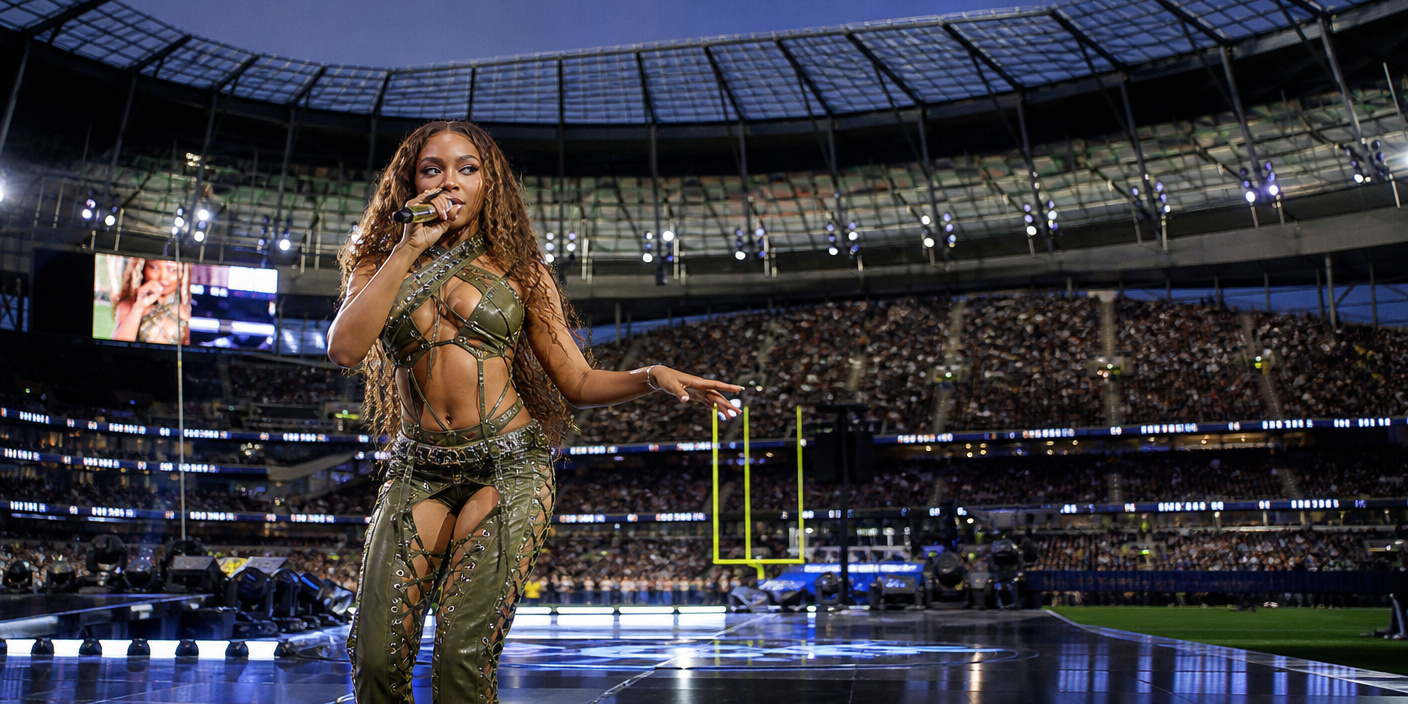
Nigerian superstar Ayra Starr has officially cemented her status as a global icon, becoming the first African artist to headline an NFL International Games halftime show. Performing at London’s Tottenham Hotspur Stadium during the high-stakes matchup between the Philadelphia Eagles and the Jacksonville Jaguars, the “Bloody Samaritan” singer delivered a performance that bridged the gap between African musical dominance and American professional sports culture. This historic moment not only highlighted Starr’s meteoric rise but also signaled a significant shift in how the NFL approaches its global brand expansion, increasingly leveraging the world’s most influential cultural voices to engage international audiences.
Key Highlights
- Historic First: Ayra Starr becomes the first African artist to headline an NFL International Games halftime show.
- The Setting: The performance took place at the state-of-the-art Tottenham Hotspur Stadium in London.
- The Event: The historic set occurred during the Philadelphia Eagles versus Jacksonville Jaguars international fixture.
- Cultural Impact: Marks a strategic integration of Afrobeats into the mainstream American sports ecosystem.
- Global Reach: Solidifies the NFL’s commitment to cultural resonance within its international expansion markets.
The Cultural Catalyst: Afrobeats Meets the Gridiron
The selection of Ayra Starr to lead the halftime proceedings at the Tottenham Hotspur Stadium was far from a mere entertainment booking; it was a calculated maneuver representing the collision of two of the world’s most powerful cultural exports. In recent years, the NFL has aggressively expanded its international footprint, with London serving as the cornerstone of this strategy. By inviting an artist who embodies the current “Afrobeats-to-the-World” movement, the league is effectively capturing the zeitgeist of modern music while simultaneously deepening its roots in the UK—a market where Afrobeats has seen an unprecedented cultural surge.
For Ayra Starr, the opportunity represented a pivot point in a career already defined by rapid international accolades. Since her breakthrough, she has consistently been at the forefront of the new wave of Nigerian talent gaining traction in North America and Europe. Performing at an NFL game—an event characterized by its massive TV viewership and corporate prestige—places her in a rarefied echelon of global entertainers, validating the legitimacy of the Nigerian music industry on a platform historically dominated by American pop and R&B.
Why London’s Tottenham Hotspur Stadium Was the Ideal Stage
The Tottenham Hotspur Stadium has quickly become the NFL’s preferred European home, boasting a bespoke field designed specifically for football. This venue provides the perfect acoustic and aesthetic backdrop for a high-profile music performance. The architectural design of the stadium allows for an intimate yet thunderous atmosphere that differs significantly from the cavernous open-air stadiums in the United States. For a performer like Ayra Starr, who relies on high-energy choreography and intricate vocal delivery, the stadium’s advanced sound infrastructure ensured that the nuances of her Afrobeats soundscape reached every corner of the venue without the muddiness often associated with large-scale stadium performances.
Furthermore, the London audience presents a unique demographic mix. The city is a melting pot of cultures, and the fanbase for the Eagles vs. Jaguars game was as diverse as the music Starr brings to the table. This symbiosis between the audience’s cultural background and the performer’s origin created an electric atmosphere that is rarely achieved in traditional U.S. domestic games, effectively turning the halftime show from a standard intermission into a primary event.
Breaking Barriers: The Strategic Alignment of Music and Sport
The inclusion of an African artist in a primetime NFL slot underscores a broader strategy of “cultural diplomacy” through sports. Music has long been the NFL’s primary vehicle for elevating halftime shows into cultural milestones—think of the Super Bowl halftime spectacles that define pop culture conversations for weeks. By bringing this same level of curation to the International Games, the NFL is elevating these matches from being viewed as “exhibition” or “niche” games into must-watch entertainment events.
This move also highlights the shifting economic power of African entertainment. As streaming data continues to show, African artists are no longer “niche” or “regional”; they are global chart-toppers. Organizations like the NFL are clearly pivoting to reflect this data, realizing that engagement in international markets requires genuine representation rather than imported American-centric pop culture. Ayra Starr’s performance serves as a blueprint for how the league will likely approach future international marketing, focusing on local heroes who resonate globally.
What’s Next: Expanding the Global Reach of the NFL
Looking forward, the success of this performance will likely lead to an increase in cross-continental collaborations between the NFL and international stars. The league is currently looking to expand into other global regions, including Brazil, Germany, and potentially Africa itself. By establishing a track record of supporting diverse, global voices, the NFL is positioning itself as a platform that recognizes and nurtures international talent. For Ayra Starr, the impact of this performance is multifaceted: it opens doors for more lucrative sponsorship deals, increases her visibility to American football fans who may not have been previously exposed to her catalog, and establishes a historical precedent that will be cited in every future discussion regarding African representation in global sports and entertainment.
FAQ: People Also Ask
Who is Ayra Starr and why is she significant?
Ayra Starr is a Nigerian Afrobeats singer-songwriter who rose to international fame with hits like “Bloody Samaritan” and “Rush.” She is considered one of the most influential voices in the current generation of African artists, known for her unique vocal style and fashion-forward aesthetic.
Why was her performance considered ‘historic’?
Her performance was historical because she was the first African artist to ever headline a halftime show during the NFL International Games. This represents a significant milestone for African representation in global sports entertainment.
Where was the performance held?
The performance occurred at Tottenham Hotspur Stadium in London, England, during the NFL International Games matchup between the Philadelphia Eagles and the Jacksonville Jaguars.
How does this impact the NFL’s global strategy?
It demonstrates the NFL’s strategic shift to prioritize cultural relevance in international markets. By booking a major African artist, the NFL is connecting with diverse global demographics and elevating the entertainment value of their games played outside of North America.