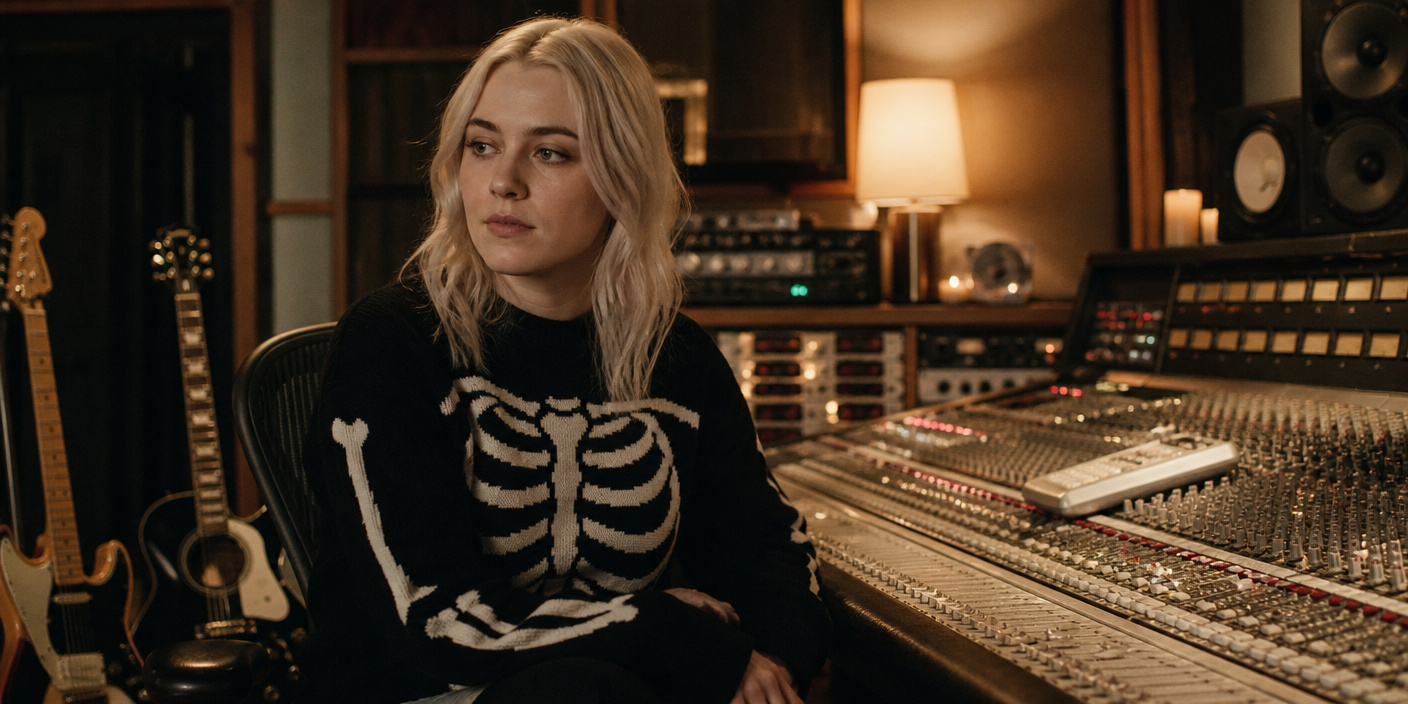
The August 14 release cycle marks a significant turning point in the mid-summer musical landscape, signaling a shift toward introspective songwriting and high-energy global pop synchronization. As New Music Friday dominates the industry discourse, the arrival of Phoebe Bridgers’ new solo album, ‘Lost Weekend’, sits at the epicenter of a diverse day for listeners and critics alike. Joining this release are new offerings from global phenomenon KATSEYE, the enduring alternative rock stalwarts The Script, and the consistently innovative Jungle, creating a mosaic of sounds that reflects the current fragmented yet vibrant state of streaming consumption. This week, we analyze not just the music, but the strategic positioning of these major releases within an increasingly competitive global market.
The Resurgence of the Solo Auteur: Phoebe Bridgers
The most anticipated arrival of the week, without question, is Phoebe Bridgers’ ‘Lost Weekend’. Bridgers, who has spent the last several years building a reputation as both a prolific collaborator—through her work with boygenius and various high-profile features—and a singular songwriter, returns here to the solo spotlight. ‘Lost Weekend’ arrives at a pivotal moment in the indie-folk ecosystem. The album, characterized by its signature lyrical transparency and nuanced production, represents an evolution in her sonic narrative. Industry analysts are closely watching the performance of ‘Lost Weekend’ as a barometer for the ‘auteur effect’ in modern streaming: the ability for a single artist to command massive, sustained attention in a market that is increasingly geared toward short-form, viral hits. Bridgers’ refusal to conform to the quick-hit aesthetic suggests a continued appetite for ‘slow-burn’ album listening experiences.
Global Pop and Legacy Acts: KATSEYE and The Script
Contrasting the introspective nature of Bridgers’ work, this Friday also highlights the sheer force of globalized pop and legacy-driven alternative rock. KATSEYE’s latest release represents the intersection of K-pop training systems with Western market penetration—a strategy that has fundamentally altered the Billboard charts over the last eighteen months. Their presence on this week’s release calendar underscores the aggressive pace at which new music is being pushed to reach a transcontinental audience.
Parallel to this, The Script provides a stabilizing force. Having solidified their brand of stadium-ready anthemic rock over more than a decade, their latest output speaks to the resilience of legacy bands in the streaming era. While many mid-career artists struggle to maintain relevancy amidst the algorithmic shifts of digital service providers (DSPs), The Script’s consistent adherence to a proven, emotive rock formula ensures they retain a locked-in demographic that values thematic consistency over experimental trend-chasing. This duality—the experimental nature of new-gen global acts and the reliability of established rock outfits—is the defining tension of this week’s playlist.
The Sonic Texture of Jungle
Rounding out this notable collection of releases is Jungle, whose contributions to this week’s cycle lean heavily into the sophisticated, electronic-soul territory they have occupied so successfully. Jungle’s production style, which blends analog instrumentation with polished, modern production techniques, serves as the perfect bridge between the organic feel of Bridgers and the high-energy, choreographed pop of KATSEYE. Their addition to the August 14 roster ensures that the week’s release schedule feels balanced, offering something for the sophisticated listener while maintaining the momentum required by contemporary streaming platforms. The interplay between these four distinct artists suggests a broader industry trend toward diversification, where DSPs are actively prioritizing ‘genre-blind’ programming to maximize user retention throughout the weekend.
Strategic Implications for the Q3 Music Market
Looking beyond the tracks themselves, the timing of these releases—mid-August—is strategic. As the music industry prepares for the ‘Back to School’ marketing window and the lead-up to the lucrative Q4 holiday season, this August 14 drop acts as a crucial ‘mid-point’ correction. Labels are testing the appetite for various genres, measuring engagement statistics across major platforms like Spotify and Apple Music to refine their promotional strategies for the autumn. The performance of these albums will likely dictate marketing budgets for the final quarter of the year, making this week’s data points arguably more important to industry executives than the actual charts themselves. We are witnessing a calculated effort to maintain engagement levels before the traditional ‘fall rush’ of blockbuster releases.
FAQ: People Also Ask
Q: What makes this week’s New Music Friday significant?
A: This week is significant due to the diverse mix of artists releasing simultaneously. It combines the high-anticipation solo return of Phoebe Bridgers with global pop efforts from KATSEYE and established rock anthems from The Script, providing a snapshot of the current breadth of global music consumption.
Q: Why is Phoebe Bridgers’ ‘Lost Weekend’ considered a major release?
A: Bridgers has significant cultural cachet. Her ability to translate deep, indie-folk songwriting into mainstream commercial success makes her new album, ‘Lost Weekend’, a bellwether for the ‘auteur’ model in modern music, where individual artistic vision remains a primary driver of album sales.
Q: How do acts like KATSEYE fit into the current streaming landscape?
A: KATSEYE represents the globalization of pop music. By leveraging international training models and multi-market promotional strategies, they are designed to appeal to a borderless digital audience, demonstrating how K-pop-inspired methodologies are successfully integrating into the Western mainstream.
Q: What does the inclusion of Jungle tell us about the music market?
A: Jungle’s presence emphasizes the industry’s continued interest in high-fidelity, production-forward electronic soul. Their success demonstrates that there is still a substantial, profitable market for ‘vibe-based’ music that relies on sophisticated arrangements rather than just hook-heavy pop formulas.