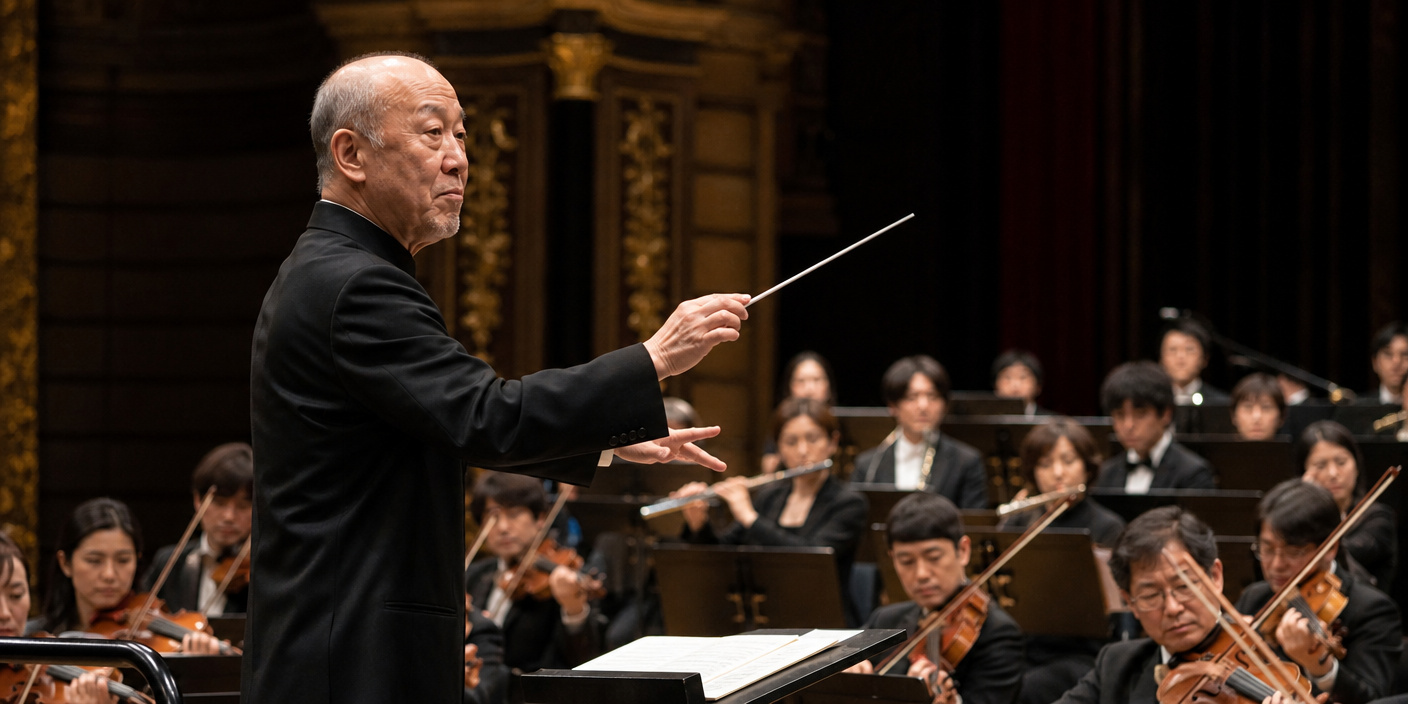
Joe Hisaishi, the world-renowned maestro and architect of modern cinematic soundscapes, has officially entered a new, expanded phase of his illustrious career. In a major development for the classical music industry, the Japanese composer, conductor, and pianist has extended his landmark partnership with the legendary classical label Deutsche Grammophon. This new agreement signals a commitment to a massive multi-year project involving unprecedented studio recordings and an exhaustive international concert tour that will span North America, Europe, and Asia, stretching the horizon of his live performances through 2030.
Key Highlights
- Extended Partnership: Joe Hisaishi has deepened his exclusive relationship with Deutsche Grammophon to produce a new slate of genre-defining studio albums.
- Global Tour Expansion: The maestro has announced an ambitious, long-range touring schedule that brings his orchestral works to major venues across North America, Europe, and Asia.
- Long-Term Strategic Outlook: The current agreement secures Hisaishi’s concert and recording commitments through the year 2030, marking one of the most stable and forward-looking contracts in contemporary classical music.
- Genre-Bridging Impact: The collaboration aims to further cement the legitimacy of film-score composition within the traditional classical canon, following a series of record-breaking sold-out concerts.
The Maestro’s New Era: Expanding the Classical Canon
The extension of Joe Hisaishi’s partnership with Deutsche Grammophon (DG) is more than a simple contract renewal; it represents a fundamental shift in how the classical music industry approaches crossover artists. For decades, Hisaishi has occupied a unique space—revered for his collaborative works with director Hayao Miyazaki and Studio Ghibli, yet increasingly recognized for his standalone symphonic compositions. By doubling down on this relationship with the ‘Yellow Label,’ Hisaishi is signaling a permanent transition into the highest echelons of the classical recording tradition.
Bridging the East-West Musical Divide
One of the primary goals of this new initiative is the rigorous exploration of Hisaishi’s body of work through a symphonic lens. Unlike standard soundtrack releases, the upcoming studio sessions are expected to focus on high-fidelity, definitive orchestral recordings of his major works, including his symphonies and chamber music. This strategy serves to curate a ‘legacy collection’ for DG, ensuring that his compositions are preserved with the same technical precision afforded to masters like Beethoven or Mahler. For the listener, this means a shift in perspective: Hisaishi’s music is being framed not merely as accompaniment, but as autonomous musical literature.
The Economics of the ‘Hisaishi Effect’
The decision to map out a performance schedule through 2030 speaks to the unprecedented demand for Hisaishi’s live presence. In an era where classical music often struggles to attract younger audiences, Hisaishi has become an anomaly. His recent concerts in hubs like London, Paris, and New York have seen record-breaking attendance figures, often attracting demographics that rarely frequent symphony halls. The ‘Hisaishi Effect’—the ability to turn orchestral performances into high-demand, high-revenue cultural events—has made him a cornerstone of modern classical concert programming. By securing his presence for the next several years, international promoters and symphonies are ensuring a consistent draw for the remainder of the decade, stabilizing the financial outlook for classical music organizations that host these tours.
Artistic Philosophy in the 2030 Vision
As Hisaishi approaches his ninth decade, his creative output has shown no signs of slowing. His current artistic philosophy emphasizes a ‘return to basics’—a focus on the raw, emotional power of the orchestra without the constraints of film editing. In recent interviews, Hisaishi has noted the importance of the ‘dialogue’ between the conductor and the orchestra, a conversation that is best captured in the live setting. The extension through 2030 allows for a systematic rollout of both new compositions and revised orchestrations of his most iconic melodies, ensuring that the evolution of his sound is documented in real-time.
The Future of Orchestral Cinema
As this collaboration unfolds, industry analysts are watching closely to see how the partnership influences the broader market for film music. We are seeing a blurring of lines between popular film scores and high-art classical performance. Hisaishi’s work is currently acting as a bridge, successfully bringing the global fan base of anime and film into the world of the concert hall. This strategy not only benefits DG’s catalog but also revitalizes the relevance of symphonic music in an increasingly digital world. The success of this 2030 roadmap could set a new blueprint for how labels manage their top-tier talent, shifting away from project-based contracts toward long-term, career-encompassing relationships.
FAQ: People Also Ask
Q: What is the significance of the Deutsche Grammophon partnership for Joe Hisaishi?
A: Deutsche Grammophon is one of the most prestigious classical music labels in the world. Being signed to this label validates Hisaishi’s work as ‘serious’ classical music, moving beyond the label of ‘soundtrack composer’ to that of a contemporary symphonic master.
Q: Where can fans expect to see Joe Hisaishi perform during this tour?
A: The tour is comprehensive, covering major metropolitan markets across North America, Europe, and Asia. Exact dates are rolled out in phases to accommodate his studio recording schedule, focusing on major symphony halls and iconic concert venues.
Q: Will this tour include only music from Studio Ghibli films?
A: While the Ghibli scores are central to his fame, the current DG recordings and live performances emphasize a wider scope, including his original symphonic pieces, chamber music, and concertos, showcasing his breadth as a total composer.
Q: How does this impact the future of his career?
A: By extending his commitments through 2030, Hisaishi is essentially creating a definitive ‘encyclopedia’ of his own work, ensuring that his legacy is recorded according to his own artistic standards and performed globally in major cultural centers for years to come.