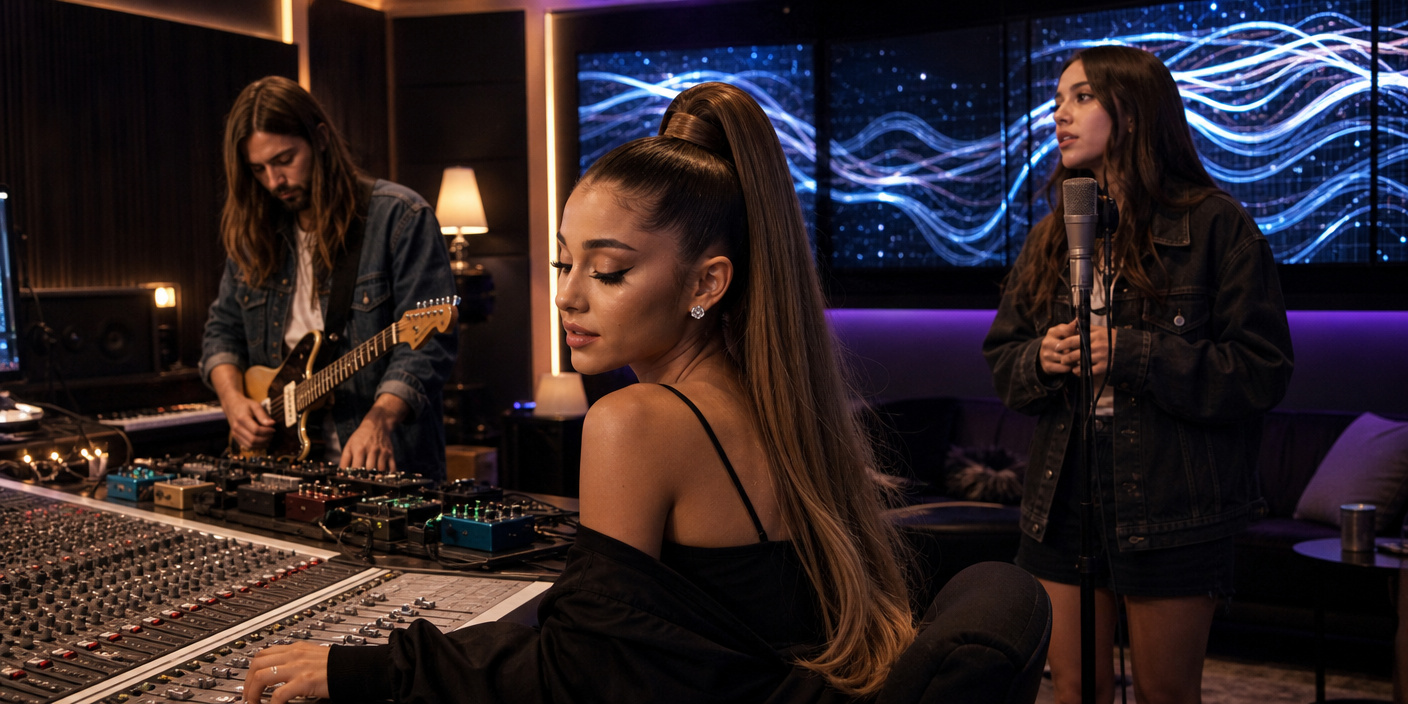
Charli xcx has long positioned herself as the vanguard of experimental pop, and with her latest studio album, ‘Music, Fashion, Film’, she solidifies her status as the genre’s most provocative architect. Moving away from the radio-friendly structures of her early career, this 11-track collection serves as an unflinching dissection of the artistic process and the isolation inherent in global stardom. By stripping back the polished veneer of modern pop production, Charli delivers a project that is equal parts vulnerable, jarring, and undeniably essential.
Key Highlights
- 11-Track Genre-Averse Opus: The album rejects traditional pop structures, favoring chaotic, raw, and experimental soundscapes.
- The Fame Paradox: A core thematic exploration of the double-edged sword of celebrity and the loss of personal identity.
- Artistic Control: Charli exerts total creative autonomy, moving further into the ‘contrarian’ space that defines her brand.
- Industry Commentary: The album serves as a meta-commentary on the current state of the music business and the commodification of art.
The Anatomy of a Contrarian Masterpiece
The most striking aspect of ‘Music, Fashion, Film’ is its refusal to adhere to the algorithmic pressures of contemporary streaming culture. In an era where many artists optimize songs for short-form video platforms, Charli xcx has engineered a soundscape that actively demands the listener’s undivided attention. The album, comprised of 11 tracks, operates with a ‘genre-averse’ philosophy, pulling elements from industrial techno, lo-fi bedroom pop, and dissonant hyper-pop to create a collage of sound that feels both futuristic and fundamentally broken.
Sonic Deconstruction
Each track acts as a sonic document of the artistic struggle. Where previous albums might have favored the anthemic hook, this record opts for textures that grate and unsettle. The production choices—often leaning into distorted bass lines and unexpectedly abrasive vocal layering—are not merely stylistic flourishes; they are thematic anchors. They represent the internal noise of fame. When Charli sings about the complexities of her public image, the music swells with a claustrophobic intensity, effectively mirroring the experience of being constantly watched yet never truly seen.
The Thematic Weight of Fame
Lyrically, the album is a profound pivot. While celebrity culture has always been a subject for pop artists, Charli treats it with a clinical, almost autopsy-like precision. She explores the ‘Music, Fashion, Film’ trinity mentioned in the title as three distinct pillars of her own exploitation. The lyrics traverse the exhaustion of the ‘fashion’ cycle—the endless demand for aesthetic updates—and the ‘film’ of her life, a curated narrative that often diverges sharply from her private reality. It is a deeply meta-textual work that invites fans to participate in the dismantling of the very pedestal they helped her build.
The Strategic Pivot: Secondary Angles
To understand the broader implications of this release, we must look beyond the melody. The economic and cultural impact of Charli’s ‘contrarian’ pivot offers several unique insights into the current music landscape.
1. The Economy of Niche Stardom
Historically, mainstream success required broad appeal. Charli is proving that in the streaming age, ‘niche’ can be profitable. By cultivating a die-hard, hyper-engaged fanbase that values artistic authenticity over radio play, she has created a sustainable business model that is insulated from the whims of traditional industry gatekeepers. This release demonstrates that there is significant economic power in non-conformity.
2. Historical Context: The Anti-Pop Tradition
‘Music, Fashion, Film’ occupies a specific lineage of ‘anti-pop’ that includes figures like Björk and early-career Fiona Apple. Like these icons, Charli is using the medium of pop to critique the industry from the inside. She is not rejecting the system entirely; she is manipulating it, using its tools to expose its hollow centers. This evolution highlights a maturing artist who is no longer interested in the ‘pop star’ archetype but rather in the ‘cultural provocateur’ role.
3. The Future of Artist Autonomy
As AI-generated content and platform-driven music creation become more prevalent, Charli’s emphasis on the ‘artistic process’ feels like a necessary counter-movement. This album serves as a blueprint for future independent-minded artists who wish to maintain ownership of their creative output. It suggests that the future of pop is not mass-market homogeneity, but radical individuality.
FAQ: People Also Ask
Q: How does ‘Music, Fashion, Film’ differ from Charli xcx’s previous work?
A: While her previous albums flirted with pop-experimentalism, this record is explicitly ‘genre-averse.’ It discards traditional verse-chorus structures in favor of atmospheric, thematic storytelling, prioritizing conceptual depth over mass-market appeal.
Q: What does the album title represent?
A: The title, ‘Music, Fashion, Film,’ represents the three primary industries where Charli’s persona is manufactured, consumed, and critiqued. The album serves as an examination of how these industries intersect to commodify a single individual.
Q: Are there any high-profile collaborations on this project?
A: In keeping with her focus on the ‘artistic process,’ the album is largely a solo, auteur-driven project, relying on minimal outside production to maintain a singular, uncompromising vision.
Q: Is this album a commercial shift for Charli?
A: It is a deliberate brand shift. By leaning into the ‘contrarian’ label, Charli is intentionally distancing herself from the standard pop-star trajectory to secure her legacy as an experimental artist who controls her own narrative.