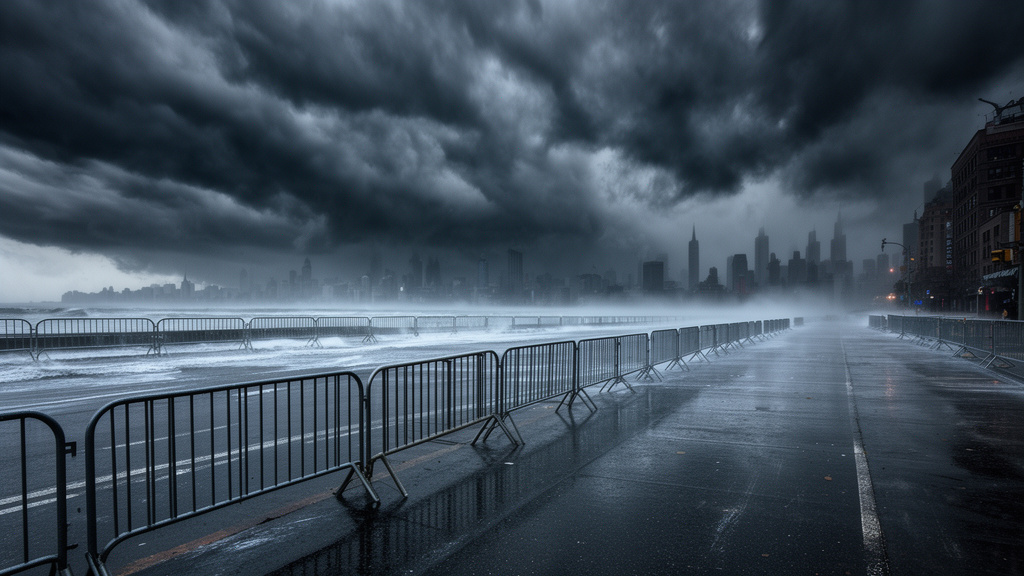
Thanksgiving travel and traditions have been thrown into complete disarray as a rapidly intensifying, massive Nor’easter storm system slams into the U.S. Eastern Seaboard. The weather event, characterized by gale-force winds and torrential precipitation, has forced the unprecedented postponement of the Macy’s Thanksgiving Day Parade—a move that marks the first time in the iconic event’s 100-year history that the festivities have been halted due to weather conditions. Simultaneously, the aviation sector is reeling, with over 400 flight cancellations logged as major hubs scramble to manage the volatile atmospheric conditions.
Key Highlights
- Unprecedented Parade Postponement: The Macy’s Thanksgiving Day Parade has been postponed for the first time in its century-long history, citing extreme safety concerns due to high-wind gusts.
- Aviation Gridlock: 400 flights have been cancelled across the U.S., with major delays reported at primary transit hubs, effectively trapping thousands of travelers.
- Storm Intensity: Meteorologists have categorized the event as a significant Nor’easter, warning of dangerous wind chill factors and restricted visibility throughout the holiday period.
A Century of Tradition Halted by Nature
The decision to postpone the Macy’s Thanksgiving Day Parade serves as a sobering indicator of the storm’s severity. For 100 years, the parade has been a symbol of American resilience, moving forward through political shifts, economic downturns, and various social upheavals. While the parade was previously suspended during the height of World War II (1942-1944), this marks a distinct historical milestone: the first time a natural meteorological event has forced a total postponement.
Event organizers, working in close coordination with the National Weather Service and local authorities, determined that the projected wind speeds posed a lethal risk to the massive helium-filled balloons that define the parade’s visual identity. The safety protocols, which strictly dictate that balloons must be grounded if wind gusts exceed established thresholds, were triggered well before the scheduled start time. This cancellation sends a ripple of disappointment through millions of families who make the event a central pillar of their Thanksgiving morning routine, and it underscores the sheer kinetic power of this particular Nor’easter.
Meteorological Mechanics: Why This Storm Matters
Unlike standard seasonal rainstorms, this Nor’easter is exhibiting ‘bombogenesis’ characteristics—a rapid drop in barometric pressure that fuels explosive storm development. The pressure gradient between the storm’s low-pressure center and the high-pressure system to the north has created a corridor of punishing winds. These winds are not merely localized; they are sweeping across the dense metropolitan corridors of the Northeast, making airport logistics impossible and dangerous. The storm’s trajectory, moving slowly up the coast, threatens to exacerbate the impact, prolonging the duration of hazardous conditions well into the holiday evening.
The Aviation Crisis: 400 Flights and Counting
The 400 cancellations reported thus far represent only the beginning of what aviation analysts predict will be a chaotic 48-hour window for the U.S. transportation sector. The Federal Aviation Administration (FAA) has been forced to implement ground stops at several key airports, including JFK, LaGuardia, and Newark, as wind shear creates dangerous takeoff and landing conditions.
For airlines, this disruption is compounding an already strained holiday travel schedule. With the Thursday holiday typically serving as one of the busiest travel days of the year, the infrastructure was already operating at near-maximum capacity. The cancellations create a ‘domino effect’ of logistical failure: crews are timed out, aircraft are displaced from their originating hubs, and passengers are being stranded in terminals with dwindling rebooking options. Airline carriers are scrambling to issue waivers and re-accommodate passengers, but the sheer volume of cancellations suggests that holiday travel plans for many will remain compromised for days to come.
Economic and Social Ripples
The impact of this storm extends far beyond the cancelled parades and flights. From an economic perspective, the halt to such a major cultural event and the resulting travel paralysis has a measurable fiscal impact on the tourism and retail sectors. Local businesses in major cities that rely on the influx of holiday visitors are facing sudden revenue losses.
Furthermore, the social implications are significant. Thanksgiving is defined by family assembly, and the disruption of air travel means that thousands of families will be separated this year. The anxiety surrounding the storm has been palpable on social media, where travelers are documenting the uncertainty of their status. This event highlights the fragility of modern inter-state travel and the dependency of national celebrations on favorable climate conditions. As the nation pivots to emergency response and recovery, the focus remains on when, and if, travel will resume to normalcy by the weekend.
FAQ: People Also Ask
Will the Macy’s Thanksgiving Day Parade be rescheduled?
Organizers have announced a postponement, but a specific makeup date has not yet been confirmed. Given the logistical complexity of coordinating thousands of participants, floats, and broadcast schedules, a near-term rescheduling is unlikely. Updates are expected to be released via official Macy’s channels.
Are flight cancellations eligible for refunds?
Under current Department of Transportation regulations, passengers whose flights are cancelled by the airline—regardless of the reason—are entitled to a full cash refund if they choose not to be rebooked. However, travelers should check their specific carrier’s policy, as weather-related ‘force majeure’ events often complicate compensation for meals and hotels.
How long will this Nor’easter affect travel?
Meteorological models suggest the storm system will move gradually offshore, but the tail end of the high winds and residual precipitation is expected to impact travel into the following day. Passengers should expect intermittent delays even after the primary storm clears, as airlines work to reposition aircraft and crews.
Why was this storm more disruptive than others?
The combination of peak holiday travel volume and the storm’s specific timing made it uniquely disruptive. The system struck exactly when the largest number of travelers were attempting to fly, and the intense wind gusts directly conflicted with the specific safety requirements for the Macy’s parade balloons, leaving no margin for error.