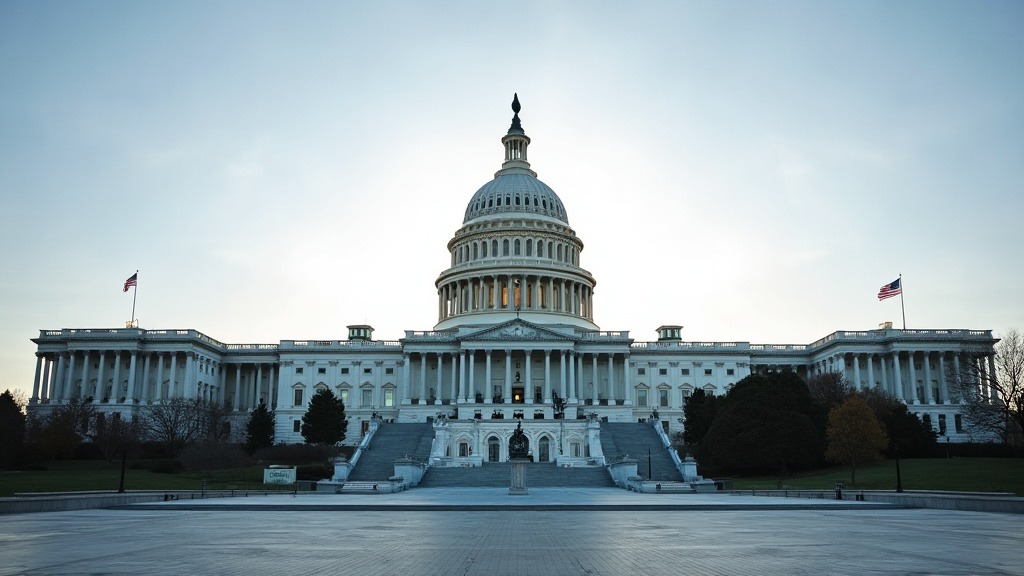
Democrats have officially clinched a historic majority in the U.S. House of Representatives, securing at least 258 seats—a legislative threshold not reached by the party since 1992. This decisive electoral outcome reshapes the congressional landscape, signaling a clear mandate for the party’s agenda and setting the stage for significant policy shifts in the upcoming legislative session.
Key Highlights:
• Democrats have crossed the 258-seat threshold, cementing dominant control over the lower chamber and altering legislative leverage.
• This outcome marks the largest Democratic House majority since 1992, indicating a broader and sustained political shift.
• The expansive majority size provides the party leadership with increased flexibility to advance key legislative priorities, including budget reconciliation and social policy reforms.
• Republicans must now recalibrate their strategy for the minority, facing a significantly reduced influence in committee assignments and floor votes.
A New Era of Congressional Control: Analyzing the 258-Seat Mandate
The Democratic Party’s successful capture of at least 258 seats in the U.S. House of Representatives is more than a simple numerical victory; it represents a tectonic shift in American governance. By reaching this specific milestone—a feat not seen since the 1992 election cycle—the party has secured a robust buffer that grants them immense power over the House floor, committee agendas, and the broader legislative calendar. This “super-size” majority fundamentally alters the day-to-day operations of the Capitol, allowing leadership to push through comprehensive legislation with a degree of internal political breathing room that is rare in modern, polarized politics.
The 1992 Benchmark and Historical Context
To understand the magnitude of this achievement, one must look back to 1992. That year served as a high-water mark for Democratic control, occurring during a period of significant national transition and economic focus. Today’s 258-seat threshold mirrors the confidence and legislative scope that defined that era. However, the modern context is distinct; the current political environment is characterized by hyper-partisanship and digital-age voter mobilization. The fact that the party has managed to replicate a 1992-era majority size in this climate speaks to a successful strategy that bridged urban centers with critical suburban swing districts. This historical parallel is not merely symbolic; it provides a blueprint for what the party intends to do next—namely, using their sheer numbers to bypass the gridlock that has paralyzed previous sessions.
Legislative Implications and Power Dynamics
The mathematical reality of a 258-seat majority is the primary engine behind the party’s upcoming agenda. In the House, where simple majorities dictate the passage of most legislation, having a cushion of seats beyond the 218 required for a quorum means that leadership can afford dissent within their own ranks while still passing critical bills. This is crucial for navigating the ideological spectrum of the modern Democratic caucus, which ranges from staunch progressives to moderate, swing-district members. With this number of seats, the party can pass significant budget reconciliation packages, confirm administrative priorities, and set the terms of debate on social and economic issues with minimal fear of a floor defeat. The Congressional Budget Office (CBO) and other non-partisan oversight bodies will now be operating under a legislative framework that prioritizes the Democratic platform above all else.
Strategic Shifts for the Minority Party
For the Republican caucus, the implications are stark. A loss of this scale necessitates a total strategic reset. With the Democratic majority at 258, the minority party’s ability to exert influence through traditional procedural maneuvers—such as motions to vacate or stalling committee progress—is severely diminished. Republicans will likely need to pivot toward a strategy of public messaging and judicial challenges, as the legislative path through the House has been effectively closed off by this numerical reality. The focus for the opposition will shift toward building a case for future cycles, attempting to frame the current majority’s actions as overreach, rather than attempting to derail the legislative process from within the chamber.
Economic and Social Policy Outlook
The primary question for voters and observers is what this historic majority will produce. With 258 seats, the party has the capital to tackle long-standing issues such as infrastructure modernization, healthcare expansion, and climate change mitigation. The ability to whip votes effectively means that major omnibus bills are likely to become the standard vehicle for governance. This creates a high-stakes environment where every legislative success or failure will be directly tied to the party’s performance, given they now own the levers of power completely. As the transition to the new session begins, the nation will be watching to see if this historic majority uses its power to deliver tangible results that resonate with the electorate.
FAQ: People Also Ask
What is the specific significance of reaching 258 seats in the House?
Reaching 258 seats creates a comfortable “cushion” above the 218-seat threshold needed for a simple majority. This provides the Speaker of the House and party leadership with the ability to manage internal dissent while still passing major legislation, effectively neutralizing the power of smaller factions within the party to hold up key votes.
How does this majority compare to the 1992 election results?
The 1992 election was a landmark moment for the Democratic Party, representing a high-water mark for their control in the late 20th century. By matching or exceeding this seat count, the current majority has achieved a level of dominance that had been considered unlikely in the current era of slim margins and divided government.
What can the Democratic Party achieve with this majority?
With a 258-seat majority, the party has the procedural power to pass major budget bills, advance long-stalled social and economic legislation, and control the committee agenda without needing significant bipartisan support. It allows them to set the legislative calendar entirely, dictating the focus of the House for the remainder of the term.