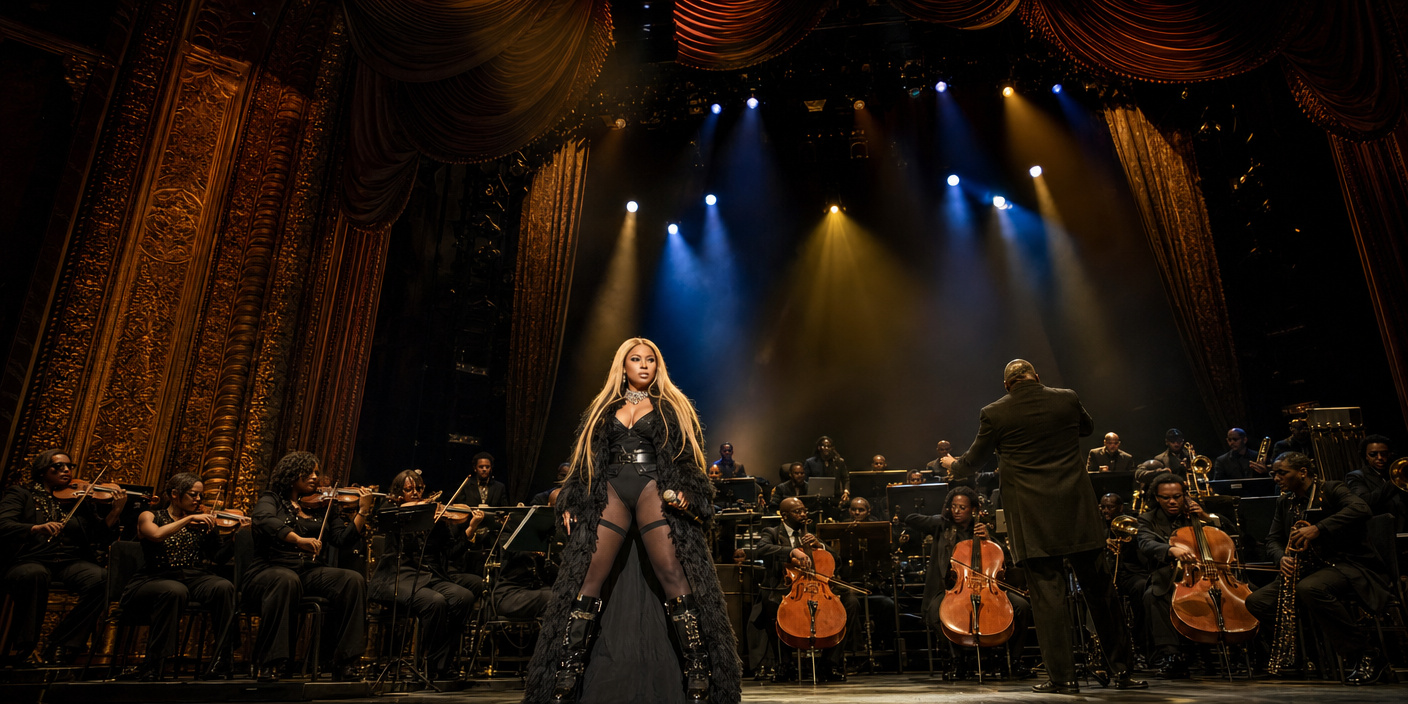
The Brooklyn-born hip-hop pioneer Lil’ Kim commanded the stage at the historic Kings Theatre this week, cementing her status as a cultural titan with a groundbreaking two-day residency, ‘Hard Core Symphony.’ Accompanied by the genre-bending Thee Phantom & The Illharmonic Orchestra, the Queen of Rap delivered a transformative performance that bridged the raw, gritty energy of 1996’s ‘Hard Core’ with the sweeping, cinematic grandeur of a full symphonic ensemble. This sold-out engagement was not merely a concert, but a meticulous re-examination of a foundational hip-hop record, proving that true legacy acts can innovate while honoring the roots that defined a generation.
Key Highlights
- Brooklyn Homecoming: Lil’ Kim returned to her home borough, selling out the historic Kings Theatre for two consecutive nights of high-concept performance.
- Orchestral Fusion: The collaboration with Thee Phantom & The Illharmonic Orchestra elevated classic trap and boom-bap rhythms into complex, symphonic arrangements.
- Legacy Honor: The setlist focused heavily on the 25th-plus anniversary of the diamond-certified and genre-defining album ‘Hard Core,’ showcasing its enduring cultural relevance.
- Artistic Innovation: The event serves as a blueprint for veteran hip-hop artists looking to evolve their live performances beyond traditional DJ-and-mic setups.
The Anatomy of an Orchestral Takeover
The marriage of hip-hop and orchestral music is often a delicate balancing act, but ‘Hard Core Symphony’ achieved a rare synergy. Unlike generic “rap with strings” arrangements, this collaboration with Thee Phantom & The Illharmonic Orchestra required a complete re-engineering of Lil’ Kim’s discography. Thee Phantom, a producer and emcee himself, has long championed the fusion of orchestral music with hip-hop, and his work here provided the necessary structural tension to match Kim’s aggressive, unapologetic flow.
Scaling the Soundscape
At the heart of the performance was the need to preserve the “grime” that made ‘Hard Core’ a seismic shift in 1996. The album was originally characterized by heavy, claustrophobic basslines and an unfiltered lyrical delivery that challenged the male-dominated industry of the time. By introducing woodwinds, soaring strings, and dramatic percussion, the live arrangements didn’t soften the music—they amplified its intensity. The arrangement of tracks like ‘Crush on You’ and ‘Queen Bitch’ highlighted the underlying complexity of the original production, exposing hidden melodic lines that were previously buried in the low-end frequencies of early 90s studio mixes.
The Kings Theatre Factor
Choosing the Kings Theatre in Brooklyn was a strategic, symbolic masterstroke. As one of the most ornate and architecturally significant venues in New York, the theatre provided a juxtaposition of velvet-clad elegance and street-level authenticity. For a Brooklyn native like Lil’ Kim, the venue served as a temple. The acoustics of the renovated 1929 movie palace allowed for an immersive, resonant sound profile that a standard arena could not provide. The intimacy of the theatre space created an atmosphere of reverence, turning the concert into an experiential event rather than a standard touring stop.
Beyond the Nostalgia: A Blueprint for Rap Royalty
Secondary to the spectacle is the business and cultural strategy behind this move. The hip-hop industry has historically struggled with how to present aging catalogs in a way that feels modern and worthy of premium ticket pricing. By opting for a symphonic format, Lil’ Kim has successfully bypassed the typical ‘nostalgia tour’ trap. This format appeals to a wider demographic, attracting classical music enthusiasts and hip-hop purists alike, while simultaneously establishing the artist as a ‘serious’ performer in the vein of jazz or opera icons.
Economic and Cultural Impact
From an economic standpoint, the success of a two-night sold-out engagement at a venue of this scale (which holds approximately 3,000 guests) demonstrates that high-concept production can yield higher returns than traditional touring models. It minimizes the logistics of massive light shows and pyrotechnics while maximizing the ‘premium’ quality of the show. Culturally, this performance reinforces the notion that hip-hop is an American art form deserving of the same preservation and prestige as classical repertoires. Lil’ Kim is effectively curating her own history, ensuring that ‘Hard Core’ is viewed not just as a 90s artifact, but as a timeless composition.
The Future of the ‘Symphony’ Model
Will we see more of this? The ‘Hard Core Symphony’ model is likely to become a template for legacy hip-hop acts. As the genre matures, the challenge of ‘how to perform songs from 30 years ago’ will only grow more pressing. The orchestral route offers a sophisticated solution—one that invites critical appreciation rather than just fan-service. Lil’ Kim’s willingness to take this risk and execute it at this level of polish places her at the forefront of this trend, proving that she remains a pioneer not just in lyrical style, but in performance curation.
FAQ: People Also Ask
1. Why was ‘Hard Core’ chosen for the orchestral treatment?
‘Hard Core’ is widely considered one of the most influential debut albums in hip-hop history. Its release in 1996 redefined the archetype of the female rapper, combining explicit lyricism with high-fashion aesthetics. An orchestral treatment honors its status as a seminal body of work.
2. Who is Thee Phantom & The Illharmonic Orchestra?
They are a pioneering group known for combining the energy of hip-hop with the instrumentation of a classical orchestra. Their involvement brings a legitimacy to the symphonic fusion, ensuring the music retains its ‘street’ soul while expanding its sonic palette.
3. Will the ‘Hard Core Symphony’ tour to other cities?
While the Brooklyn engagement was a specific tribute at the Kings Theatre, the success of the two-night run makes future select-city dates a distinct possibility, though no official tour has been announced as of yet.
4. Does the orchestral arrangement change the explicit nature of the original lyrics?
No. The performance remained faithful to the original recordings. The contrast between the sophisticated, clean orchestral arrangements and the raw, explicit lyrical content is a core component of the show’s artistic tension.