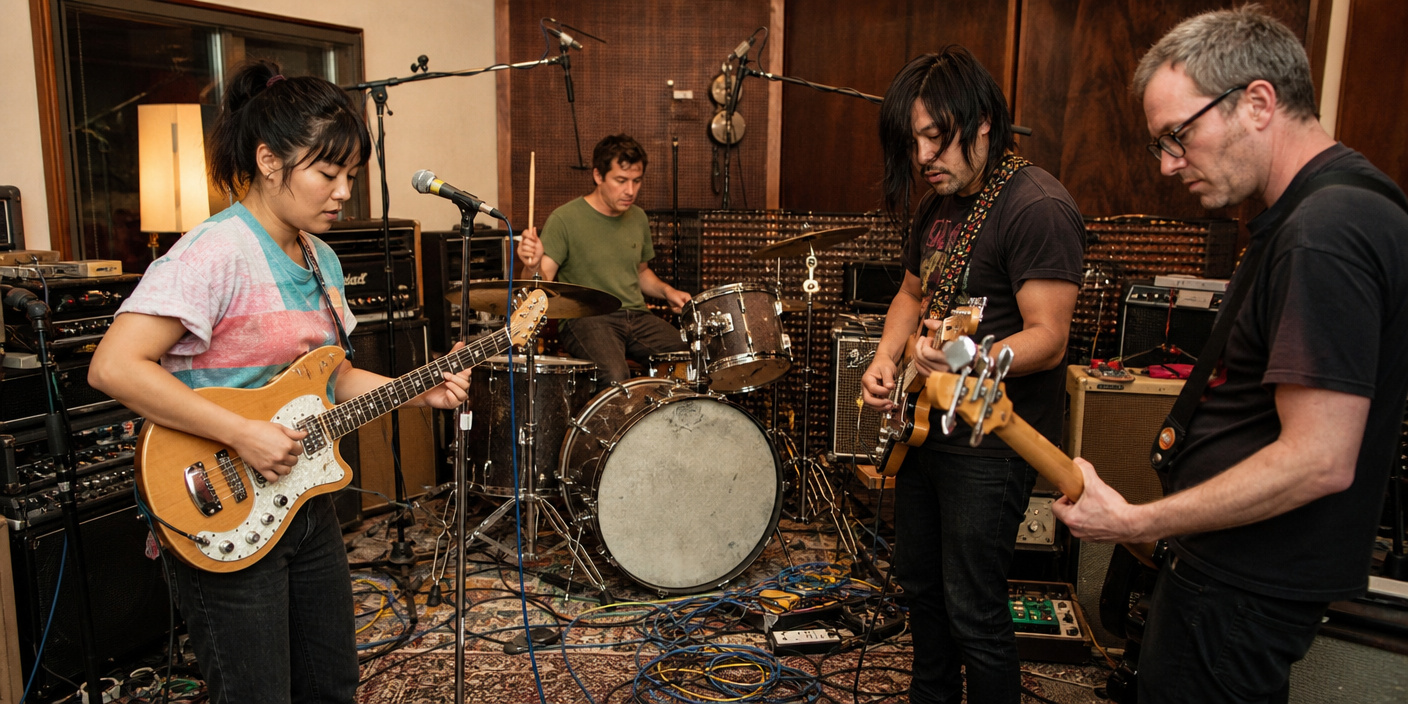
The landscape of contemporary experimental music is often defined by ephemeral trends, yet few bands maintain the consistent, jagged brilliance of Deerhoof. Their latest track, ‘Sun Like It Hot,’ featured in the September 1st edition of the influential Fuzzy Meadows column by POST-TRASH, serves as a masterclass in how established artists can innovate while maintaining complete creative autonomy. By analyzing the production of this track and the mechanics behind their self-released album cycle, we gain a rare insight into the mechanics of long-term independent survival.
The Sonic Alchemy of ‘Sun Like It Hot’
Deconstructing the Arrangement
At the core of ‘Sun Like It Hot’ lies the signature tension that has defined Deerhoof for over two decades. The track immediately grabs the listener with an infectious, skittering rhythm—a hallmark of drummer Greg Saunier’s erratic, jazz-inflected timekeeping. What separates this release from standard indie-pop offerings is the intentionality behind the production. The track balances Satomi Matsuzaki’s deadpan, whimsical vocal delivery against thick, distorted guitar lines provided by Ed Rodriguez and John Dieterich.
Production Techniques and Artistic Intent
The decision to keep the production ‘raw’ is not a limitation of budget, but a strategic aesthetic choice. In an era dominated by hyper-compressed digital masters, Deerhoof opts for a dynamic range that feels captured live in a room. This approach emphasizes the ‘human’ element of the performance—the slight vocal cracks, the feedback swells, and the organic interplay between instruments. It is a sonic rebellion against the sterility of modern studio standards, reinforcing the band’s identity as a unit that prioritizes musical conversation over commercial sheen.
Divine Schism: Reimagining the Label Model
Autonomy as a Business Strategy
Perhaps the most significant aspect of this news cycle is the band’s ongoing reliance on their own label, Divine Schism, to manage the release of their upcoming project. For legacy bands, the traditional label structure often involves compromises in distribution rights, creative direction, and release scheduling. Divine Schism represents a shift toward a ‘closed-loop’ ecosystem. By handling the logistics of their own output, Deerhoof retains 100% of their creative rights and, crucially, establishes a direct conduit to their most dedicated listeners.
The Future of Independent Distribution
This model is a roadmap for modern musicians. The economics of the music industry have shifted the burden of promotion almost entirely onto the artist, yet this burden also brings power. Divine Schism acts not just as a vanity imprint, but as a distribution hub. By controlling their own manufacturing and retail distribution, the band mitigates the risks associated with supply chain bottlenecks in the vinyl industry, ensuring their music reaches fans with minimal middle-man interference.
The Curation Economy: POST-TRASH and Fuzzy Meadows
The Role of Taste-Making Media
The inclusion of ‘Sun Like It Hot’ in the Fuzzy Meadows column highlights the vital intersection between independent artists and independent media. As algorithmic streaming platforms (Spotify, Apple Music) increasingly standardize music discovery, curated columns like those found on POST-TRASH provide a necessary human element. These platforms function as essential gatekeepers of ‘cool’ and artistic integrity, guiding listeners away from the infinite scroll of algorithmic playlists and toward artists who are actively pushing the boundaries of their genre.
Why Curation Matters for Experimental Art
Experimental music, by definition, is harder to sell to a mass audience. It requires context. Fuzzy Meadows provides that context. By placing Deerhoof’s work alongside other emerging experimental acts, the column creates a lineage, a shared scene where avant-garde techniques are normalized. This type of discovery is essential for the economic viability of experimental music; without these curators, the ‘long-tail’ of indie music would effectively vanish into the noise of the global digital marketplace.
Future Implications for Legacy Acts
Longevity in the Short-Form Era
Deerhoof’s ability to remain relevant nearly 25 years after their inception suggests a shift in how we define a ‘career’ in music. The band has transcended the need for a traditional ‘hit’ cycle. Instead, they rely on a recurring cycle of high-quality output and direct-to-fan engagement. Their trajectory suggests that the future of the rock band is not found in signing to a major label conglomerate, but in building a sustainable, community-supported infrastructure.
The Economic Impact of Fan-First Models
As we look toward the future, the ‘Divine Schism’ model—where the band is the business—will likely become the standard for mid-to-high-tier legacy acts. By leveraging their established fan base to support direct album sales and independent tour routes, bands can bypass the volatility of touring markets dominated by massive ticketing conglomerates. This is not just a musical evolution; it is a financial one, ensuring that the art remains beholden to the artist, not the quarterly earnings of a parent label.
FAQ: People Also Ask
How does Divine Schism differ from a traditional record label?
Divine Schism functions as an artist-led operation where Deerhoof retains full creative control and ownership of their masters. Unlike traditional labels that may take a significant percentage of revenue and influence creative decisions, Divine Schism allows the band to dictate release schedules, physical merchandise production, and overall branding, ensuring the art remains entirely representative of the band’s vision.
What makes Fuzzy Meadows an important resource for new music?
Fuzzy Meadows, hosted on the POST-TRASH platform, serves as a curator for the experimental and underground music scene. It helps filter the ‘noise’ of thousands of daily releases, focusing on tracks that demonstrate technical prowess, artistic innovation, or cultural relevance. For artists like Deerhoof, being featured here validates their work within the specific community of listeners most likely to appreciate experimental rock.
Is the ‘raw’ production style of Deerhoof a conscious choice?
Yes. Deerhoof utilizes a production style that favors dynamic range and instrumental interaction over perfectionism. This ‘raw’ aesthetic is intentional, designed to mirror the energy of their live performances and to push back against the over-processed, hyper-compressed sound that is currently standard in popular music.
Why is the independent label model becoming more popular for established bands?
Established bands are increasingly moving toward independent models to reclaim their master rights and creative independence. As the industry faces instability, controlling one’s own distribution allows artists to hedge against the fluctuations of streaming payouts and the unpredictability of physical retail, creating a more sustainable, long-term business model.