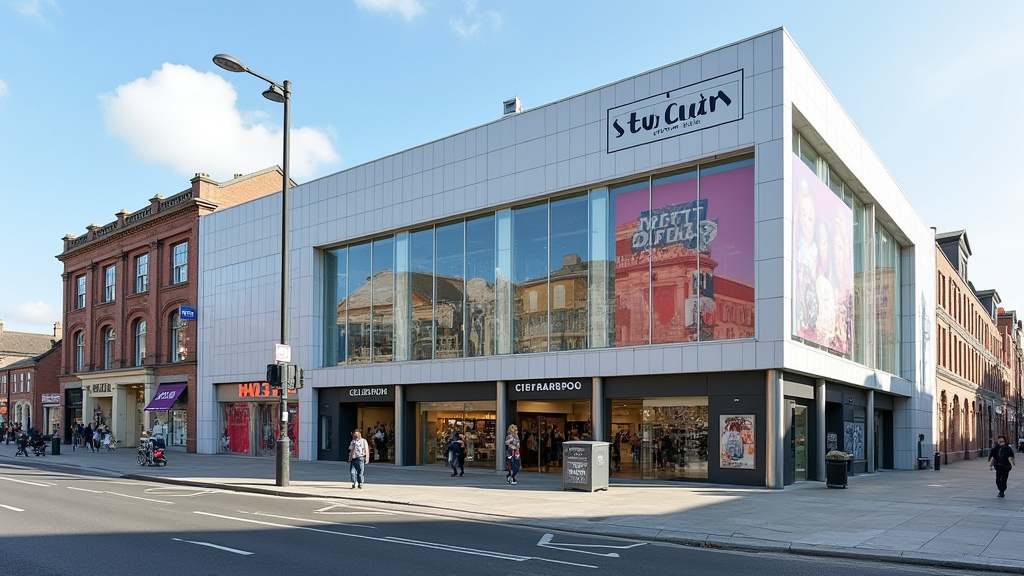
The Beatles Story, long regarded as the world’s definitive permanent exhibition dedicated to the Fab Four, is poised for a monumental shift. In a major development for Liverpool’s cultural landscape, it has been confirmed that the attraction will relocate from its long-standing home at the Royal Albert Dock to the St Johns Shopping Center. This move, sanctioned and announced by Apple Corps Ltd, marks a significant departure from the museum’s current footprint, aiming to create a four-times-larger, state-of-the-art immersive experience that promises to redefine how music history is consumed by the public.
Key Highlights
- Strategic Relocation: The Beatles Story will move from the Royal Albert Dock to the central St Johns Shopping Center.
- Four-Fold Expansion: The new facility will be four times larger than the current site, allowing for vastly expanded galleries and interactive zones.
- Immersive Narrative: The museum will transition into a multi-hour, deep-dive immersive experience, moving beyond static exhibits to interactive storytelling.
- Regeneration Driver: The move is expected to be a major catalyst for foot traffic and economic revitalization within the city’s primary retail hub.
- Apple Corps Approval: The project is backed by Apple Corps Ltd, ensuring historical accuracy and brand integrity for the new installation.
A New Chapter for Fab Four Tourism
For decades, the Royal Albert Dock has served as the nautical backdrop for the Beatles Story, grounding the band’s history in the industrial heritage of Liverpool’s waterfront. However, the shift to St Johns Shopping Center represents a strategic evolution in music tourism. By relocating to the heart of the city’s retail and commercial district, the exhibition is positioning itself to capture a broader audience, including domestic shoppers and international tourists who frequent the city center. This isn’t merely a change of address; it is a fundamental reimagining of the visitor journey.
The Shift to Immersive Storytelling
The contemporary museum landscape is increasingly moving away from passive observation. Visitors today demand agency and sensory engagement. The new St Johns site will leverage this, moving towards a ‘multi-hour’ narrative experience. Rather than viewing artifacts behind glass, attendees will likely encounter high-fidelity audio-visual integrations, projection mapping, and narrative-driven set pieces that trace the band’s trajectory from the Cavern Club days to the final rooftop performance. Apple Corps Ltd’s involvement is crucial here; their oversight suggests that this expansion will maintain the exacting standards of historical record, balancing ‘Disney-fication’ risks with authentic archival detail.
Economic Impact and Urban Regeneration
Cities across the UK are currently struggling with the viability of central shopping malls as online retail continues to cannibalize high-street sales. By embedding a world-class cultural institution like the Beatles Story into the St Johns complex, Liverpool is utilizing a proven model of ‘experience-led retail.’ This is a masterstroke in urban planning. The increased footfall generated by die-hard Beatles fans—estimated to be in the hundreds of thousands annually—will provide a vital lifeline to surrounding businesses, cafes, and hospitality venues. It effectively turns the shopping center into a hybrid ‘cultural-commerce’ hub, a model many other UK cities will undoubtedly watch with interest.
The Logistics of Legacy
Moving a collection of this magnitude is a Herculean task. The current exhibition houses an extensive array of instruments, stage costumes, handwritten lyrics, and personal ephemera. Transitioning these items to a site four times larger requires not just physical transport, but an architectural redesign of the visitor flow. The planners have hinted at a linear, sequential narrative path, which will require careful environmental control—humidity, lighting, and security—to protect items of immense historical value. This suggests that the interior of the new St Johns space will be heavily modified, likely featuring black-box theater elements and specialized acoustic treatment to ensure the music, which is the heart of the attraction, remains pristine for every visitor.
Future-Proofing the Band’s History
As the original members of the Beatles age, and as time separates new generations from the 1960s, the challenge for Apple Corps is maintaining the relevance of the band. A museum that remains static runs the risk of becoming a relic. This expansion is clearly designed to combat that, employing modern technology to keep the stories fresh. By creating a multi-hour experience, the venue can accommodate deeper dives into the band’s individual solo careers, the specific production techniques used in the studio, and the cultural context of the 1960s, ensuring that the legacy remains vibrant for decades to come.
FAQ: People Also Ask
Q: Why is the Beatles Story moving from the Albert Dock?
A: The primary driver is the need for more space. The new site at St Johns Shopping Center will be four times larger, allowing for a more immersive, modern, and comprehensive visitor experience that the current site could no longer accommodate.
Q: When will the new Beatles Story attraction open?
A: Official timelines are currently being synchronized with the construction phase at St Johns, with project updates being managed through Apple Corps Ltd and official Liverpool city tourism channels.
Q: Will the new exhibition feature original artifacts?
A: Yes, the move is focused on expanding the scale of the experience, which will allow for the display of a wider range of the museum’s extensive collection of authentic instruments, clothing, and memorabilia.
Q: How will this affect Liverpool’s economy?
A: The expansion is expected to drive significant foot traffic into the city center, providing an economic boost to retail, hospitality, and service industries located within and around the St Johns area.