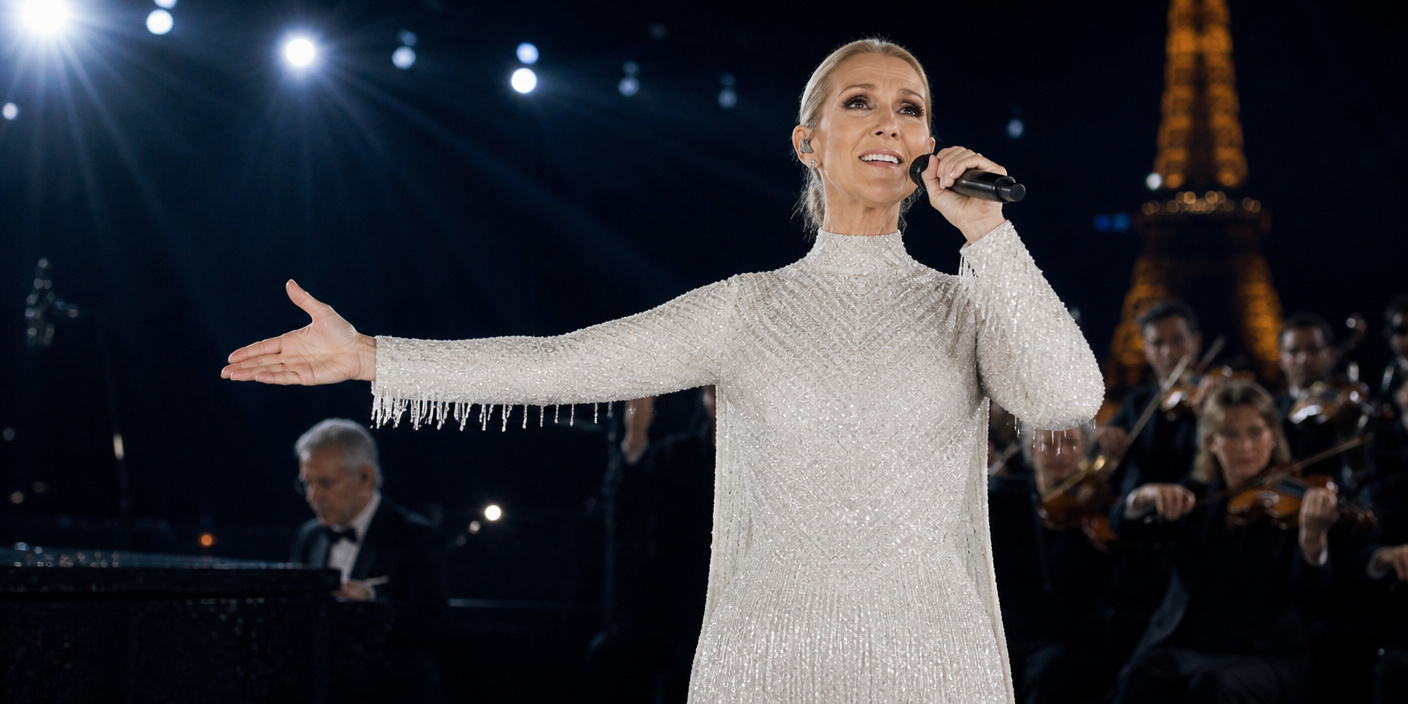
On the evening of September 12, 2026, the world of music witnessed what many had feared might never happen again: the return of Céline Dion to the live stage. In a sold-out venue in Paris, the legendary vocalist delivered a performance that transcended mere entertainment, serving as a powerful testament to human resilience, medical advancement, and the enduring power of the human spirit. The concert, her first public performance since 2022, effectively ended a harrowing six-year hiatus that began when the singer was diagnosed with Stiff Person Syndrome (SPS), a rare and debilitating neurological condition.
Key Highlights
- The Return: Céline Dion officially resumed live performances on September 12, 2026, in Paris, ending a six-year absence from the stage.
- Medical Resilience: This appearance marks a major milestone in her public struggle with Stiff Person Syndrome, which was first publicly disclosed in 2022.
- Cultural Impact: The performance is being hailed by industry experts as a landmark moment in the intersection of high-level vocal artistry and complex chronic illness management.
A Parisian Resurrection: The Night That Halted Time
When the house lights dimmed in Paris on that crisp September evening, the atmosphere in the arena was palpable—a mixture of tension, disbelief, and overwhelming adoration. For six years, the global music community had existed in a state of uncertainty regarding the career of one of the 20th and 21st centuries’ most iconic voices. When Dion finally emerged, center stage, the roar from the audience was deafening. It was not merely applause; it was an outpouring of collective relief.
Performing a setlist that spanned her decades-long career, Dion displayed a level of technical precision that defied the clinical expectations of her diagnosis. Observers noted that her signature vibrato remained intact, resonant and powerful, seemingly untouched by the years of neurological suppression. The performance served as an immediate visual and auditory counter-narrative to the prognosis often associated with Stiff Person Syndrome. She moved with purpose, controlled and elegant, showing that while the journey to reach this stage was fraught with physical and mental hurdles, the essence of the artist remained entirely undiminished.
The Invisible Adversary: Understanding Stiff Person Syndrome
To appreciate the magnitude of this return, one must understand the nature of the adversary she has been facing. Stiff Person Syndrome (SPS) is an exceptionally rare, progressive autoimmune neurological disorder. It is characterized by muscle stiffness, rigidity, and painful spasms that can be triggered by various stimuli, including stress or sound. For a performer whose livelihood depends on intricate muscular control—specifically the diaphragm and laryngeal muscles required for world-class singing—an SPS diagnosis felt like a definitive career curtain.
Between 2022 and 2026, Dion was largely absent from the public eye, focusing entirely on a rigorous, multifaceted recovery program. Her medical team, an elite cohort of neurologists and rehabilitation specialists, utilized a combination of immunotherapy, physical therapy, and unconventional vocal re-training techniques. The 2026 return is not just a musical event; it is a clinical triumph. It demonstrates the efficacy of sustained, specialized intervention, offering a beacon of hope for thousands of others suffering from autoimmune neurological disorders who have previously viewed such conditions as career-ending or life-limiting.
The Road to 2026: Decades of Dedication and Grit
Behind the curtains, the last six years were defined by silence and sweat. While the public speculated, Dion was engaged in what sources close to her camp described as “total immersion therapy.” The process of returning to the stage required more than just vocal practice; it necessitated a complete recalibration of her body’s response to the physical stress of performing. In interviews preceding the tour, her support team emphasized that there was no guarantee she would ever sing live again.
This makes the Paris concert a study in extraordinary determination. The psychological toll of the diagnosis—the fear that the very instrument that gave her a voice might be permanently silenced—was reportedly the greatest hurdle. Her success on September 12, 2026, was as much a psychological victory as it was a musical one. By stepping onto that stage, she reclaimed not just her career, but her autonomy over a body that had been betraying her for years.
Global Resonance and Economic Implications
The cultural impact of Dion’s return cannot be overstated. In an era where the music industry is increasingly dominated by ephemeral viral trends, Dion’s comeback serves as a reminder of the enduring power of legacy acts. The economic ripple effects are already being projected: the demand for tickets for her projected European and North American dates has surged to levels that rival her 1990s peak.
Furthermore, this performance changes the landscape for disability in the arts. By being transparent about her limitations while simultaneously pushing the boundaries of what is possible, Dion has shifted the narrative. She has effectively normalized the concept of the “evolving performer,” where an artist’s physical challenges do not necessarily equate to the end of their creative contributions. Analysts are already predicting a significant uptick in philanthropic support for autoimmune research, directly tied to the visibility provided by this high-profile recovery.
Looking ahead, the industry is watching closely. This performance in Paris was not a one-off event; it was the opening salvo of a new chapter. If the standard set on September 12 holds, the music world is looking at a sustained period of resurgence for one of its most cherished figures.
FAQ: People Also Ask
Q: What is Stiff Person Syndrome, the condition that kept Céline Dion away?
A: Stiff Person Syndrome (SPS) is a rare neurological disorder with autoimmune features, characterized by fluctuating muscle rigidity in the trunk and limbs and a heightened sensitivity to stimuli such as noise, touch, and emotional distress, which can set off muscle spasms.
Q: Was this Paris concert part of a larger tour?
A: Yes, the Paris performance marked the commencement of her 2026-2027 global tour, representing her first live concert cycle since the 2022 diagnosis.
Q: How did Dion manage to return to singing after such a severe diagnosis?
A: While specific medical details remain private, her team has credited a combination of intensive physiotherapy, advanced immunotherapy treatments, and specialized vocal rehabilitation, which allowed her to regain control over the muscles essential for her unique vocal technique.
Q: Why was this specific Paris date so significant in her career?
A: It served as the symbolic and literal “re-launch” point, exactly six years after her previous hiatus began, allowing her to face her most supportive fanbase in a city that has always played a major role in her international success.