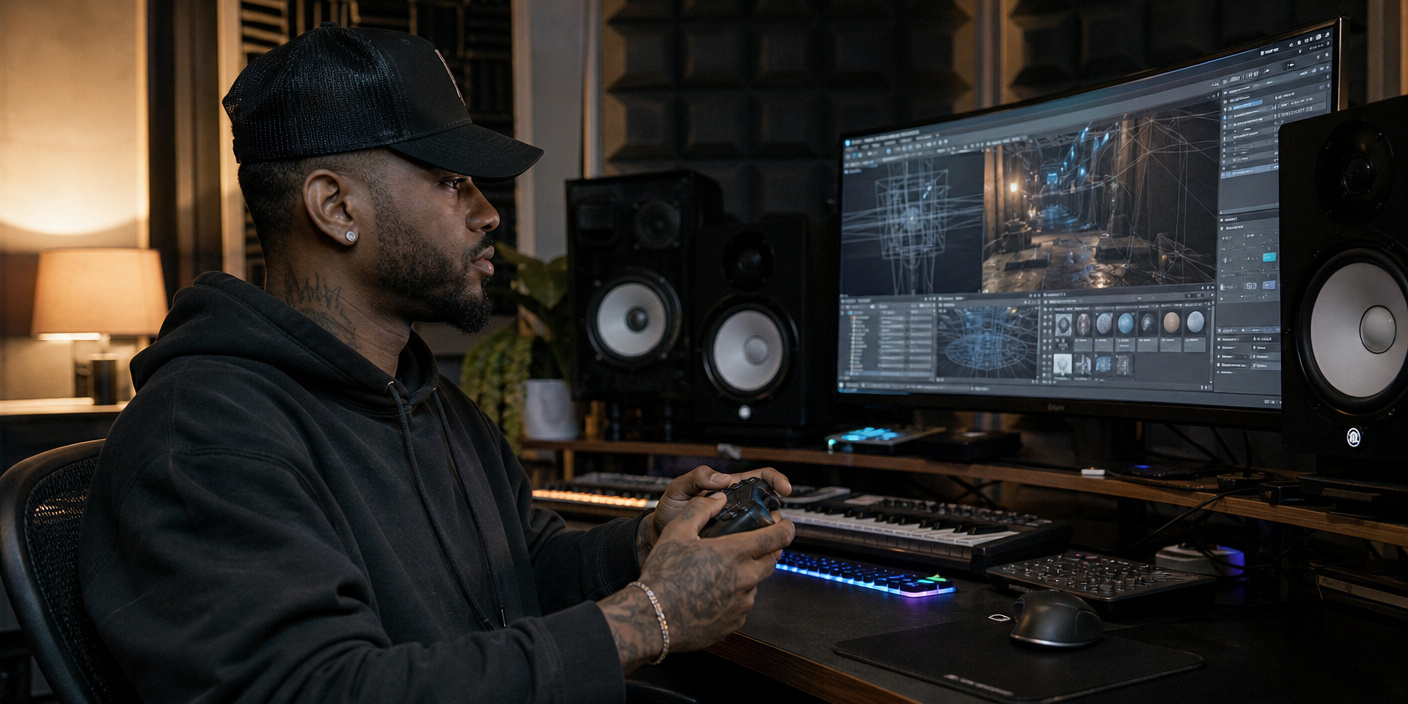
In a decisive move that bridges the gap between traditional entertainment conglomerates and the frontier of machine learning, Stability AI has successfully secured $76 million in Series B funding. This significant capital injection is backed by a coalition of industry titans, including Sony Music Group, Universal Music Group, Warner Music Group, and Electronic Arts (EA). This convergence of legacy intellectual property giants and generative AI developers marks a watershed moment for the industry, signaling a strategic pivot toward collaborative, enterprise-grade creative AI tools rather than adversarial litigation. The funding will be primarily directed toward the scaling of professional-grade production services, aiming to provide creators in music, gaming, and film with a new suite of sophisticated, ethically-aligned generative capabilities.
Key Highlights
- $76 Million Series B: The capital raise positions Stability AI to aggressively scale its infrastructure to meet the demands of the media and entertainment sectors.
- Industry Alignment: The investment round features an unprecedented alliance between major music labels (Sony, Universal, Warner) and interactive entertainment leader Electronic Arts.
- Creative Utility Focus: Unlike pure consumer-facing tools, the new roadmap emphasizes professional services, workflow integration, and enterprise-scale production stability.
- Strategic Shift: The influx of capital underscores a shift in how major entertainment entities are choosing to engage with generative AI—investing in its development to shape the technology’s evolution.
The Strategic Convergence of AI and Media Giants
The landscape of artificial intelligence is undergoing a profound metamorphosis. For years, the narrative surrounding generative AI and the creative arts was defined by tension, primarily centered on intellectual property rights and the potential for displacement. However, the $76 million Series B funding round for Stability AI effectively rewrites this script. By securing investments from Sony Music Group, Universal Music Group, Warner Music Group, and Electronic Arts, Stability AI has transitioned from an disruptor to a central partner in the creative ecosystem.
Integrating AI into Professional Workflows
This investment is not merely about liquidity; it is about infrastructure. The core value proposition for investors like EA and the “Big Three” music labels is the development of “creative AI production tools.” These are not intended to replace human creativity but to augment it. In the context of gaming, for example, Electronic Arts can leverage these tools to generate assets—textures, environmental variables, or complex audio stems—at a velocity previously impossible without significantly inflating development costs.
For the music industry, the implications are equally profound. The technology could theoretically allow producers to iterate on arrangements, explore complex instrumental textures, or manage rights-clearing and data-labeling at a speed that respects the underlying copyrights of the invested labels. This shift suggests that the future of creative production will be “human-in-the-loop,” where the generative engine serves as a high-velocity collaborator rather than a replacement. The professional services arm that Stability AI is building will likely prioritize enterprise-grade security, consistency, and traceability—features that are non-negotiable for large-scale media corporations.
The Economic Implications of Collaborative AI
From an economic perspective, this funding round validates the shift toward enterprise-AI adoption. The valuation of creative AI is no longer based on the novelty of a static image generator; it is based on the efficiency gains in professional production pipelines. By embedding their technology within the workflows of companies like Sony and Warner, Stability AI is effectively creating a “moat” of adoption.
Furthermore, this development highlights the economic necessity for entertainment companies to have a seat at the table. By investing directly, these corporations gain influence over the technical roadmap, ensuring that future iterations of generative models are built with compliance, licensing, and professional utility at their core. This is a defensive and offensive move: defensive in its desire to protect copyright, and offensive in its ambition to control the next generation of creative tools.
Predicting the Future of Generative Media
The next 24 to 36 months will be critical. We are likely to see the emergence of proprietary model fine-tuning, where entertainment companies train Stability AI’s foundational models on their own exclusive catalogs. This would result in specialized generative engines capable of replicating the specific sonic fingerprints or visual aesthetics of established franchises.
We anticipate three secondary angles to emerge as this partnership matures:
1. The Rise of Ethical AI Datasets: The investment will likely accelerate the transition toward ‘clean’ training sets where participating labels provide licensed data, creating a gold standard for copyright-safe AI content.
2. Gaming as the Primary Testbed: Electronic Arts’ involvement suggests that interactive media will be the primary proving ground for these tools, as games require dynamic, non-linear content generation—a perfect use case for generative models.
3. Monetization of AI-Assisted Artistry: We may see new revenue models where creators use AI tools to generate ‘base’ creative work, which is then legally cleared and distributed through these major label platforms, creating a new tier of ‘AI-augmented’ commercial media.
Ultimately, this $76 million round is not just about the money; it is about legitimacy. By aligning with the titans of industry, Stability AI is moving toward a future where generative technology is not a fringe experiment but the backbone of the professional creative economy.
FAQ: People Also Ask
Q: What is the primary purpose of the $76 million investment?
A: The funds are explicitly earmarked for the expansion of creative AI production tools and the development of professional-grade services tailored for the media and entertainment sectors.
Q: How does this funding impact the ongoing copyright debates in AI?
A: By partnering with major labels (Sony, Universal, Warner), the investment suggests a shift toward a licensed, collaborative ecosystem where creative rights are integrated into the technological framework, potentially softening the adversarial dynamic often seen in legal disputes.
Q: Why is Electronic Arts investing in an AI company?
A: Electronic Arts is looking to streamline the production of high-fidelity video game assets. Generative AI can assist in creating textures, sound design, and 3D environments, drastically reducing the time-to-market for AAA gaming titles.
Q: Will this affect the average user of Stability AI tools?
A: While the focus is shifting toward enterprise and professional services, the underlying technological advancements, R&D, and model optimizations funded by this round will likely filter down to improve the performance and capability of the broader Stability AI platform ecosystem.