Bryson Tiller, the multi-platinum R&B artist known for hits like ‘Don’t’ and ‘Exchange,’ has officially confirmed a pivot in his entrepreneurial career: he is currently developing his own video game. In a recent podcast appearance, Tiller candidly revealed that he has been utilizing the income generated from his successful musical tenure to self-fund this ambitious project, framing his recent musical output not just as artistic expression, but as a financial vehicle to secure the capital necessary to escape the volatile demands of the music industry.
Key Highlights
- Self-Funded Venture: Bryson Tiller is financing the development of his video game entirely through his personal earnings from his music career.
- The ‘Brutal’ Pivot: The artist explicitly described the music industry as a ‘brutal’ environment, positioning his entry into gaming as a necessary move toward creative autonomy and long-term professional stability.
- Industry Transition: Tiller views his music career as a strategic financial foundation, allowing him to transition into the interactive entertainment space where he has greater control over his intellectual property.
The Anatomy of an Entrepreneurial Pivot
The trajectory of the modern celebrity has shifted significantly in the last decade, with artists moving beyond endorsements and into the role of venture creators. Bryson Tiller’s decision to build a video game is perhaps the most visceral example of this evolution. By openly acknowledging that the music business is a ‘brutal’ industry, Tiller is speaking to a sentiment shared by many in the digital age: the volatility of streaming royalties, the pressure of algorithmic demands, and the lack of creative finality in a landscape dominated by corporate labels.
Why Gaming? The Appeal of Creative Autonomy
For an artist like Tiller, who has navigated the high-stakes world of R&B and Hip-Hop, the transition to gaming represents a shift from a service-based creative model—where the label often owns the master recordings—to a product-based model. In the video game industry, developers and creators retain a higher degree of intellectual property control. Unlike a radio single, which has a finite lifecycle, a video game functions as a platform. It offers an evergreen ecosystem where Tiller can curate not just the soundscapes, but the narrative, the visual aesthetic, and the user experience. This level of ‘total design’ is the antithesis of the collaborative, often compromised, nature of producing pop music.
The Financial Foundation of Independence
Self-funding is the most critical aspect of Tiller’s announcement. By relying on his own bankroll rather than seeking traditional venture capital or gaming publisher funding, Tiller avoids the ‘publisher trap’—a dynamic all too similar to the ‘label trap’ he is trying to escape. In the gaming industry, publishers often demand strict milestones, monetization gimmicks, and aggressive release schedules that can compromise the artistic vision. By funding this himself, Tiller ensures that the game’s development cycle is dictated by his own standards rather than the quarterly demands of stakeholders. This is a savvy economic play: leveraging the high-margin revenue of his music stardom to build an asset class (a gaming franchise) that can generate revenue long after the charts move on to the next trend.
Bridging the Gap: Music and Interactive Tech
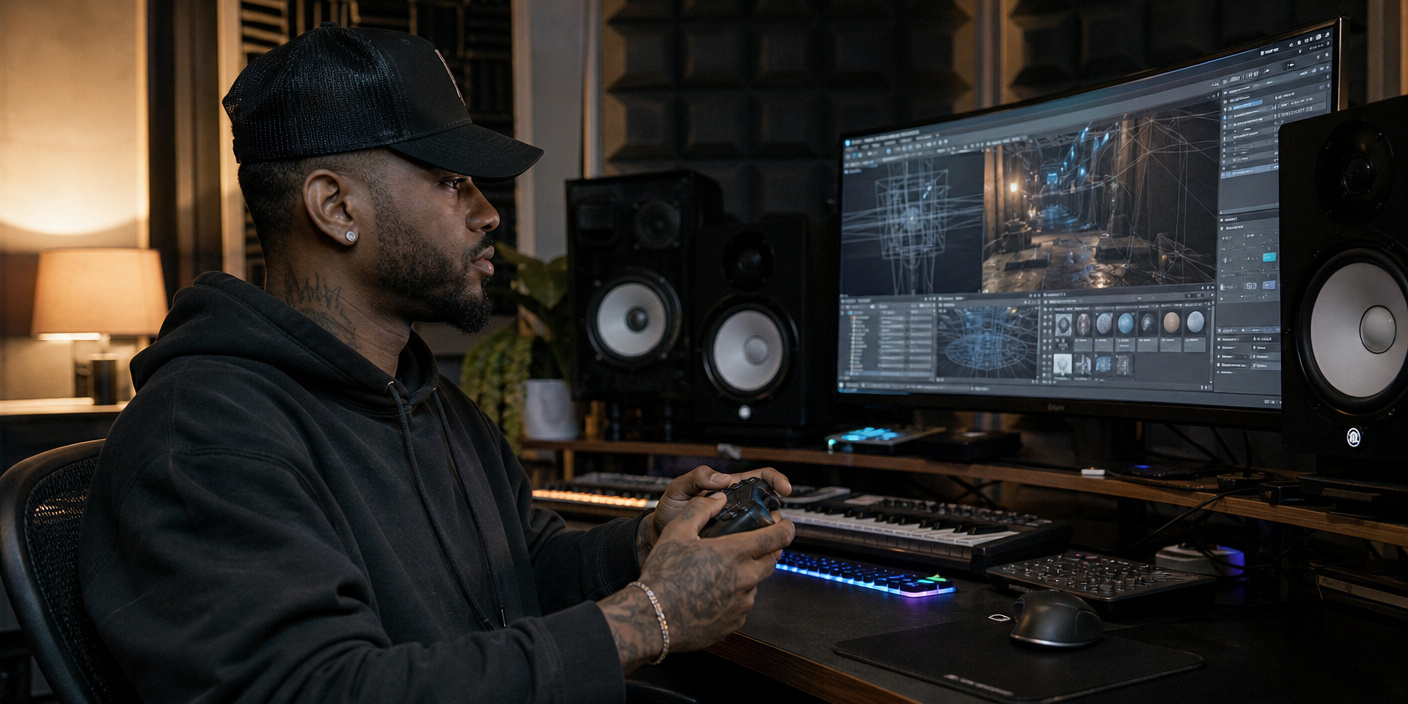
The convergence of music and gaming has been accelerating for years, with stars like Travis Scott, Marshmello, and Lil Nas X hosting virtual concerts inside platforms like Fortnite and Roblox. However, Tiller’s approach is fundamentally different. He is not just appearing in a game; he is building one. This indicates a deep-seated interest in the technical backend of production. Modern game engines, such as Unreal Engine 5, have democratized game development, allowing artists with the vision and the capital to construct high-fidelity environments without needing a massive team of 500 developers. Tiller is effectively positioning himself as an ‘auteur’ of the digital age—a creator who uses the tools of modern tech to own his digital presence entirely.
FAQ: People Also Ask
What kind of game is Bryson Tiller building?
While specific gameplay mechanics, genres, or titles have not yet been publicly revealed, Tiller’s interest in the project suggests a high-fidelity experience that leverages his unique visual and sonic aesthetic.
Why does Tiller describe the music industry as ‘brutal’?
In his interview, Tiller highlighted the immense pressure, the lack of creative control regarding long-term IP, and the mental tax involved in constantly chasing chart success, leading him to seek a more stable and autonomous professional landscape.
Is Tiller retiring from music?
No. Tiller has framed his music career as a financial vehicle. Rather than retiring, he is evolving, using the capital from his music to diversify his career and secure his future through game development.
How is he funding this project?
He is self-funding the development. By using his personal earnings from his music catalog and touring, he maintains full creative control and ownership, avoiding the standard publisher-developer power dynamics.