By September 2026, the artificial intelligence sector has undergone a fundamental metamorphosis. The era of the simple chatbot—characterized by passive information retrieval and basic text generation—has effectively ended. We have entered the age of ‘Actionable Intelligence,’ where systems no longer just converse but execute, reason, and interact with the physical world. This transition is not merely an incremental upgrade but a structural pivot in how enterprises, developers, and consumers engage with computation.
Key Highlights
- Agentic Workflows: AI is now autonomous, handling end-to-end task completion rather than just content drafting.
- Small Reasoning Models (SRMs): The industry has pivoted toward efficient, low-latency models that prioritize logic over massive parameter counts.
- Embodied AI: Foundation models are now powering robotics, bridging the gap between digital reasoning and physical manipulation.
- Energy-Efficient Inference: As compute costs rise, optimization of model architecture has become the primary competitive advantage.
The Architecture of Autonomy in 2026
When we look at the technological ecosystem in September 2026, the primary differentiator is utility. The industry has moved beyond the ‘Model First’ mentality to an ‘Agent First’ architecture. This is a critical departure from the paradigms of 2024 and 2025. In the current market, the value is not found in the raw capabilities of a Large Language Model (LLM), but in the system’s ability to orchestrate external tools, maintain persistent memory, and operate with a high degree of agency.
The Rise of Agentic Workflows
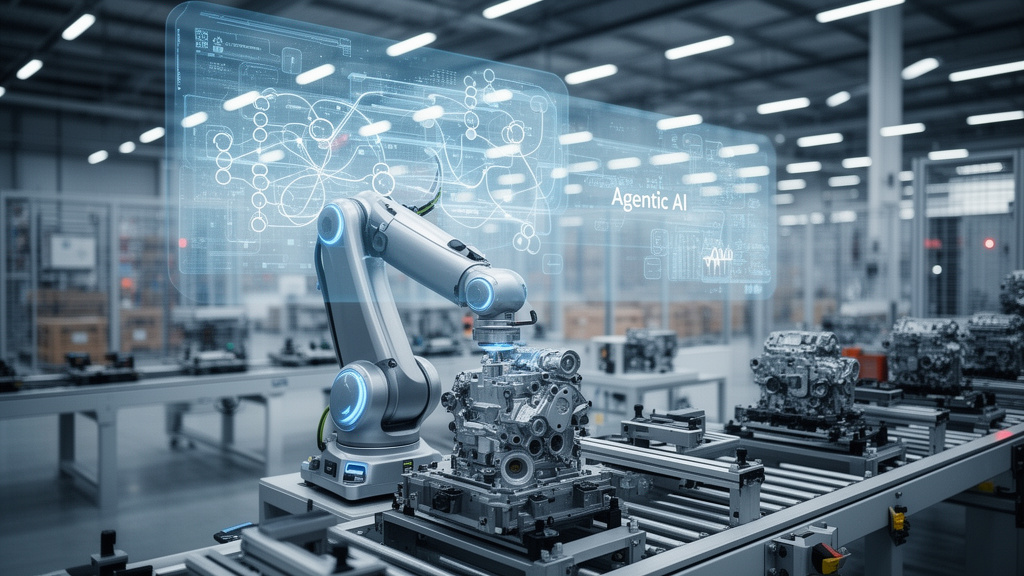
The most significant trend this month is the stabilization of ‘Agentic AI.’ We are seeing a 40% reduction in human-in-the-loop dependencies for complex enterprise tasks. Modern agents, powered by frameworks like those popularized by OpenAI’s o-series reasoning models and Anthropic’s updated Claude architectures, can now plan, execute, and self-correct across multi-step workflows. Whether it is deploying software code, managing complex procurement cycles, or orchestrating supply chain logistics, these agents act as ‘Digital Employees’ rather than static assistants.
Small Reasoning Models (SRMs) and Efficiency
Not all progress is about size; in fact, the most disruptive progress is about minimization. As of Q3 2026, the obsession with ‘bigger’ models has subsided in favor of ‘smarter’ models. The emergence of highly optimized Small Reasoning Models (SRMs) allows businesses to run sophisticated logic on edge devices. This shift has been driven by the need to lower inference costs and reduce latency. Companies are moving away from massive, cloud-dependent clusters for routine tasks, opting instead for localized, high-reasoning models that provide near-instantaneous responses while maintaining data privacy.
Embodied AI and the Physical Frontier
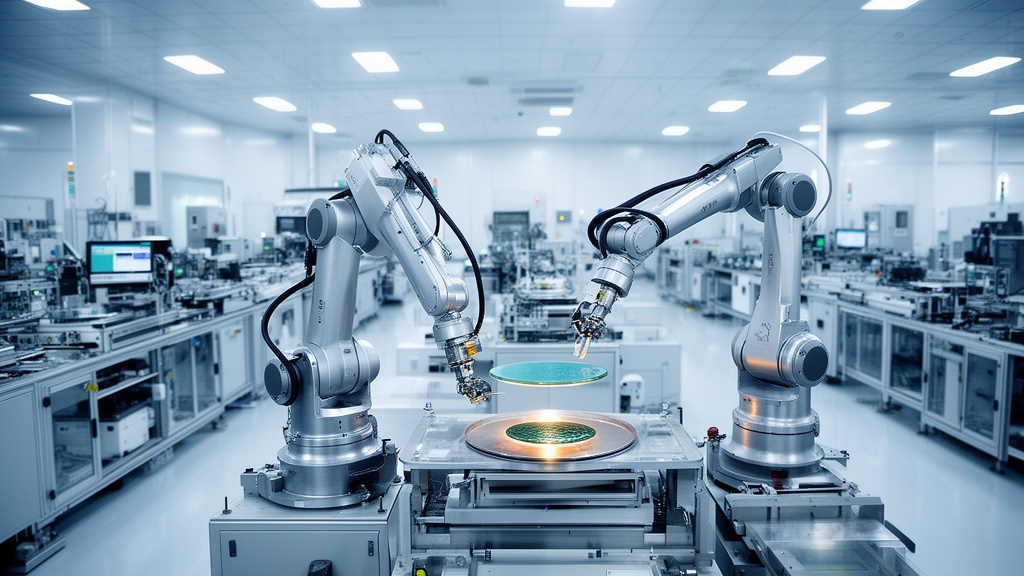
Perhaps the most visually stunning trend is the advancement of Physical AI. Following the integration breakthroughs seen earlier this year by innovators like Figure AI and Boston Dynamics, we are now seeing foundation models operating in the real world. Robotics in 2026 are no longer programmed for repetitive ‘if-then’ motions; they are being trained on video and sensor data to ‘understand’ tasks in real-time. This is transforming manufacturing, logistics, and elder care, as robots gain the ability to navigate unstructured environments.
The Multimodal Convergence
Multimodality is no longer a luxury feature—it is the baseline. Users in September 2026 expect models to ingest video, audio, code, and text streams simultaneously. This convergence has enabled ‘Real-Time Reasoning,’ where an AI agent can analyze a live video feed of a manufacturing defect and suggest a corrective path, or interpret a video conference to provide real-time negotiation strategies. The seamless integration of these modalities has democratized the use of AI in high-stakes fields like medicine and structural engineering.
Secondary Angles: The Structural Impact
1. The Energy Bottleneck: With the massive proliferation of agentic systems, energy consumption has become the primary limiting factor for AI growth. We are observing a trend toward specialized, low-power inference hardware, leading to a massive spike in investments within the energy sector, specifically modular nuclear and advanced grid storage solutions.
2. The New ‘AI Orchestrator’ Role: The job market has fundamentally shifted. The ‘Prompt Engineer’ role has largely been automated away. In its place, the ‘AI Orchestrator’ has emerged—a professional who manages the interconnected web of agents, monitoring for hallucination drift, ensuring cross-system security, and managing the cost-efficiency of model routing.
3. The Trust Crisis: As agents gain more autonomy, the industry has faced a reckoning regarding ‘Agency Risk.’ We are seeing the rise of mandatory, third-party auditing for agentic systems to prevent recursive errors, where an AI’s self-correction loop inadvertently compounds a mistake, a phenomenon that has already caused notable ripples in automated financial trading platforms this year.
FAQ: People Also Ask
Q: What is the difference between an ‘Agent’ and a standard Chatbot?
A: A chatbot provides information or content based on a prompt. An Agent can take action on your behalf, such as accessing your email, modifying code, or interacting with software tools to complete a project without constant human instruction.
Q: Are Small Reasoning Models really as capable as Large Language Models?
A: For specific, high-logic tasks, yes. While they may not have the breadth of knowledge of a trillion-parameter model, SRMs are trained for precision, reasoning, and efficiency, making them superior for operational workflows.
Q: What is ‘Physical AI’?
A: Physical AI refers to the integration of advanced reasoning models with physical hardware, such as robotic arms or autonomous drones, allowing machines to perform complex tasks in the real world based on ‘understanding’ rather than pre-programmed scripts.
Q: Will these trends lead to more job displacement?
A: While the nature of work is changing, these trends are creating new roles focused on orchestration, oversight, and infrastructure management. The ‘Agentic’ era is focused on augmenting productivity rather than replacing the human worker entirely.