August 19 stands as one of the most culturally significant dates in the timeline of popular music, acting as a historical pivot point where the industry shifted from regional novelty to a global, stadium-filling economic engine. On this date in 1964, the world witnessed the true ignition of Beatlemania in North America, while the date also serves as a bookend for the artistic evolution and tragic loss of some of rock’s most influential figures. This date reminds us that rock music is not merely a collection of songs, but a series of industrial and cultural revolutions that permanently altered the global stage.
Key Highlights
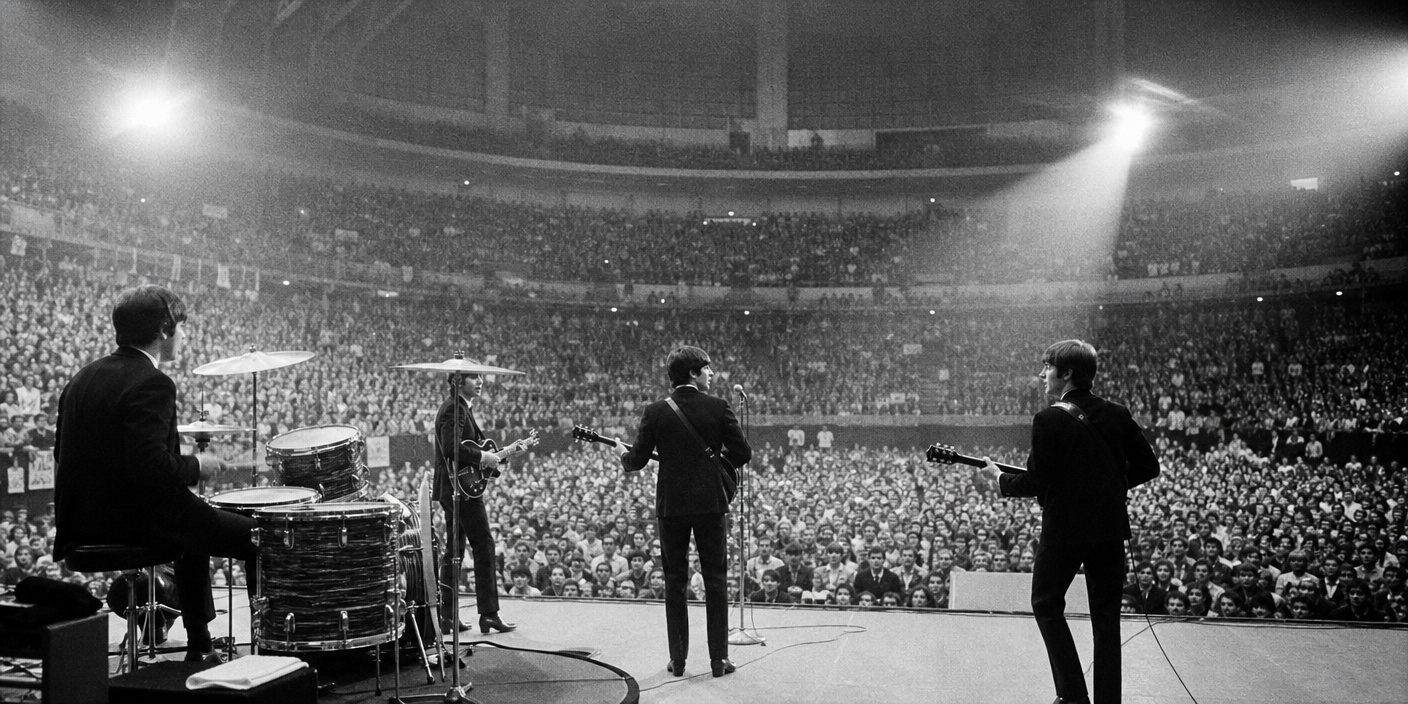
- 1964: The Beatles performed their first-ever North American tour concert at the Cow Palace in San Francisco, forever changing the live music industry.
1974: Eric Clapton released his iconic album 461 Ocean Boulevard*, signaling a successful pivot toward a more laid-back, reggae-influenced sound.
- 1997: The music world mourned as the body of Jeff Buckley was recovered from the Wolf River in Tennessee, marking the heartbreaking end of a prodigious talent.
The Architecture of Beatlemania
When The Beatles arrived in San Francisco on August 19, 1964, the music industry was fundamentally unprepared for the magnitude of what was about to unfold. Performing at the Cow Palace to an audience of approximately 17,130 screaming fans, the band did not just play a concert; they provided a masterclass in modern stardom. This show was the inaugural performance of their first North American tour, a 32-day odyssey that would see them perform 32 shows in 24 cities.
Before this tour, the concept of a “stadium rock” spectacle did not exist in the way we recognize it today. The sheer technical challenge of hearing the music over the constant, high-pitched shrieking of thousands of fans forced the band—and their management team led by Brian Epstein—to rethink tour logistics, sound systems, and security protocols. It was a baptism by fire that taught the music industry that rock and roll was a multi-million-dollar force capable of dominating not just charts, but entire continents.
The Shift in Live Touring Economics
The financial success of the 1964 tour laid the blueprint for the modern concert industry. Promoters began to realize that the cultural phenomenon surrounding The Beatles could be leveraged into a permanent revenue stream. Prior to 1964, touring was a promotional tool to sell singles. After this date, touring became the primary economic engine for rock acts. The scale of the Cow Palace event, with its controlled chaos and record-breaking ticket demand, forced venue managers to treat rock concerts with the same administrative gravity as major sporting events. This was the birth of the professionalized rock tour.
Eric Clapton’s Mid-70s Metamorphosis
Fast forward exactly a decade to August 19, 1974. The rock world saw a different kind of evolution with the release of Eric Clapton’s 461 Ocean Boulevard. Following a period of hiatus and personal struggle, Clapton returned with an album that defied the heavy, blues-rock expectations of his Cream era.
By embracing a softer, more melodic approach—and notably, a reggae influence on his cover of Bob Marley’s “I Shot the Sheriff”—Clapton demonstrated that a rock icon could reinvent their sound without alienating their core audience. This album was a masterclass in musical maturation. It proved that longevity in rock required an artist’s willingness to experiment with genres. 461 Ocean Boulevard reached number one on the Billboard 200, validating the idea that after the excess of the 60s, audiences were ready for a more nuanced, intimate, and groovy musical texture. The album remains a case study for artists looking to transition from “guitar hero” to “song-first” songwriter.
The Tragic Loss of Jeff Buckley
History is rarely all triumph, and August 19 also carries the weight of profound grief. On this day in 1997, rescue crews recovered the body of Jeff Buckley from the Wolf River in Memphis, Tennessee. Buckley had gone missing days earlier while swimming, and his sudden passing at age 30 remains one of rock’s most haunting “what if” scenarios.
Buckley’s legacy, built on the strength of his singular album Grace and his ethereal, spine-tingling cover of Leonard Cohen’s “Hallelujah,” has only grown in the decades since his death. His loss serves as a somber reminder of the human element behind the industry machines. In the annals of rock history, his departure on this date marks a moment of reflection—not just on his talent, but on the fragility of the creative process. Music history is as much about the artists we lost too soon as it is about those who lived to shape the medium for decades.
Analyzing the Cultural Echo
Why do these specific dates resonate? Whether it is the ascent of The Beatles, the artistic pivot of Clapton, or the silence left by Buckley, August 19 connects the dots of rock’s lifecycle. It is a date that encompasses the beginning of massive commercial expansion, the necessity of artistic reinvention, and the vulnerability of the creative spirit. When we analyze these events, we are looking at the foundational pillars of rock and roll: the audience, the artist, and the inevitable passage of time.
FAQ: People Also Ask
Q: Did The Beatles play any other major shows in August 1964?
A: Yes, the August 19 show at the Cow Palace was the first stop of an extensive 1964 tour. They performed continuously across North America throughout the remainder of August and into September, playing 32 shows in just 34 days, a grueling schedule that essentially defined the modern touring model.
Q: How did Eric Clapton’s 1974 album change his career?
A: 461 Ocean Boulevard was critical in moving Clapton away from the “guitar god” persona he earned in Cream and The Yardbirds. By focusing on songwriting and incorporating reggae and pop elements, he established himself as a mature, sustainable solo artist, proving that an artist’s sound could evolve with their life experiences.
Q: Why was the 1964 Beatles tour considered an economic shift?
A: It established the “stadium tour” as a legitimate business model. Before this, large-scale venue tours for rock bands were rare and often poorly managed. The Beatles’ success proved that rock bands could fill massive venues, leading to the development of the multi-billion-dollar global touring industry that exists today.
Q: What is the significance of the Wolf River location in Jeff Buckley’s story?
A: The Wolf River in Memphis became the final site of Buckley’s life in 1997. It is frequently visited by fans and remains a somber point of pilgrimage in the broader narrative of rock tragedy, highlighting the unpredictability of an artist’s journey at the height of their influence.