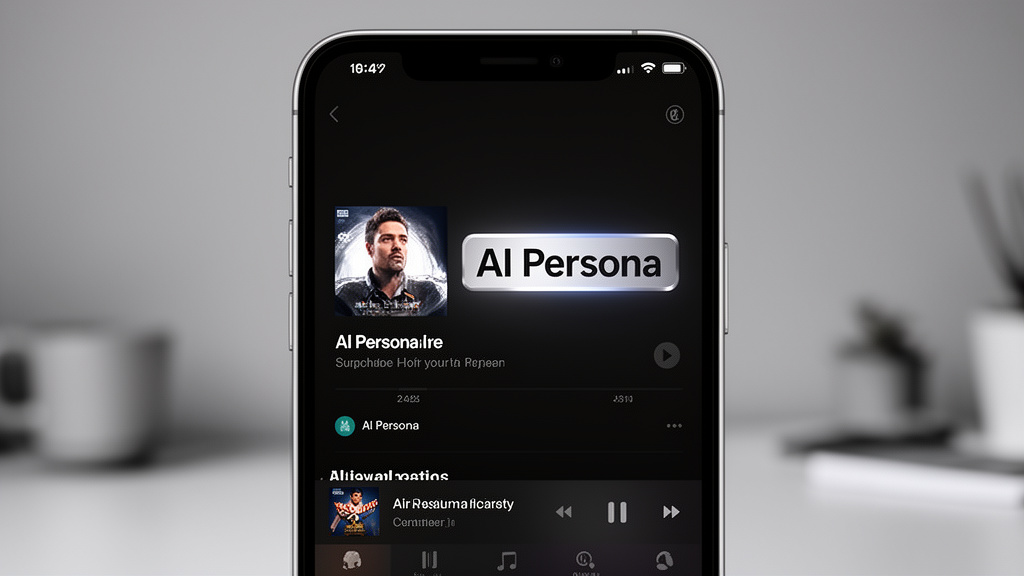
In a decisive move to restore clarity in an increasingly saturated streaming ecosystem, Spotify has officially confirmed the rollout of a comprehensive labeling system for AI-generated music. Beginning in mid-September, the platform will introduce a mandatory “AI Persona” tag for tracks that leverage generative artificial intelligence, marking a significant pivot in how the world’s largest audio streamer manages the intersection of technology and human creativity.
This policy is not merely a feature update; it is an industry-defining standard intended to shield the sanctity of human artistry while providing listeners with radical transparency regarding the origin of the media they consume. As algorithmic content proliferates, Spotify’s intervention aims to serve as a firewall between authentic musical expression and synthesized audio files.
Key Highlights
- Mandatory Disclosure: All creators and distributors must now utilize the new “AI Persona” tagging system for any track containing AI-generated elements.
- Transparency Deadline: The rollout commences in mid-September, with enforcement protocols expected to scale shortly thereafter.
- Distinction of Artistry: The initiative is designed to delineate between traditional human compositions and content created by machine learning models.
- User Trust: By implementing visible tags, Spotify aims to combat the “deepfake” phenomenon and maintain listener confidence in platform content.
The Transparency Pivot: Redefining the Streaming Landscape
The decision to implement the “AI Persona” tag arrives at a critical juncture for the music industry. Over the past eighteen months, the rapid advancement of generative AI tools—capable of mimicking everything from vocal timbres to intricate instrumental arrangements—has created a “Wild West” environment on streaming platforms. Tracks mimicking major artists have gone viral, often misleading listeners and creating significant copyright and royalty friction between rights holders and technology developers.
Spotify’s new policy essentially serves as a regulatory buffer. By requiring creators to proactively label their AI-influenced content, the platform is shifting the burden of disclosure onto the producers. This move is less about banning AI-generated music—which remains a legitimate, albeit contentious, creative tool—and more about “truth in labeling.” For listeners, this means the user interface will soon feature specific markers that clearly identify tracks that do not originate from human studio sessions.
The Mechanics of the ‘AI Persona’ Tag
From a technical perspective, the implementation is designed to be seamless yet unmistakable. The tags will appear directly on track profiles and album pages, ensuring they are visible at the point of discovery. While specific UI/UX details remain under wraps until the mid-September launch, sources indicate that the tagging system will be integrated into the existing metadata upload process. Artists will be prompted to disclose AI involvement during the distribution phase, similar to how they currently declare explicit content or parental advisory status.
This system is not purely automated; it relies on a combination of creator honesty and potential algorithmic auditing. Spotify has invested heavily in detecting audio fingerprints that deviate from standard human performance patterns, and the new labeling mandate likely aligns with these detection capabilities to flag non-compliant releases.
Economic Implications and the Royalty Pool
One of the most pressing questions surrounding this policy is how it will impact the streaming royalty pool. Currently, Spotify’s payout model is based on stream counts, which does not inherently differentiate between a garage-band recording and an AI-generated lo-fi beat loop. By tagging AI tracks, Spotify creates a pathway for future “differential monetization.”
Industry analysts speculate that this could lead to a segmented royalty system. If AI content is clearly labeled, major labels and collection societies may push for these tracks to be categorized differently, potentially protecting the revenue share of human artists. This economic angle is crucial: if generative AI content continues to flood the platform without distinction, it threatens to dilute the earnings of creators who spend significant time, effort, and capital on professional studio productions.
The Secondary Angles: Beyond the Tag
1. The Trust Economy: In an era of rampant misinformation, trust is a commodity. Spotify’s decision is likely a strategic play to maintain its position as a trusted curator. By differentiating human from synthetic, the platform protects its brand value against the risk of becoming a repository for “cheap” or “deceptive” AI media.
2. The Legal Firewall: This move provides legal cover for Spotify. As copyright lawsuits mount against AI companies (like those involving Universal Music Group and various generative music startups), having a clear, disclosed system for AI content helps Spotify distance itself from claims of hosting infringing material, placing the onus on the uploader to be transparent.
3. Future-Proofing Creativity: The long-term impact on music production is profound. Artists are now effectively competing against an infinite supply of instant music. By forcing transparency, Spotify is forcing a choice upon the consumer: do you value the “human” touch, or are you looking for functional background noise? This shift may eventually lead to a renaissance of “human-made” marketing for musicians, where the lack of an AI tag becomes a premium selling point.
FAQ: People Also Ask
Q: Will existing tracks be retroactively labeled?
A: The current rollout focuses on new uploads starting in mid-September. However, Spotify’s policy framework allows for the potential auditing of existing content that is identified as AI-generated by rights holders or internal detection systems.
Q: Does this mean AI-generated music is banned from Spotify?
A: No. Spotify is not banning AI music. The goal is transparency, not censorship. AI-generated tracks will remain allowed, provided they are correctly labeled as such by the creators.
Q: What happens if an artist fails to label their AI-generated music?
A: While the specific penalties are evolving, failure to adhere to platform metadata standards typically results in content removal, account suspension, or, in extreme cases, the withholding of royalty payments until the metadata is rectified.
Q: How does this help the average listener?
A: It empowers listeners to make informed choices. If you specifically enjoy human-composed artistry, you will soon have the tools to identify the tracks that align with your preference, separating them from algorithmic or synthetic compositions.