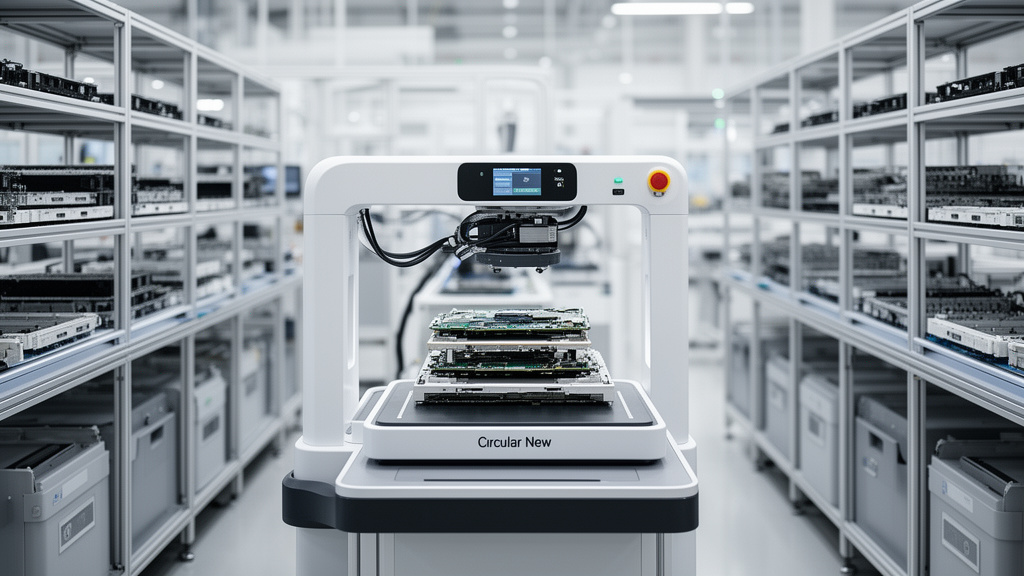
On October 15, 2026, the financial world witnessed a dramatic shift in market sentiment as a brutal sell-off hit semiconductor and AI-linked stocks. Driven by fresh fears regarding September’s 3.7% inflation print and the subsequent expectation of aggressive interest rate hikes, investors rapidly liquidated positions in high-growth tech assets, opting instead for the perceived safety of bonds and fixed-income securities. This event marks a potential turning point in the post-pandemic market narrative, signaling that the ‘growth at all costs’ era is confronting the stubborn reality of sustained inflationary pressure.
Key Highlights
- Market Volatility: Semiconductor equities experienced a sharp decline on October 15, 2026, with tech-heavy indices struggling to maintain support levels.
- Inflation Catalyst: September’s Consumer Price Index (CPI) reached 3.7%, effectively ending hopes for early interest rate relief and triggering the sell-off.
- Global Contagion: Asian markets were hit first and hardest, with South Korea’s Kospi 200 suffering significant losses due to its heavy weighting in memory chip manufacturers.
- Defensive Pivot: Institutional capital is flowing out of volatile growth stocks and into government bonds, as investors prioritize yield security over speculative tech gains.
The Great Semiconductor Rotation: Inflation Fears Trigger Market Shift
The sell-off on October 15, 2026, was not merely a momentary dip; it represented a structural rotation in capital markets. For years, semiconductor stocks—the backbone of the AI boom—had been the market’s darling, fueled by limitless capital expenditure on infrastructure. However, the release of September’s inflation data, which pegged the rate at 3.7%, shattered the prevailing consensus that inflation had been tamed.
The Inflation-Interest Rate Trap
When the 3.7% inflation figure was confirmed, the market reaction was instantaneous. Higher inflation necessitates higher interest rates to cool the economy. For chipmakers, who are often capital-intensive and rely on discounted future cash flows for their valuations, higher interest rates are devastating. When the discount rate rises, the present value of future earnings for high-growth tech companies plummets.
Investors, sensing that the ‘higher for longer’ interest rate environment was no longer a theoretical risk but a present reality, began to reprice risk. The transition from risk-on assets (tech) to risk-off assets (bonds) has become the defining theme of the fourth quarter of 2026. The volatility witnessed in US tech-heavy indices on October 15 was a direct consequence of institutional algorithms adjusting to this new cost-of-capital environment.
Impact on the Kospi 200 and Asian Supply Chains
While US tech markets faced immense pressure, the impact was arguably more acute in Asian markets. The Kospi 200, deeply correlated with the global semiconductor supply chain, saw significant declines. Because many South Korean manufacturers are primary suppliers for the global AI ecosystem, the sell-off served as a proxy for global demand fears.
Analysts suggest that the downturn in the Kospi 200 reflects a broader anxiety: if US tech giants reduce their capital expenditure due to high borrowing costs, demand for the specialized chips produced in Seoul will inevitably decline. This creates a feedback loop where financial tightening in the West directly erodes the manufacturing base in the East.
The ‘Safety Trade’: Bonds as the New Alpha
With equity markets showing instability, the focus has shifted entirely to the bond market. Yields on government Treasuries have become increasingly attractive compared to the dividend yields of major tech firms. For institutional investors—pension funds, insurance companies, and sovereign wealth funds—the current yield environment offers a ‘risk-free’ return that was simply unavailable during the 2023-2025 tech bull run.
This shift is not merely defensive; it is strategic. By locking in current yields, investors are insulating their portfolios from further inflation spikes. The ‘safety trade’ is now the primary driver of equity volatility, as every percentage point rise in bond yields effectively siphons liquidity out of the equity markets.
Future Predictions: The AI Infrastructure Question
Looking forward, the question remains: will this sell-off stifle innovation? If capital becomes too expensive, the rapid deployment of AI infrastructure—data centers, GPUs, and high-bandwidth memory—may slow down. However, some analysts argue that this period of consolidation is necessary.
Over the next few months, market watchers will be looking for signs of stabilization in semiconductor pricing and, more importantly, clarity from central banks regarding the trajectory of interest rates. Until inflation trends downward closer to the 2% target, the semiconductor sector will likely remain under immense pressure, forcing investors to remain nimble and bond-focused.
FAQ: People Also Ask
1. Why did the 3.7% inflation rate trigger a tech sell-off?
Because higher inflation generally forces central banks to raise interest rates. Higher interest rates increase borrowing costs and lower the present value of future earnings, which disproportionately hurts high-growth tech companies and chipmakers that rely on capital-intensive investments.
2. Is the semiconductor decline permanent?
Market volatility is rarely permanent. While the current sell-off is significant, semiconductor demand is driven by secular trends like AI, cloud computing, and automotive tech. Investors are currently repricing these assets based on macro-economic conditions rather than a loss of faith in the technology itself.
3. Why are investors moving to bonds?
Bonds are considered a safer asset class compared to stocks. In a high-interest-rate environment, the yield (interest payment) on bonds becomes more competitive with the earnings growth of stocks, leading investors to reallocate capital into fixed-income assets to protect their principal and secure steady returns.