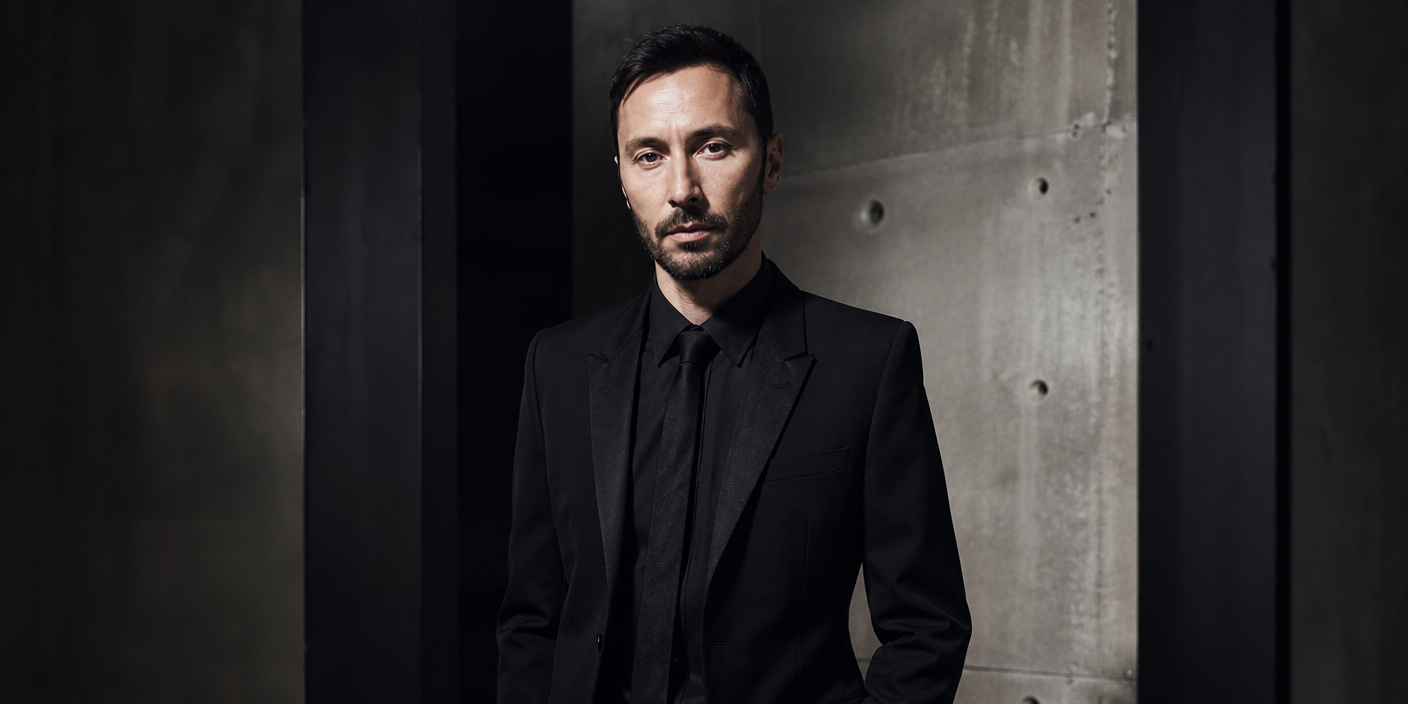
Anthony Vaccarello is officially stepping down as the creative director of Saint Laurent, marking the end of a transformative ten-year era that fundamentally redefined the Parisian fashion house. Since his appointment in 2016, Vaccarello has steered the brand away from the rock-n-roll grit of his predecessor, ushering in an aesthetic defined by razor-sharp tailoring, hyper-femininity, and an uncompromising commitment to dark, architectural glamour. As the industry reflects on this departure, it is clear that Vaccarello did not merely design clothes; he curated an entire visual language that dominated the luxury sector for a full decade.
Key Highlights
- A Decade of Transformation: Anthony Vaccarello’s tenure began in 2016, successfully positioning Saint Laurent as a beacon of modern, high-octane luxury.
- Signature Aesthetic: He is credited with synthesizing the house’s heritage with a new, aggressive minimalism, characterized by daring silhouettes and precise construction.
- The SS27 Legacy: His final contributions are headlined by the engineering marvel of the SS27 ‘cloud’ installation, which pushed the boundaries of immersive runway production.
- Business Growth: Under his creative guidance, the brand saw significant revenue resilience, maintaining a sharp focus on elevated, luxury-tier ready-to-wear that appealed to a global, trend-conscious demographic.
The Architecture of the Vaccarello Woman
When Anthony Vaccarello assumed the mantle of creative director at Saint Laurent in 2016, he faced the daunting challenge of succeeding a predecessor who had steered the brand toward a specific, gritty rock aesthetic. Vaccarello’s pivot was not an immediate rejection of that past, but a maturation. He honed in on the concept of ‘the Vaccarello woman’—a figure of imposing, sharp-shouldered strength who embraced deep, noir-inspired color palettes and innovative fabrics.
His technical precision became the brand’s cornerstone. Unlike designers who lean heavily into oversized or streetwear-influenced silhouettes, Vaccarello remained steadfast in his devotion to the suit, the tuxedo, and the mini-dress. He utilized the archives of Yves Saint Laurent—specifically the 1980s power-dressing era—as a launchpad, contemporizing the look with sheer materials and complex, asymmetric cuts. This approach created a high-barrier-to-entry aesthetic that demanded confidence, effectively making YSL garments the unofficial uniform for the global red-carpet elite.
Showmanship as Strategy: The SS27 ‘Cloud’ Moment
Perhaps the most enduring legacy of the Vaccarello years is his radical approach to showmanship. Vaccarello transformed the runway from a simple exhibition space into a theatrical, site-specific event. He famously utilized the Trocadéro Gardens and the Eiffel Tower as a backdrop, treating the Parisian skyline as a living extension of his collections. However, nothing solidified his reputation for structural ambition quite like the SS27 ‘cloud’ installation.
This show was not merely about the clothes; it was an exercise in environmental engineering. By suspending the audience within an immersive, atmospheric fog and light structure, Vaccarello blurred the lines between reality and artifice. It was a bold, risky move that paid off, generating unprecedented engagement metrics across digital platforms. The ‘cloud’ show serves as a case study for luxury marketing in the digital age: it was designed to be viewed through a screen just as much as it was meant to be experienced in person. It remains a testament to his ability to craft ‘viral’ moments that never sacrificed the integrity of the couture craftsmanship.
Economic Impact and Brand Resilience
Beyond the visuals, Vaccarello’s decade was marked by consistent business discipline. In an era where fashion houses frequently pivoted toward sneaker drops and logomania to capture short-term revenue, Vaccarello stayed the course with a product-first strategy. He focused on high-margin, high-visibility runway pieces that drove the brand’s desirability. Under his direction, Saint Laurent remained a core pillar for the Kering group, demonstrating an ability to sustain growth in a volatile macroeconomic environment. His strategy relied on cultivating scarcity and aspiration, ensuring that despite the brand’s massive global scale, it retained the exclusive, ‘cool-kid’ cachet that Yves Saint Laurent himself originally championed.
A Vacancy at the Top: What Comes Next?
As the fashion industry turns its eyes toward the future, Vaccarello’s departure leaves a significant void. The question of who will fill the role is not merely about finding a designer capable of cutting a lapel; it is about finding a creative director who can manage the massive, machine-like operation that is a modern, billion-euro fashion label. The next iteration of Saint Laurent will likely be heavily scrutinized. Will the brand lean further into its couture roots, or will it seek a disruptor to shake up the current, polished aesthetic? Regardless of the successor, the bar has been set exceptionally high by ten years of Vaccarello’s unwavering, dark, and precise vision.
FAQ: People Also Ask
1. What was the defining aesthetic of Anthony Vaccarello’s time at Saint Laurent?
Vaccarello was defined by his ‘dark glamour’ aesthetic. This involved razor-sharp tailoring, monochromatic palettes (heavily favoring black), sheer fabrics, and a modern take on 1980s power dressing, distinguishing the brand through structural precision rather than seasonal trends.
2. Why was the SS27 ‘cloud’ installation so significant?
The SS27 ‘cloud’ installation was a landmark project that prioritized immersive set design. It demonstrated Vaccarello’s ability to use environmental engineering to frame his collections, creating a digital-first, theatrical experience that set a new standard for luxury runway shows in the modern era.
3. What is the business impact of his departure?
Vaccarello’s departure leaves a critical role at Saint Laurent, a top-performing brand under the Kering conglomerate. His tenure was characterized by maintaining financial resilience and brand desirability, and his successor will be tasked with continuing this upward trajectory in a shifting luxury market.
4. How does his legacy compare to his predecessor, Hedi Slimane?
While Slimane focused on a rock-n-roll, indie-sleaze aesthetic that was often raw and gritty, Vaccarello’s approach was more aligned with ‘polished’ haute couture. He took the brand toward a more sophisticated, architectural, and hyper-feminine direction, while respecting the heritage of the house.