In a profound shift across the American carceral system, music is no longer merely a pastime behind bars; it has become a central component of rehabilitation and human expression. A wave of new initiatives, most recently headlined by major reporting on the musical output of incarcerated individuals, is shedding light on how these often-hidden sonic landscapes function as powerful tools for processing trauma, building community, and challenging the dehumanizing effects of long-term confinement. These projects are not just archiving sound; they are fundamentally altering the discourse on justice and the purpose of the prison system itself.
Key Highlights
- The ‘Redemption Songs’ Impact: The Marshall Project’s recent limited-run newsletter, “Redemption Songs,” has brought decades of music created behind bars into the mainstream, cataloging songs that span nearly a century.
- Technological Innovation: Artists inside are bypassing lack of studio access by using innovative methods, including recording via collect-call phone systems, which are then polished by outside producers.
- Humanizing the System: Experts argue that music programs provide essential psychological outlets, reducing recidivism by fostering identity and purpose beyond the label of “prisoner.”
- Collaborative Ecosystems: Nonprofit entities and arts organizations are increasingly partnering with departments of corrections to provide legitimate studio time, gear, and distribution channels for formerly and currently incarcerated artists.
The Harmonic Shift: How Music Projects Are Transforming Correctional Culture
The American prison system has long been criticized for its isolating and punitive nature. However, a growing body of evidence—and a recent flurry of media attention—suggests that artistic expression is acting as a necessary counterweight to this environment. The emergence of high-profile projects, such as “Redemption Songs,” has effectively moved the “prison music” genre from the periphery of fringe culture to the center of serious sociological inquiry. These initiatives are not merely “human interest” stories; they represent a significant pivot in how society understands the rehabilitative potential of the arts within locked facilities.
The ‘Digital Wall’ – Overcoming Recording Barriers
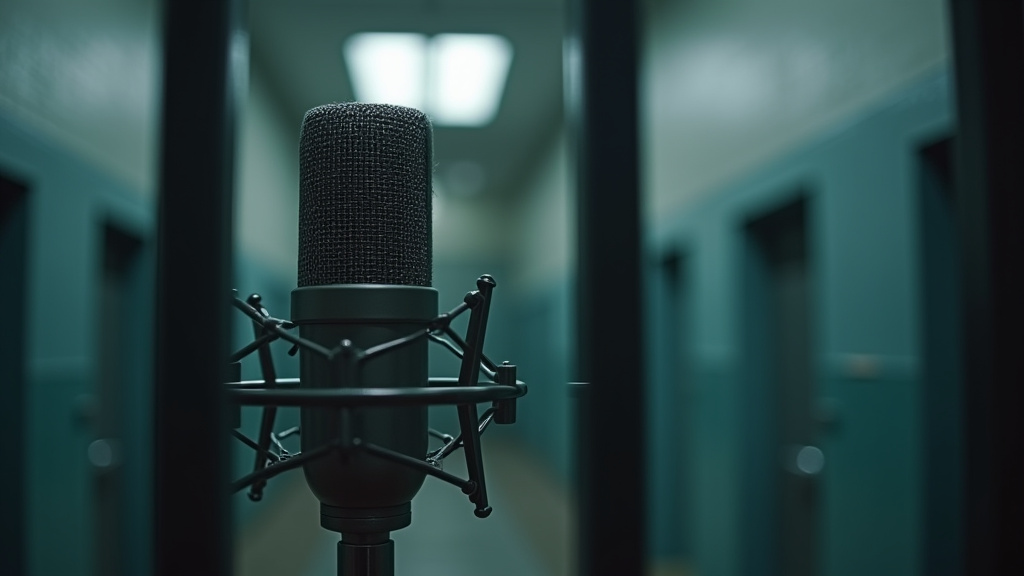
One of the most fascinating aspects of this movement is the ingenuity required to produce the art. In facilities where traditional recording equipment is strictly prohibited, incarcerated artists have had to become sound engineers of necessity. The process often involves complex workarounds: singing or rapping lyrics into payphones during authorized communication windows, where the audio is captured by external collaborators, or utilizing “lo-fi” recording devices smuggled or provided through specific pilot programs. This “phone-line fidelity”—often characterized by tinny, compressed audio, background ambient noise of the facility, and the abrupt cut-offs of timed calls—has become an aesthetic signature of the genre.
However, the recent influx of “authorized” programs, such as those in California’s state prisons, is changing the landscape. By providing access to Pro Tools, keyboards, and controlled recording spaces, these programs are allowing for a professionalization of the art. This transition from “stolen moments” to “structured creation” marks a pivotal step in correctional policy. When inmates are treated as artists, the power dynamic shifts from one of total control to one of creative agency, allowing them to reclaim a piece of their identity that the carceral system otherwise seeks to strip away.
The Psychology of Incarcerated Expression
Why is music specifically effective in this setting? The answer lies in its ability to bridge the gap between the internal world of the individual and the external world from which they are excluded. For many, music is the only medium capable of translating the extreme emotional volatility of prison life. Research into “musicking”—the idea that music is an act rather than just an object—suggests that for incarcerated individuals, the process of composition is a vital exercise in autonomy.
When a person in prison writes a song, they are asserting that their voice still matters. They are making a claim on their own history. In the “Redemption Songs” archives, one finds songs that range from gospel ballads written in the 1940s to hip-hop tracks produced in the 2020s. This continuity reveals that the “prison song” is not a static artifact; it is an evolving dialogue about justice, loss, and the eternal search for redemption.
Ethics and the Public Perception of Prison Art
There is, of course, a critical ethical debate surrounding these projects. Critics often ask: Does “humanizing” the incarcerated through art detract from the gravity of their crimes? Proponents, such as BL Shirelle of Freer Records, argue that the goal is not to excuse the crime but to acknowledge the humanity of the person behind the bars. The music itself serves as an undeniable piece of evidence that, regardless of one’s legal status, the human impulse to create, communicate, and connect remains irreducible. By providing a platform for this art, these projects challenge the public to view incarcerated individuals not as abstractions, but as complex human beings with talents, histories, and the capacity for growth.
The Future of Correctional Arts
As we look toward the future, the integration of technology and arts programs in prisons is likely to expand. We are seeing a move toward more institutionalized “creative rehabilitation,” where the focus is not just on time served, but on time spent. If a prisoner leaves a facility not only with a clean disciplinary record but with a portfolio of creative work, technical skills in digital audio production, and a documented history of emotional processing through art, the likelihood of successful reintegration into society rises exponentially. The “prison music” project is therefore not just a documentary effort; it is a blueprint for a more rehabilitative, less warehouse-oriented approach to justice.
FAQ: People Also Ask
Q: Are these prison music projects legal and authorized?
A: Yes. While unauthorized recording has historically been common, modern initiatives like the Marshall Project’s collaborations or state-sponsored programs in California operate with the full cooperation of correctional administration, who increasingly view these programs as effective rehabilitation tools.
Q: How can I listen to the music created by incarcerated artists?
A: Many projects, such as “Redemption Songs” or labels like Freer Records, release compilations on major streaming platforms. These organizations also provide dedicated websites where you can stream the tracks and read the stories behind the songs.
Q: Does listening to this music actually reduce recidivism?
A: While music programs are not a “silver bullet,” studies suggest they improve behavior, mental health, and social connection within facilities. These factors are strongly correlated with lower rates of recidivism and better outcomes for individuals upon re-entry into society.
Q: How do producers get audio out of high-security prisons?
A: It varies by program. Some involve recording sessions held in designated rooms where files can be transferred to encrypted drives, while other, less formal projects rely on the aforementioned phone-call recording methods, which are later cleaned and mixed by professional engineers.