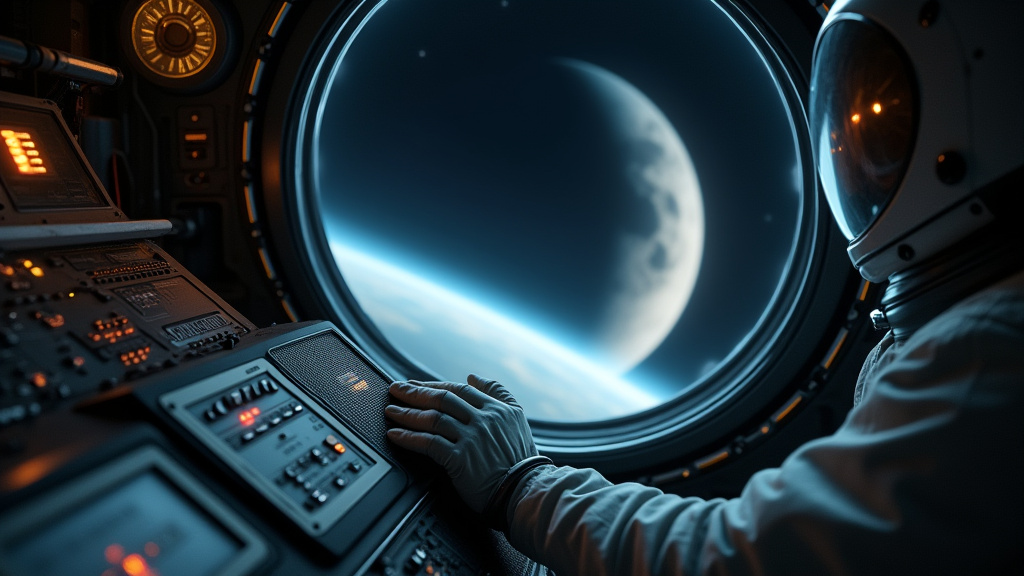
The Artemis II mission, a monumental endeavor that reignited humanity’s aspiration for deep-space exploration, concluded triumphantly on April 10, 2026. As the Orion spacecraft splashed down in the Pacific Ocean off the coast of San Diego, it signaled not just the end of a ten-day journey, but the successful re-entry of the United States into the business of crewed lunar exploration. For the four astronauts aboard—NASA’s Reid Wiseman, Victor Glover, and Christina Koch, and the Canadian Space Agency’s Jeremy Hansen—the mission was the culmination of years of rigorous training, technical challenges, and the collective hope of a new generation of explorers. This return marks the first time since the Apollo 17 mission in December 1972 that humans have traveled beyond low-Earth orbit, circumnavigated the Moon, and returned safely to tell the tale. The successful recovery by the USS John P. Murtha and the precision of the splashdown have proven that the Artemis architecture, including the Space Launch System (SLS) and the Orion capsule, is ready for the more complex missions that lie ahead.
Key Highlights
- Mission Success: The Artemis II crew splashed down safely in the Pacific Ocean on April 10, 2026, officially ending a 10-day historic lunar flyby.
- Technological Validation: The mission successfully tested the Orion spacecraft’s life-support systems, thermal protection during high-speed atmospheric re-entry, and deep-space communications.
- International Cooperation: The inclusion of Canadian Space Agency astronaut Jeremy Hansen highlights the global nature of the Artemis program, emphasizing partnerships essential for future lunar base development.
- Path to 2028: With the success of this crewed test flight, NASA is now firmly on track for Artemis III, a mission aimed at landing astronauts on the lunar surface in 2028.
A New Era of Lunar Exploration
The Artemis II mission was never intended to be a simple return to the Moon; it was a stress test for the future of human presence in our solar system. Unlike the Apollo missions, which were defined by the Cold War space race and a rapid, albeit spectacular, progression toward a surface landing, the Artemis program is built on a philosophy of sustainable exploration. The success of this 10-day circuit demonstrates that NASA and its international partners have successfully modernized the critical infrastructure required to survive and operate in the harsh environment of deep space.
The Technological Triumph of Orion
At the heart of this mission was the Orion capsule, a spacecraft designed to keep humans alive in deep space for longer durations than ever before. During the journey, the capsule functioned as a high-tech laboratory and living space. One of the most significant technical hurdles was the atmospheric re-entry. Traveling at speeds exceeding 24,000 mph (approx. 38,600 km/h) upon approaching Earth, the spacecraft encountered the atmosphere with immense kinetic energy. The heat shield, a critical component manufactured by Lockheed Martin, was subjected to temperatures reaching nearly 5,000 degrees Fahrenheit (2,760 degrees Celsius). Its successful performance in shielding the crew from this plasma-hot descent validates the engineering choices made over the last decade of development. The ‘bullseye’ landing in the Pacific, verified by recovery teams on the USS John P. Murtha, was the final, critical confirmation that the capsule is ready for the more strenuous requirements of future lunar landings.
The Human Element and Global Inspiration
While the technology dominated the headlines, the human element of Artemis II provided the emotional core of the mission. Commander Reid Wiseman, Pilot Victor Glover, and Mission Specialists Christina Koch and Jeremy Hansen carried the hopes of millions. The crew’s broadcasted updates, providing glimpses of the Earth rising over the lunar horizon, served as a powerful reminder of our planet’s fragility and the vastness of the cosmos. For Victor Glover, becoming the first Black astronaut to travel beyond low-Earth orbit, and for Christina Koch, breaking barriers as a woman on this deep-space trajectory, the mission was a landmark moment for diversity in aerospace. Furthermore, the inclusion of Jeremy Hansen, representing the Canadian Space Agency, underscored the ‘Artemis Accords’—a framework of international agreements that seeks to ensure that the future of lunar exploration is collaborative, peaceful, and beneficial for all of humanity.
Secondary Angles: Beyond the Splashdown
1. The Economic Catalyst: The Artemis program is acting as a massive economic engine. Beyond the immediate manufacturing contracts awarded to giants like Lockheed Martin and SpaceX, a secondary economy of smaller vendors, software developers, and research institutions is forming around the lunar logistics chain. This mission proves that investment in ‘cislunar’ economy is not just speculative, but actionable.
2. Historical Parallelism: Comparing Artemis II to Apollo 8 and Apollo 17 reveals a strategic pivot. While the Apollo era was a sprint to demonstrate dominance, Artemis is a marathon aimed at permanent infrastructure. The shift from ‘planting flags’ to ‘building bases’ represents a fundamental change in how humanity approaches space—moving from visiting to occupying.
3. Medical and Psychological Insights: The data collected from these four astronauts regarding the psychological impact of deep-space isolation and the physical toll of radiation and microgravity during a 10-day flight will be invaluable. This ‘living lab’ data is the key to unlocking safe human travel to Mars in the 2030s, as it provides the baseline for how we keep humans healthy outside the protection of Earth’s magnetosphere.
FAQ: People Also Ask
Q: What is the primary difference between Artemis II and the Apollo missions?
A: While Apollo was focused on rapidly achieving a landing to win the Space Race, Artemis is designed for long-term sustainability. The architecture includes plans for a permanent lunar base, utilizing international partnerships, and developing reusable landers with commercial partners like SpaceX and Blue Origin.
Q: When is the next Artemis mission, and what will it achieve?
A: The next major milestone, Artemis III, is scheduled for 2028. Its primary objective is to land two astronauts—including the first woman and the first person of color—on the lunar surface, specifically at the lunar south pole, to explore regions containing water ice.
Q: How was the crew recovered after splashdown?
A: Following the Orion spacecraft’s parachute-assisted splashdown in the Pacific Ocean, U.S. Navy recovery teams, including teams from the USS John P. Murtha, deployed small boats and helicopters. They secured the capsule, performed safety checks, and hoisted the astronauts out of the water to begin initial medical evaluations before transit to Houston.