The music industry is currently witnessing a tectonic shift as Suno, the generative AI powerhouse, secures a massive $2.45 billion valuation following its latest Series C funding round. While record labels and copyright watchdogs sound the alarm over training methodologies, Suno has quietly become one of the most significant disruptors in creative technology, effectively creating a new ecosystem where text-to-audio generation meets professional-grade production. This $2.5 billion bet by investors—including Menlo Ventures and NVIDIA’s NVentures—signals a firm belief that AI is not merely a novelty or a temporary threat, but the foundational architecture for the next generation of musical composition.
Key Highlights
- Massive Valuation: Suno has achieved a $2.45 billion post-money valuation after a $250 million Series C round, underscoring investor confidence in generative audio.
- Industry Polarization: While Suno faces active copyright litigation from major labels like Sony and Universal, it has simultaneously secured strategic partnerships, such as the landmark deal with Warner Music Group.
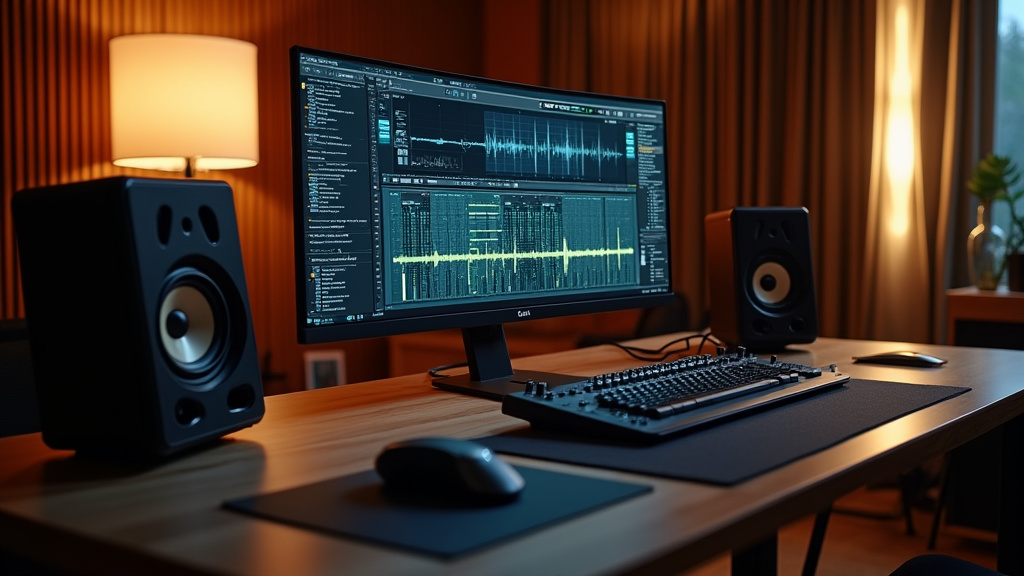
- Product Ecosystem: The launch of ‘Suno Studio’ and its acquisition of ‘WavTool’ mark a pivot from a simple ‘prompt-to-song’ utility to a comprehensive digital audio workstation (DAW) for creators.
- Creator Adoption: With over 100 million users and daily song generation rates in the millions, Suno is moving beyond ‘viral content’ to influence actual music charts and daily professional workflows.
- The ‘Licensed Future’: Suno is actively transitioning its models toward a licensed-data training foundation, aiming to resolve the tension between creative innovation and intellectual property rights.
The Generative Audio Revolution
The arrival of Suno into the mainstream consciousness represents more than just another generative AI tool; it is a fundamental challenge to the traditional gatekeeping mechanisms of the music industry. For decades, music production was limited by high barriers to entry: expensive equipment, professional studio time, and rigorous technical training. Suno, by contrast, democratizes this process, allowing anyone with a text prompt to manifest high-fidelity, studio-quality audio in seconds. This democratization has triggered a polarized reaction, casting the startup as both a visionary architect of the ‘creator economy’ and an existential threat to the livelihoods of professional musicians.
The $2.5 Billion Gamble: Betting on Disruption
The capital infusion of $250 million is not merely about server costs or talent acquisition; it is a declaration of permanence. By attracting heavy-hitting investors like Menlo Ventures and NVIDIA, Suno has positioned itself at the nexus of the ‘AI hardware and software’ stack. This capital enables the company to weather extended legal battles while simultaneously accelerating the development of its proprietary v5 model and ‘Suno Studio’ ecosystem. Investors are betting that the friction between AI and traditional labels will eventually follow the trajectory of the early digital streaming era: initial resistance followed by inevitable integration. In this view, the valuation is not based on current revenue alone, but on the potential for Suno to become the dominant platform where music consumption and creation converge.
The Legal Labyrinth: From ‘Fair Use’ to Licensing
Suno’s narrative is inextricably linked to its legal status. In 2024 and 2025, the company faced aggressive copyright infringement lawsuits from major players like Sony Music Entertainment, Universal Music Group, and Warner Music Group, who allege that the platform was trained on their artists’ intellectual property without authorization. Suno’s initial defense centered on the ‘fair use’ doctrine—a complex and often untested territory in AI development. However, the business landscape shifted significantly in early 2026. Suno’s decision to move toward a licensed model, exemplified by its deal with Warner Music Group, marks a critical pivot. This transition is essential for legitimacy; it acknowledges that while innovation can be disruptive, long-term market dominance requires a ‘walled garden’ of rights-cleared data that labels can accept. The future of Suno hinges on its ability to convince the remaining holdouts that a partnership model is more profitable than a scorched-earth litigation strategy.
Democratization or Displacement?
The central tension surrounding Suno is the fear of displacement. Critics, including many independent artists and unions, argue that AI platforms represent a ‘smash and grab’ operation on human creativity. However, the internal data tells a more nuanced story. Suno CEO Mikey Shulman has frequently pointed to the use of the platform by established songwriters and producers to speed up their creative workflows. This suggests a shift where AI serves not as a replacement for the artist, but as a ‘force multiplier.’
We are seeing a new type of creator emerge: the ‘curator-producer.’ In this model, the artist provides the emotional vision and structural direction, while the AI executes the technical heavy lifting—mixing, stem generation, and multi-track arrangement. While this undoubtedly disrupts the value proposition for traditional session musicians and junior production roles, it creates a massive expansion in the number of people who can call themselves ‘artists.’ The long-term economic impact will likely be a massive increase in the volume of music, which creates a new challenge: how to filter quality in an ocean of AI-generated, high-fidelity content.
The Technical Edge: Why Suno is Winning
From a technical perspective, Suno’s success is rooted in its rapid iteration cycle. The introduction of ‘v5’ marked a significant leap in audio fidelity, vocal control, and creative flexibility. By acquiring WavTool, Suno transitioned from being a black-box generator to a transparent, user-controlled workstation. This evolution is vital. A ‘prompt-to-song’ app is a toy; a DAW is a tool. By building a full-stack ecosystem that includes AI models, professional workstations, and community-driven social features like ‘Hooks,’ Suno is attempting to replicate the ‘Spotify for Creation’ effect. They aren’t just letting you make a song; they are trying to provide the environment where you live, work, and share that music.
FAQ: People Also Ask
1. Why is Suno valued at $2.5 billion despite the lawsuits?
Investors are betting on the platform’s long-term utility and its pivot toward a licensed ecosystem. Suno’s valuation reflects its massive user base (over 100 million people) and its proven ability to integrate into professional creative workflows, suggesting that once the legal issues are settled, the platform will be a standard tool in music production.
2. Is AI-generated music going to replace human artists?
Most experts view it as a transformation, not a complete replacement. While AI can generate songs, it lacks the ‘human brand’ and cultural context that audiences connect with. Instead, we are likely to see a hybrid future where artists use AI to speed up production and experimentation, while human-led curation and storytelling remain the primary drivers of cultural influence.
3. How does Suno plan to solve the copyright issue?
Suno is currently in the process of transitioning to a model trained on licensed data. By partnering with record labels like Warner Music Group, the company is aiming to secure rights-cleared training datasets. This ‘licensed-first’ approach is the company’s path to surviving and thriving within the existing music industry infrastructure.
4. What is ‘Suno Studio’?
The Suno Studio is the company’s flagship generative audio workstation. Unlike the original chat-based prompt interface, Studio combines AI-powered stem generation with professional multi-track editing, allowing users to fine-tune every element of a song rather than accepting a ‘one-shot’ generation.