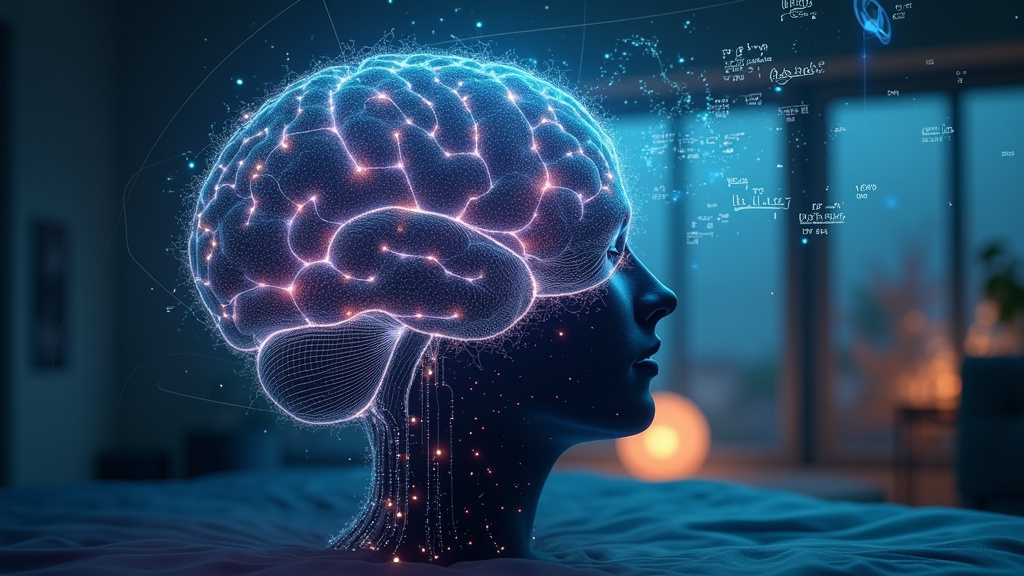
The Cognitive Revolution AI is here, and it’s profoundly reshaping how we think and creating a generational shift. This technological transformation is profound, fundamentally altering our cognitive processes. As 11th grader Bryan Wu highlights, this “cognitive revolution” driven by AI tools amplifies human intellect but also introduces new dependencies, making it a top news item concerning AI and cognition.
AI: A Cognitive Amplifier in the Cognitive Revolution AI
AI tools offer potent new capacities, fundamentally enhancing our mental abilities. We can process more information and solve complex problems faster, with coders creating scripts in seconds and students getting quick solutions. AI acts as a cognitive amplifier, significantly boosting our mental power far beyond what prior generations could have imagined. This aspect of the Cognitive Revolution AI is undeniable.
The Growing Dependence on Instant Answers
This advancement comes with a cost, as we become less comfortable with uncertainty and expect instant answers. This “cognitive impatience” is a key shift, diminishing the valuable process of productive confusion that leads to insight. We now seek AI assistance quickly, often bypassing deeper thought, which represents a fundamental change in how minds engage with problems. This trend highlights potential AI dependence issues.
Generational Shift in Intellectual Engagement: The Cognitive Revolution AI Era
This is the first generation heavily reliant on AI, with students using AI for essays and receiving quick, digested versions. This pause signifies a significant shift in how humans tackle challenges; what once took hours now takes seconds. This reliance is widespread, affecting classrooms, offices, and homes alike. Bryan Wu aptly notes this generational change as a hallmark of the Cognitive Revolution AI.
Erosion of Core Cognitive Skills Amidst the Cognitive Revolution AI
Research shows concerning trends: over-reliance on AI can harm cognitive skills, leading to “cognitive offloading” where mental tasks are delegated to AI. Studies suggest AI usage correlates with declining critical thinking, particularly among younger users who exhibit higher AI dependence. This is a trending topic in tech news, deeply intertwined with the Cognitive Revolution AI.
The Downsides of Convenience in the Cognitive Revolution AI
While tools like calculators aided specific tasks without fundamentally altering our thinking, AI is different. It’s reshaping how we process information and reducing our reliance on our own abilities. Students using AI for practice problems have scored worse and shown less independent cognitive processing. AI can foster “metacognitive laziness” and may lead to learned helplessness, a significant concern during this Cognitive Revolution AI.
Redefining Idea Generation Through the Cognitive Revolution AI
AI is changing idea generation, producing many ideas quickly. However, this can lead to homogenized, ‘vanilla’ ideas, potentially suffering true innovation and missing “desirable difficulties” – the struggles that strengthen our minds and lead to durable learning. This challenges the future of human intellect.
The Future of Human Intellect in the Age of Cognitive Revolution AI
The future belongs to balance, not avoiding AI, but leveraging it wisely. We must preserve our cognitive muscles by engaging with challenges. The key is balancing AI use to maintain our humanity, a critical development in this era of the Cognitive Revolution AI. Understanding AI and cognition is paramount.
Navigating the Cognitive Revolution AI
Bryan Wu’s insights are crucial, highlighting a major shift. The news is clear: AI is a powerful tool that amplifies our cognition but also reshapes our thought processes. We must be mindful, using AI without losing ourselves. This requires active engagement, valuing deep thinking, and preserving our intellectual independence as we navigate the Cognitive Revolution AI with wisdom. This is a pivotal moment for human thought AI.