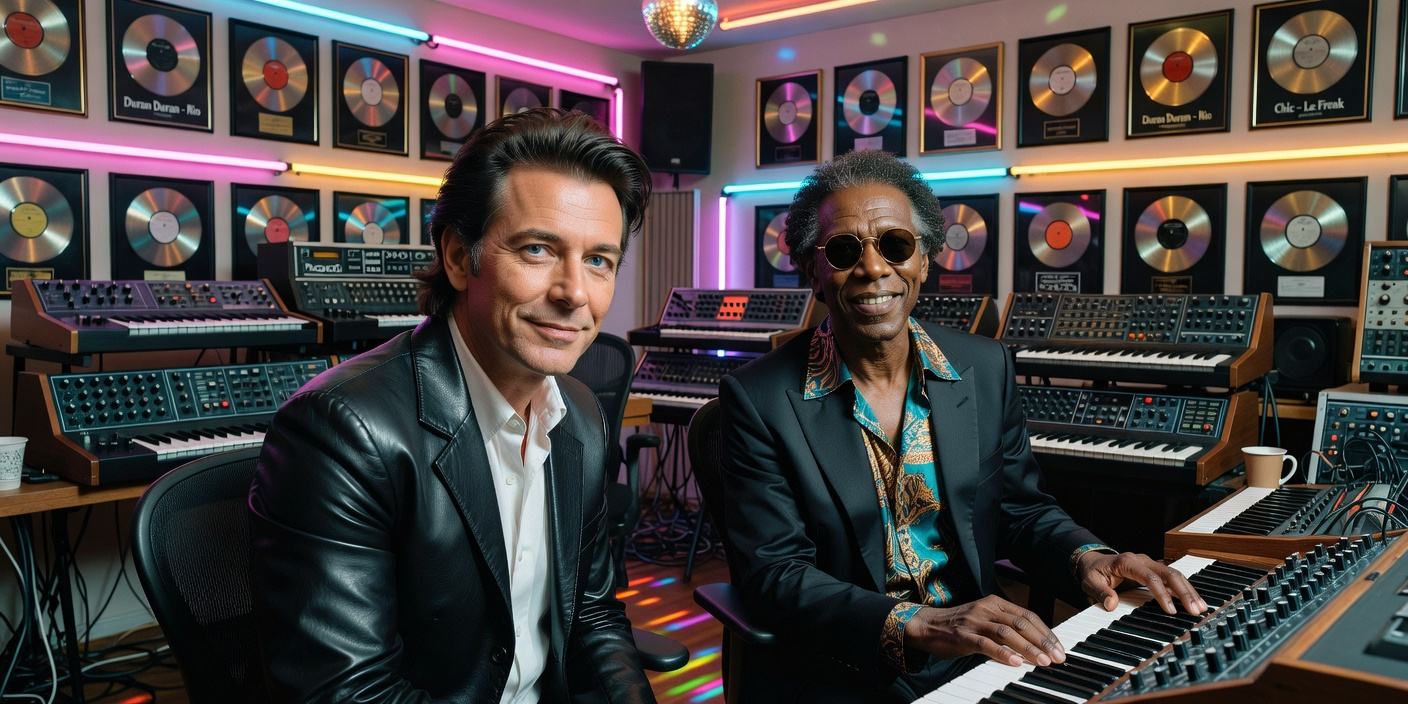
Duran Duran has officially returned to the forefront of the modern pop landscape with the release of their latest single, “Free To Love,” an effervescent, disco-infused track that reunites the band with their longtime creative partner, Chic co-founder Nile Rodgers. Released today, the track serves as both a shimmering pop anthem and a testament to one of the most enduring musical collaborations in rock history. As the band prepares for a high-profile summer circuit, including a headline slot at London’s BST Hyde Park, “Free To Love” arrives as a vibrant reminder of the band’s ability to evolve while staying tethered to the rhythmic DNA that propelled them to international stardom in the 1980s.
Key Highlights
- A Legacy Reunited: “Free To Love” marks the latest chapter in a partnership dating back to 1984, when Rodgers produced the band’s chart-topping remix of “The Reflex.”
- Disco for the 2020s: Frontman Simon Le Bon describes the track as a modern interpretation of disco, intended to offer positivity and freedom in a turbulent modern world.
- Star-Studded Visuals: The single is accompanied by a music video directed by acclaimed filmmaker Jonas Åkerlund, featuring a cameo from British broadcaster Clara Amfo and a retro, “Top of the Pops”-inspired aesthetic.
- A Message of Unity: Keyboardist Nick Rhodes emphasizes that the track serves as a beacon of hope, aiming to counter global cynicism with a straightforward message of peace and love.
The Eternal Groove: Duran Duran and Nile Rodgers Revisit Their Funk-Pop Alchemy
When the opening notes of a song produced by Nile Rodgers hit the airwaves, there is an immediate, unmistakable signature. It is a precise, syncopated funk-guitar mastery that feels simultaneously vintage and perpetually forward-looking. With “Free To Love,” Duran Duran has not only invited the legendary architect of the “Chic sound” back into the fold but has arguably tapped into the very essence of what makes their band endure: the ability to marry moody, synth-heavy British rock with the propulsive, danceable energy of American funk.
The Sonic Architecture of “Free To Love”
At its core, “Free To Love” is a structural masterclass in pop production. Unlike many modern tracks that lean heavily on compressed, digital-first sonic landscapes, this single breathes. The production relies on the interplay between Nick Rhodes’ atmospheric synth washes and the razor-sharp guitar stabs that have become synonymous with the Rodgers-Duran Duran dynamic. This is a sound that recalls the mid-80s—the era of Notorious and The Reflex—but it is filtered through the lens of a band that has been experimenting with darker, gothic-synth palettes for the better part of a decade.
By centering the track on a disco-inspired groove, the band manages to bridge the gap between their synth-pop roots and their current, more sophisticated sound design. The basslines are fluid and driving, providing a foundation for Simon Le Bon’s vocal performance, which feels rejuvenated and urgent. Le Bon has framed the song as “disco for the 2020s,” a phrase that carries weight when you consider the cultural shift toward escapism in pop music. In an era often dominated by algorithmic production and hyper-specific sub-genres, “Free To Love” leans into the universal language of the dancefloor—a space that, historically, has served as a sanctuary for marginalized voices and a crucible for cultural progress.
A Four-Decade Creative Dialogue
The narrative of Duran Duran cannot be fully told without the inclusion of Nile Rodgers. Their relationship is not merely a “producer-artist” dynamic; it is a shared language. From the remix of “The Reflex,” which transformed a guitar-heavy demo into a number-one Billboard hit, to the production of the Notorious album, Rodgers has consistently pushed the band to embrace their funk influences.
What is particularly fascinating about their 2026 collaboration is the level of mutual respect that has matured over forty years. In recent statements, Rodgers described the studio environment during the creation of this track as a space of pure, unconditional creative freedom. For the band, plugging in with Rodgers isn’t just about capturing a hit; it’s about accessing a specific frequency of “electricity”—a term Nick Rhodes used to describe the atmosphere they create together. This synergy suggests that for Duran Duran, the studio remains a place of genuine discovery rather than a mechanical factory for product. It highlights a critical aspect of their longevity: the willingness to trust the intuition of an external collaborator who has seen them through their highest highs and their period of reinvention.
The Visual World: Retro-Futurism and Nostalgia
Music in the 2020s is rarely just about the audio. The release of “Free To Love” is punctuated by a visual component directed by Jonas Åkerlund, who is renowned for his work with some of the world’s most visually oriented artists, including Lady Gaga, Madonna, and Rammstein. The choice of a “Top of the Pops”-inspired aesthetic is no accident. It serves to contextualize the song within the band’s own history while simultaneously engaging with the current trend of late-century nostalgia.
By featuring Clara Amfo—a prominent figure in modern music broadcasting—the band is also signaling an awareness of their place in the current media ecosystem. The video acts as a bridge, grounding the high-concept, disco-drenched track in a tangible, performance-based environment. This reflects a broader shift in how legacy acts are managing their image: they are not just relying on their past, but actively curating a present that honors their origins while speaking to a modern, digitally native audience.
Secondary Angles: Future Implications for the Band
1. The ‘Legacy Act’ Model: This release highlights how Duran Duran is successfully avoiding the trap of becoming a pure “nostalgia act.” By consistently integrating fresh production and collaborating with peers, they have secured a rare longevity that most of their 80s contemporaries failed to achieve. This model provides a roadmap for other heritage artists to remain culturally relevant.
2. The Economic Impact of Live Touring: With the release coinciding with the announcement of the BST Hyde Park headlining gig and a Las Vegas residency, this single serves as a potent promotional engine. In the current music economy, the synergy between new content drops and ticket sales is the primary driver of revenue. “Free To Love” isn’t just an artistic statement; it is a strategic asset for their upcoming tour.
3. Genre Fluidity: The track underscores the band’s persistent resistance to being boxed into a single sub-genre. Throughout their career, they have oscillated between pop, new wave, gothic rock, and funk. “Free To Love” proves that their core identity is, in fact, the oscillation itself—the ability to pivot between styles while maintaining a consistent aesthetic identity, a hallmark of true pop art.
FAQ: People Also Ask
Q: How long have Duran Duran and Nile Rodgers been collaborating?
A: Their creative partnership spans over four decades, originating in 1984 when Rodgers remixed the band’s hit “The Reflex.” He has since worked on numerous tracks and albums, including “The Wild Boys,” Notorious, Paper Gods, and Danse Macabre.
Q: What is the message behind “Free To Love”?
A: According to the band and Rodgers, the song is an “anthem for freedom.” It is described as a call for peace, hope, and understanding, encouraging listeners to find love and freedom in a chaotic modern world.
Q: Is there an album accompanying the release of “Free To Love”?
A: As of the release date, “Free To Love” is an standalone single. The band recently released the successful Danse Macabre (2023) and its deluxe edition, so this track represents the first new music from the group in 2026.
Q: Where can I see Duran Duran perform live in 2026?
A: The band is headlining the BeachLife Festival on May 1, followed by a residency at the Fontainebleau in Las Vegas in May and a major headline set at BST Hyde Park in London on July 5.