KION Group and Siemens have officially launched a strategic partnership aimed at redefining the future of intralogistics through the integration of artificial intelligence, advanced automation, and real-time simulation technologies. Announced at the Hannover Messe, the collaboration seeks to address the growing need for resilient and hyper-efficient supply chains by merging physical warehouse operations with sophisticated digital twin environments. By leveraging Siemens’ cutting-edge software and KION’s deep domain expertise in material handling, the partnership is set to accelerate the deployment of industrial AI, turning standard warehouses into adaptive, intelligent ecosystems capable of predicting disruptions before they impact global throughput.
Key Highlights
- Digital Twin Composer Deployment: KION Group will become the first company in Europe to implement Siemens’ new Digital Twin Composer software, enabling real-time, parallel simulation of complex logistics processes.
- Industrial AI Acceleration: The partnership includes a data-sharing agreement where KION provides operational data from real-world warehouse environments to help train and scale Siemens’ Industrial Foundation Models.
- From Physical to Digital: The collaboration moves beyond traditional automation by creating a digital nerve center, allowing operators to test warehouse layouts, process flows, and hardware updates in a virtual environment before physical implementation.
- Resilience and Efficiency: Focused on mitigating supply chain volatility, the alliance aims to provide logistics operators with the tools to make data-driven decisions that increase productivity while reducing operational downtime.
The Dawn of the Intelligent Warehouse Nerve Center
The fundamental premise of the KION and Siemens partnership lies in the convergence of the “real” and “digital” worlds. In the current global economic climate, supply chain resilience has moved from a back-office priority to a boardroom imperative. Logistics hubs are no longer just storage facilities; they are complex, high-velocity nodes that require constant optimization. By integrating Siemens’ digital portfolio with KION’s specialized material handling hardware, the partnership creates a continuous feedback loop between on-site physical sensors and virtual simulations.
The Role of Digital Twin Composer
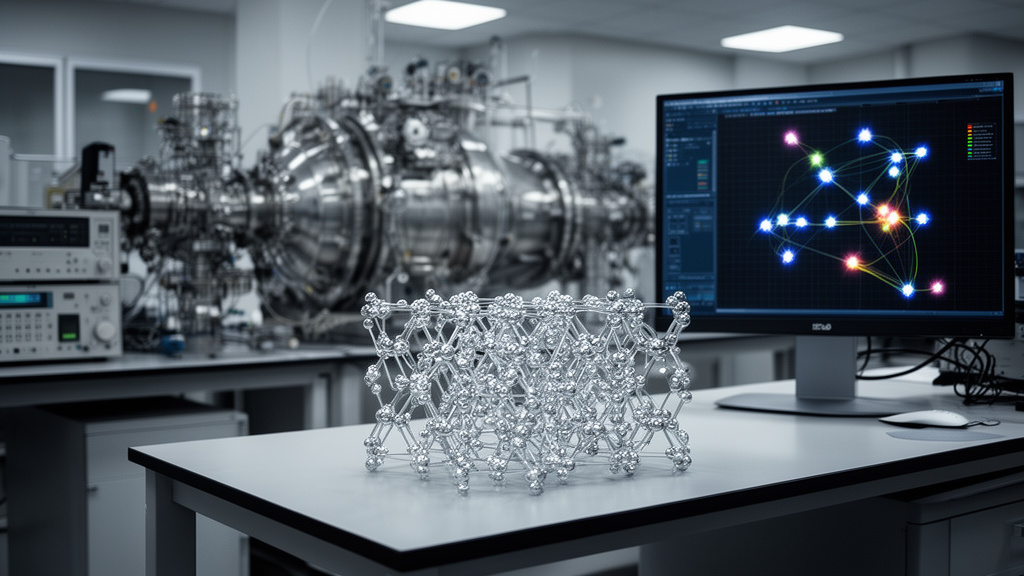
At the technological core of this alliance is the Digital Twin Composer. Unlike legacy simulation tools that often rely on static data or require extensive manual modeling, this modular toolkit allows for dynamic, real-time simulation. For KION, this means the ability to model entire warehouse ecosystems—from the movement of individual automated guided vehicles (AGVs) to the throughput of entire loading docks. This allows operations managers to simulate “what-if” scenarios in the digital realm—such as a 20% surge in order volume or a complete reconfiguration of rack layouts—and observe the performance metrics immediately. This effectively de-risks capital-intensive automation investments, allowing companies to validate process changes with high-fidelity accuracy before a single piece of equipment is moved on the floor.
Data Symbiosis: Scaling Industrial AI
Perhaps the most significant long-term implication of this partnership is the agreement to exchange selected industrial data. While generative AI has dominated the consumer technology narrative, its application in industrial engineering has faced a hurdle: the lack of high-quality, domain-specific training data. By contributing anonymized operational data from complex warehouse environments, KION is helping Siemens refine its Industrial Foundation Models.
This is a critical distinction from general-purpose AI. An industrial foundation model must understand the “language” of physical manufacturing and logistics—the constraints of space, the physics of weight, and the timing of complex mechatronic systems. KION’s data input serves as the training ground for these models, enabling them to suggest generative product designs or process optimizations that are grounded in engineering reality rather than theoretical abstraction. For instance, the AI might suggest an optimized design for a fork carriage that is lighter, more durable, and more efficient to manufacture, based on historical stress-test data provided by KION’s massive operational footprint.
Shaping the Future of Supply Chain Resilience
For the logistics sector, this partnership signifies a shift away from isolated point solutions—where a warehouse management system (WMS) operates independently of the automation hardware—toward an integrated, platform-based architecture. As Cedrik Neike, CEO of Siemens Digital Industries, noted, the goal is to transform the warehouse into a digital nerve center. This connectivity is essential for modern supply chain management, where the ability to absorb shocks—whether labor shortages, unexpected SKU volatility, or energy cost fluctuations—defines market winners.
As the collaboration matures, we expect to see these digital twin solutions integrated across the entire lifecycle of KION’s products. From initial planning and engineering to deployment and continuous optimization in live operation, the digital twin remains a living asset. This creates a sustainable competitive advantage for companies that adopt this architecture, as their facilities continuously learn and evolve. The partnership between KION and Siemens effectively bridges the gap between the static industrial past and the dynamic, AI-driven future, setting a new standard for what it means to be an “intelligent” logistics operator.
FAQ: People Also Ask
1. What is the Digital Twin Composer software?
It is a modular simulation toolkit from Siemens that allows companies to create digital replicas of machines, production facilities, or logistics processes. It enables real-time, parallel simulations, allowing operators to test changes virtually before applying them to physical assets.
2. How does the data-sharing agreement between KION and Siemens work?
KION provides anonymized operational data and expertise from its real-world warehouse environments to Siemens. This data is used to train and refine Siemens’ Industrial Foundation Models, making AI more effective for engineering and logistical applications.
3. Why is this partnership significant for supply chain resilience?
By allowing logistics operators to simulate process changes and potential disruptions in a virtual environment, the partnership enables better data-driven decision-making. This reduces the risk of physical implementation errors and allows warehouses to adapt more quickly to fluctuating demand or unexpected supply chain stresses.
4. Is this partnership only for large warehouses?
While the technology is currently being deployed at scale, the modular nature of the Digital Twin Composer is designed to support various logistics operations across their entire lifecycle. The goal is to make these advanced simulation and AI tools accessible to help optimize both existing facilities and new implementations.