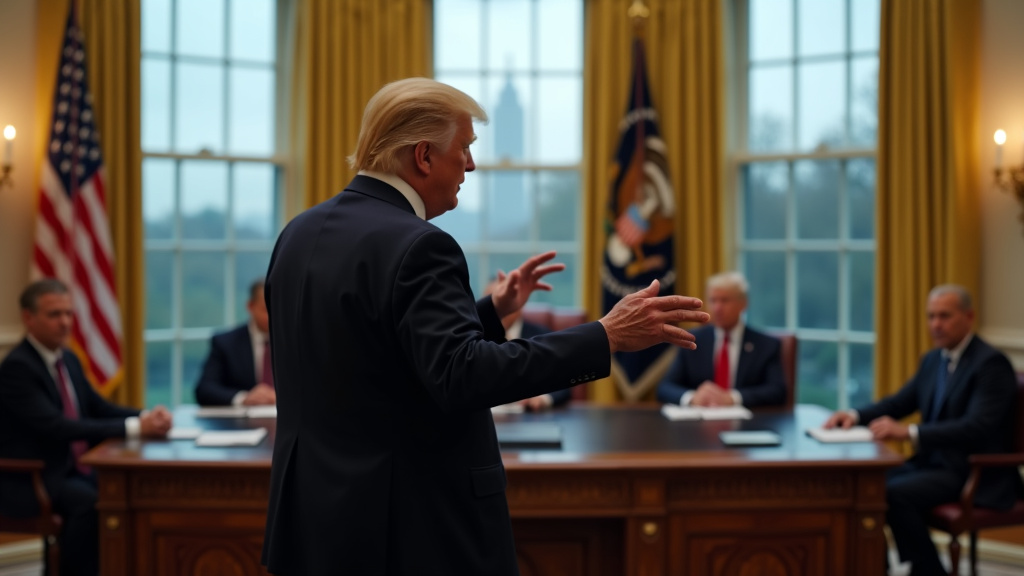
Washington D.C. – In a significant development in the ongoing international efforts to resolve the Russia-Ukraine war, U.S. President Donald Trump announced Sunday, September 7, 2025, that European leaders are scheduled to visit the United States this week for crucial discussions aimed at finding a resolution.
President Trump stated that these high-level diplomatic meetings would take place on either Monday, September 8, or Tuesday, September 9. The announcement comes in the wake of a particularly brutal and large-scale Russian aerial assault on Ukraine overnight, which struck the capital, Kyiv, and damaged a government building for the first time since the full-scale invasion began. This news is rapidly becoming a top focus in global current events.
“We’re going to get it done — the Russia Ukraine situation — we are going to get it done,” Trump told reporters, expressing confidence in his administration’s ability to broker an end to the protracted conflict. He also indicated that he would be speaking with Russian President Vladimir Putin “soon,” signaling a potential direct engagement with Moscow.
Diplomatic Blitz Amidst Escalating Hostilities
The scheduled visit by European leaders places the Ukraine war directly in the international spotlight at a critical juncture. This news is already trending across international news platforms. The announcement followed a night of intense Russian aggression, which saw Ukraine’s Air Force report the largest drone and missile attack of the war, involving over 800 drones and 13 missiles. The strikes resulted in civilian casualties, including an infant, and damaged the main government building in Kyiv. President Trump acknowledged his “disappointment” with the ongoing situation, particularly following these renewed attacks.
While President Trump did not specify which European leaders would be attending the meetings, previous diplomatic engagements suggest potential participants could include high-ranking officials from key European nations. These discussions are expected to cover the current state of peace efforts, potential security guarantees for Ukraine, territorial considerations, and the continuation of sanctions against Russia. European nations have consistently advocated for Ukraine’s territorial integrity and have been actively involved in proposing frameworks for peace, often expressing concerns that any US-brokered deal might concede too much to Russian demands.
The Protracted Conflict and Shifting Diplomatic Landscape
The Russia-Ukraine war, now in its fourth year, has seen numerous rounds of peace talks, none of which have yielded a lasting resolution. Russia’s demands include recognition of its territorial claims, guarantees against Ukraine joining NATO, and the lifting of sanctions. Ukraine, conversely, seeks a full withdrawal of Russian forces, the return of prisoners, and accountability for war crimes. The current situation, exacerbated by the recent large-scale attacks, underscores the complexity and urgency of finding a diplomatic path forward.
Recent diplomatic efforts have included proposals for security guarantees for Ukraine, with a “coalition of the willing” of European nations pledging support. However, the commitment from the United States has remained a key point of discussion, with European leaders keen to ensure a united front. There have been past instances where European leaders have lobbied the US administration, expressing concern over potential unilateral decisions that could disadvantage Ukraine. The administration’s stance on sanctions has also evolved, with President Trump indicating readiness to implement a “second phase” of sanctions against Russia, a move that could significantly increase pressure on Moscow.
Navigating Towards Peace: Challenges and Hopes
This upcoming summit represents a significant moment, as it brings together key international players to confront the ongoing crisis. The timing, immediately following a devastating escalation of hostilities, underscores the gravity of the situation. The focus will likely be on forging a cohesive strategy that respects Ukraine’s sovereignty while exploring viable pathways to end the bloodshed. The anticipated conversation with President Putin is also a critical element, potentially offering a direct channel to de-escalate tensions.
While the prospect of an immediate peace deal remains uncertain given the deep-seated issues and the continued fighting, the convergence of European leaders in Washington signifies a collective commitment to finding a resolution. The effectiveness of these talks, and whether they can break the current diplomatic deadlock, will be closely watched globally. This news is being heavily analyzed for its potential to shift the trajectory of the conflict, making it a trending topic of immense importance.
The coming days will be pivotal as President Trump and his European counterparts engage in these high-stakes discussions, seeking to chart a course toward peace in a region scarred by war. The world awaits news of concrete steps that could lead to a cessation of hostilities and a lasting resolution to this critical geopolitical challenge. The hope is that these discussions, however challenging, can bring about a significant shift in the news surrounding the war.