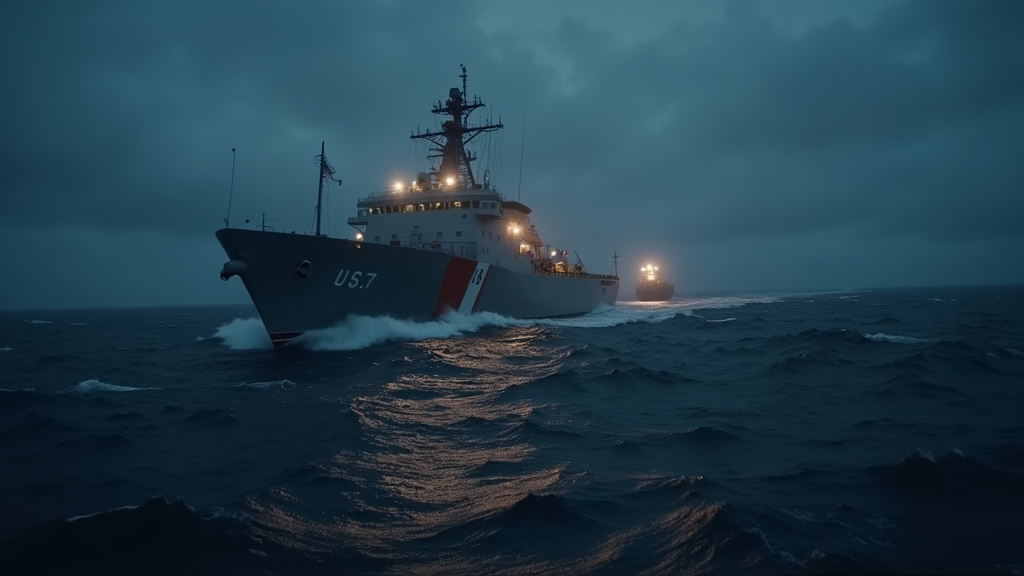
US Intercepts Second Oil Tanker Off Venezuela, Escalating Blockade Amid Rising Tensions
The United States has intercepted a second merchant vessel carrying oil off the coast of Venezuela in international waters. This action underscores a significant escalation in the U.S. pressure campaign against President Nicolás Maduro’s government. The interception occurred on Saturday, December 20, 2025. It follows the seizure of another oil tanker on December 10. Both intercepted vessels were reportedly headed for Asia. This marks a major global event in the ongoing geopolitical tensions.
US Intensifies Blockade Against Venezuelan Oil
U.S. forces apprehended the second vessel east of Barbados in the Caribbean Sea. The ship is believed to be the Panama-flagged Centuries. This event is considered major political event news. The US Homeland Security Secretary, Kristi Noem, confirmed the action. She stated the US Coast Guard and Department of Defense conducted the operation. Secretary Noem emphasized the U.S. commitment. She said, “The United States will continue to pursue the illicit movement of sanctioned oil that is used to fund narco-terrorism in the region”. She added, “We will find you, and we will stop you”.
This interception is part of an intensified U.S. blockade. President Donald Trump announced a “total and complete blockade” of sanctioned oil tankers. This policy targets vessels entering or leaving Venezuela. The U.S. aims to cripple Venezuela’s oil-dependent economy. This strategy seeks to curb the Maduro regime’s revenue streams. The administration suggests any vessel carrying Venezuelan oil could face interdiction. The U.S. has been expanding its list of sanctioned vessels.
Background and Context of the Interceptions
Venezuela’s oil sector is crucial for its economy. U.S. sanctions have targeted this sector for years. The Treasury Department uses measures like Executive Orders to restrict transactions. These sanctions aim to pressure the Maduro government. The U.S. accuses Venezuela of drug trafficking and funding narco-terrorism. President Trump has also cited disputes over oil assets seized from U.S. companies. He has declared Venezuela’s government a foreign terrorist organization.
The first vessel seized on December 10 was described as a “stateless vessel” involved in an illicit oil shipping network. The second vessel, Centuries, is flagged in Panama. Reports indicate it was not on the U.S. public sanctions list. This detail suggests an escalation in U.S. enforcement tactics. The U.S. claims the Centuries was a “falsely flagged vessel” involved in a “shadow fleet”. White House Deputy Press Secretary Anna Kelly stated the tanker carried sanctioned PDVSA oil.
Venezuela’s Response and Geopolitical Implications
Venezuela has strongly condemned the U.S. actions. The government called the seizure of the Centuries tanker “blatant theft” and “an act of international piracy”. Vice President Delcy Rodriguez denounced the move as a “serious act of piracy”. Venezuela plans to report these actions to the UN Security Council. President Maduro has urged his navy to escort oil tankers. This defiance highlights rising tensions. The U.S. military presence in the region has also increased significantly.
The U.S. blockade could have broad implications. It threatens Venezuela’s primary source of income. Some analysts warn of disruptions to global oil markets. However, markets have largely remained insulated so far. Venezuela’s oil production has faced declines due to sanctions and operational issues. The “shadow fleet” of tankers used to evade sanctions is now under increased scrutiny.
These developments are trending topics in international news. The situation adds to the ongoing geopolitical landscape, marked by major global events. The U.S. action is part of a broader strategy to exert maximum pressure on the Maduro regime. This intensified campaign could lead to further confrontations. The world watches these events closely. The future of Venezuela’s oil trade remains uncertain.
The top priority for the U.S. appears to be cutting off funding for what it labels as narco-terrorism. These events are part of significant political event news. The intercepted vessels were reportedly heading to Asia, indicating a global reach for Venezuela’s oil trade despite sanctions. The U.S. aims to disrupt this flow. It highlights the complex dynamics of international energy markets and sanctions enforcement. This is a developing story with significant consequences.
While the focus is on oil, other major global developments are unfolding. The global oil market itself is subject to numerous factors, including geopolitical risks and policy shifts, making these major global events interconnected. The strategy of seizing vessels, rather than just sanctioning them, represents a new phase. It is a major shift in U.S. enforcement. This major policy change has significant implications.
The situation remains fluid. Further actions and responses from both the U.S. and Venezuela are expected. These events will continue to shape regional stability. They also impact global energy security. The top news cycle is dominated by such geopolitical confrontations. The major political event news cycle is highly active.
The U.S. has not ruled out further escalation. President Trump has not excluded the possibility of war. This rhetoric adds to the already high tensions. The situation underscores the critical nature of oil in international relations. It is a major factor influencing global stability. The major political event news coverage reflects this.
Conclusion
The U.S. interception of the Centuries marks a significant escalation. It is a direct challenge to Venezuela’s oil exports. The blockade aims to isolate the Maduro regime financially. The coming weeks will reveal the full impact of these aggressive U.S. measures. The geopolitical landscape in the region is increasingly volatile. These events are trending globally. The top news focuses on this critical juncture.